
Companion Plants
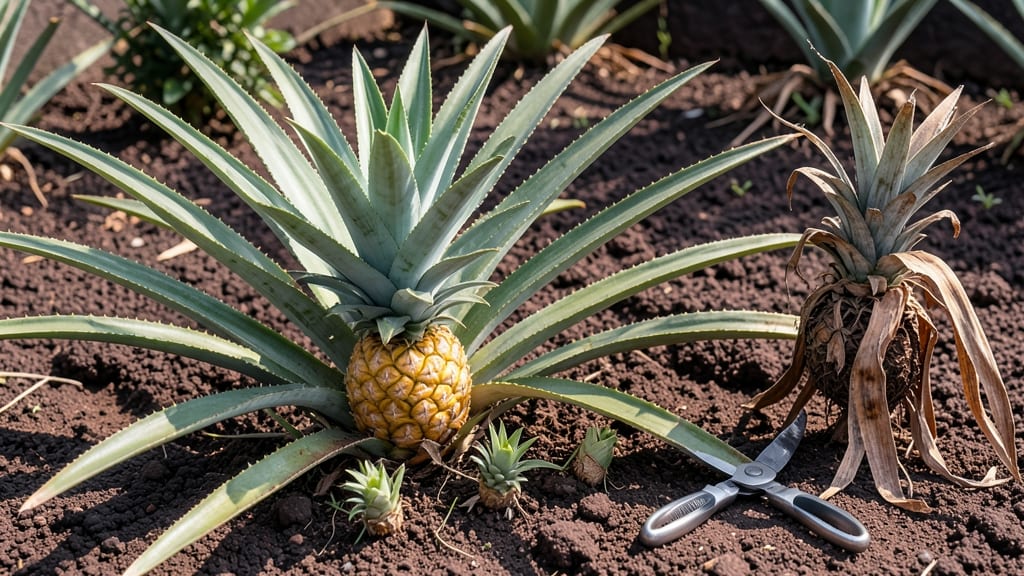
Yes, pineapple plants die after fruiting as they undergo senescence, where the mother plant redirects all its energy toward fruit production. However, the good news is that offsets (small shoots) grow at the base, which you can replant to grow new pineapple plants.
This natural lifecycle shift happens because the plant prioritizes fruit development over its own survival. 🌱 Once the pineapple matures, the mother plant's leaves yellow and die back, but those offsets at the base contain all the genetic material needed to grow into full-sized plants.
I've found that separating and replanting these offsets within a few weeks of fruiting gives them the best chance to thrive—just give them bright light and well-draining soil.
What's fascinating is how this process mirrors the plant's evolutionary strategy: instead of wasting energy trying to live longer, it focuses everything on producing fruit, then relies on its offspring to continue the cycle.
This is why gardeners often end up with multiple pineapple plants over time—each fruiting cycle creates new opportunities for growth!
💡 In This Article
- Why Pineapple Plants Senesce After Producing Fruit
- How to Harvest Offsets and Grow New Pineapple Plants
Why pineapple plants senesce after producing fruit
The moment a pineapple plant begins fruiting, its body undergoes a dramatic biological shift called senescence. This process is essentially the plant's way of saying, "I've done my job—now it's time to pass the torch."
The plant's primary focus switches from growing leaves and roots to developing the fruit, which requires an enormous amount of energy. 🌱 During this phase, the mother plant's leaves start turning yellow and eventually die back, a clear sign that it's redirecting nutrients to the fruit instead of maintaining its own structure.
Hormones like ethylene play a critical role in this transformation. As ethylene levels rise, the plant's growth hormones (like auxins) decrease, causing the leaves to stop producing chlorophyll and the plant to prioritize fruit maturation.
This hormonal shift is similar to what happens in other monocots like corn or wheat, where the plant's energy is funneled into reproductive structures. The result? A 7-9 month period where the mother plant essentially "winds down" its own life cycle to ensure the fruit reaches full ripeness.
What makes this even more fascinating is how the plant's root system behaves during senescence. While the above-ground parts weaken, the roots continue to absorb water and nutrients—but only enough to support the fruit's development.
This is why you'll often see the mother plant's base swell with new growth (the offsets) even as the top dies back. The plant is literally preparing its next generation while sacrificing itself for the fruit's success.
This lifecycle strategy isn't unique to pineapples—it's a common trait among monocarpic plants, which produce fruit just once before dying. Think of it like a biological "one-hit wonder": the plant puts everything into that single performance (the fruit) and then calls it quits.
The difference with pineapples is that they leave behind living proof of their legacy in those offsets, ready to grow into new plants.
Here's where it gets practical: if you're growing pineapples at home, you'll notice the mother plant's leaves start yellowing about 2-3 months after flowering. This is your cue to start monitoring those offsets at the base—they're your ticket to future harvests.
The key is to act quickly once the fruit is ripe, because the mother plant's decline accelerates rapidly after fruiting.
One common misconception is that pineapple plants die because of poor care. But the truth is, this senescence is hardwired into their DNA. Even with perfect growing conditions, the plant will still follow this lifecycle.
The good news? Nature's designed a backup system—those offsets contain everything needed to grow into full-sized plants, complete with their own roots and leaves, ready to repeat the cycle.
What most gardeners don't realize is how quickly this process happens. Within just 4-6 weeks after harvesting the pineapple, the mother plant may be completely dead—yet those offsets can already be large enough to transplant. This is why timing your harvest and preparing new pots is so crucial.