
Landscaping
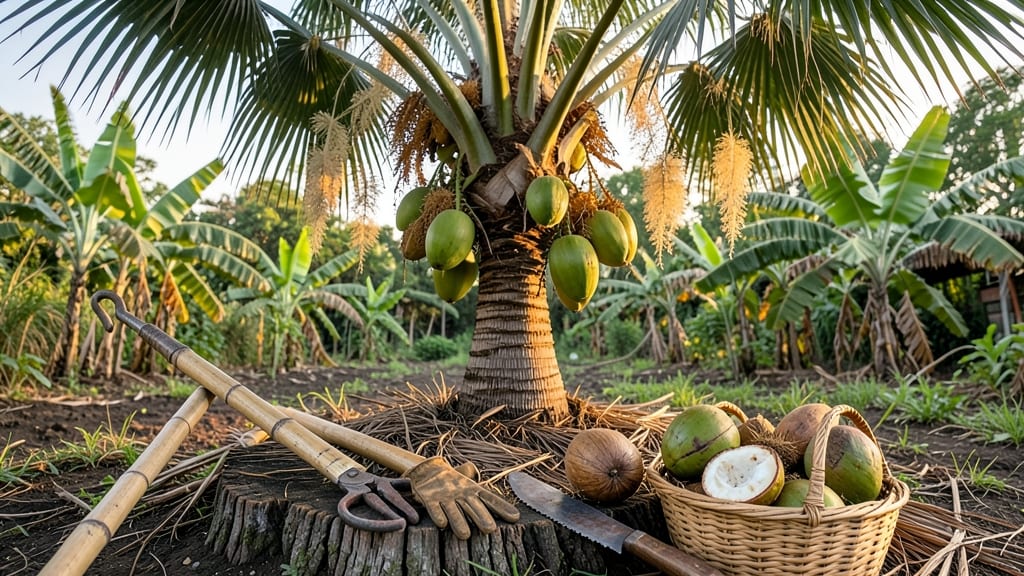
To identify ripe edible palm fruit, look for a soft outer husk that gives slightly under gentle pressure, revealing vibrant yellow, orange, or red flesh depending on the variety. The flesh should have a sweet, nutty, or coconut-like aroma when ripe, and harvesting at this stage ensures optimal flavor and texture.
Identifying ripe edible palm fruit comes down to two key visual cues: color transformation and texture. 🌟 The outer husk shifts from green to a rich, saturated hue—think of a date palm's deep orange or a heart-of-palm's golden yellow—while the flesh inside loses its fibrous stiffness.
This change signals the breakdown of chlorophyll and activation of carotenoids, a natural process that peaks at the ideal eating window. I always test ripeness by pressing the husk gently; if it yields like a ripe avocado, it's ready. Overripe fruit becomes mushy and loses its sweetness, so timing matters.
Once you've spotted the perfect specimen, harvesting requires patience. For ground-level palms like the peach palm, simply twist the fruit free from the stalk. 🌱 Higher palms demand tools or careful climbing—never force the fruit, as this can damage the plant.
After harvesting, peel away the fibrous husk immediately to preserve freshness. The flesh can be eaten raw, dried for storage, or cooked into dishes like coconut-free "milk" or sweetened desserts, depending on the species.
💡 In This Article
- How Palm Fruit Color and Texture Signal Ripeness
- Step-by-Step Guide to Harvesting and Preparing Edible Palm Fruit
How palm fruit color and texture signal ripeness
The vibrant color shift in palm fruit isn't just visual—it's a botanical process called chlorophyll degradation and carotenoid activation. As the fruit matures, chlorophyll (the green pigment) breaks down, revealing underlying carotenoids like beta-carotene (orange) or lycopene (red).
For example, date palms turn from green to deep orange when their chlorophyll converts to carotenoids, signaling peak sweetness. This process is similar to how tomatoes ripen but happens faster in tropical climates where palms thrive at 75-85°F temperatures.
Texture is your second key indicator. A ripe palm fruit's husk should feel soft but not mushy—like pressing a slightly overripe peach.
The flesh inside should yield slightly when squeezed but still hold its shape. 🌟 For species like the peach palm, this means the husk gives way with gentle pressure, while the heart-of-palm varieties develop a leathery texture.
Overripe fruit becomes spongy and loses its structural integrity, often accompanied by a fermented aroma. The ideal window is typically 2-3 days after the color peak, when the fruit is fully colored but still firm.
Species-specific patterns matter too. Date palms ripen uniformly across the cluster, while wild palms like bucay develop ripeness in stages—starting from the bottom fruit upward.
This staggered ripening is a survival mechanism to ensure not all fruit spoils at once. 🌱 For heart-of-palm varieties, the outer husk may split naturally when ripe, revealing the edible core. Always harvest when the fruit is 70-80% colored—this balance ensures maximum flavor without the risk of overripeness.
What most people overlook is the aroma test. A ripe palm fruit emits a sweet, tropical scent—think coconut with hints of honey or vanilla. This aroma comes from volatile compounds like esters that develop during ripening.
If you detect a sour or alcoholic smell, the fruit has passed its prime. The scent is strongest when the fruit is at room temperature (70-75°F), so always test after bringing it indoors from the heat.
Temperature and humidity also influence ripening speed. In high-humidity tropical environments (like Southeast Asia or Central America), palm fruit ripens 30-50% faster than in drier regions. This is why local harvesters often use shade cloths to slow ripening during transport—delaying the process by up to 5 days while maintaining quality.
The opposite happens in cooler climates where palms are cultivated; fruit may take 2 weeks to reach full ripeness.
For identification, compare these visual cues to common edible varieties:
- Date palms: Deep orange husk with firm, honeycomb-patterned flesh
- Peach palms: Bright red husk with creamy, coconut-like interior
- Heart-of-palm: Golden-yellow husk with fibrous, artichoke-like core
- Bucay palms: Yellow-green husk with starchy, potato-like texture
Remember: the perfect palm fruit should look vibrant, feel slightly yielding, and smell sweetly tropical—any deviation means it's either unripe or spoiled. 🌟