
Pruning
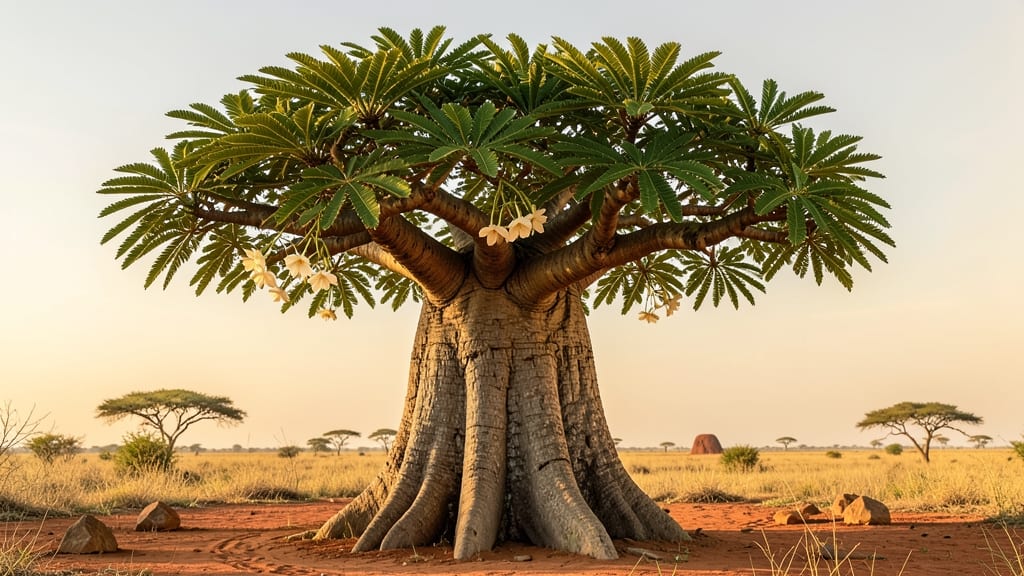
Growing a fruit baobab tree (Adansonia digitata) means cultivating one of nature’s most resilient giants—right in your own landscape. 🌿 This ancient tree thrives in arid climates, but with the right approach, you can coax it into producing its prized fruit while keeping it manageable through strategic pruning.
The key isn’t just patience—it’s precision in shaping its growth from the start.
Baobabs demand well-draining soil and full sun, but their real secret lies in watering discipline. Deep watering once a week during dry spells mimics their native conditions, while overwatering turns their roots to mush. Once established, they’ll stretch roots deeper than most trees, making them drought-proof once mature.
The fruit itself—dry, powdery, and packed with vitamin C—harvests best in late summer when the pods turn brown and split open.
Pruning isn’t just about aesthetics; it’s about directing energy toward fruit production. Remove dead branches in early spring and thin out crowded growth to improve airflow—this prevents fungal issues and encourages stronger fruit-bearing limbs.
With the right cuts, you’ll see new growth within weeks, and by year three, you could be harvesting enough fruit to dry and powder for smoothies or teas.
Fair warning: this isn’t a fast-growing tree. Give it space—baobabs can reach 50 feet tall—but the payoff is worth it. In regions like Florida or Arizona, they flourish with minimal fuss, while cooler climates may need container growing.
The real magic? A single tree can live for centuries, feeding generations with its unique harvest. Start small, and you’ll be rewarded for decades.
📚 In This Guide
- What you need
- Instructions
- Tips and common mistakes
- Wrapping up and next steps
What you need
- ● Baobab tree seeds or saplings: 1-2 (ensure they’re disease-free and sourced from a reputable nursery).
- ● Pruning tools: Bypass pruners (for small branches, sharp and sterilized).
- ● Loppers (for thicker branches, 1.5–2.5 inches in diameter).
- ● Pruning saw (for branches >2.5 inches, with a fine-toothed blade).
- ● Safety gear: Work gloves (cut-resistant, e.g., Mechanix or similar).
- ● Safety goggles (to protect from debris).
- ● Long sleeves/pants (to avoid scratches from thorns).
- ● Cleaning supplies: 70% isopropyl alcohol or bleach solution (1 part bleach to 9 parts water).
- ● Paper towels or disposable wipes.
- ● Tree wound dressing (e.g., Tanglefoot Tree Wound Pruning Sealer) to prevent disease.
- ● Ladder or extension pole (for tall branches, 6–12 feet).
- ● Marking spray or tape (to label pruning cuts for tracking growth).
- ● Soil testing kit (to check pH/nutrient levels, ideal range: 6.0–8.0).
- ● Mulch (organic, e.g., wood chips, to retain moisture).
Precision pruning techniques for year-round baobab fruit production
Baobab trees reward patience with fruit harvests that span seasons—here’s how to prune them for maximum yield.
🌿 Step 1: Assess the Tree’s Structural Health
Begin by examining the baobab’s trunk and branches for signs of stress or disease. Look for cracks in the bark, dead branches (those without leaves or green tissue), or mushroom-like growths that signal rot. Baobabs are resilient, but removing compromised wood early prevents systemic decline. Use a sharp pruning saw to cut ¼ inch above a healthy lateral branch or bud—never leave stubs, as they invite infection.
Pay special attention to the canopy’s center. Baobabs often develop dense, shaded interiors where fruit rarely ripens. Mark these areas for selective thinning. I like to sketch a rough outline of the tree’s shape first—this helps visualize the final structure before making cuts. Prune on a dry, overcast day to minimize stress on the tree.
✂️ Step 2: Thin Branches for Light Penetration
Remove 20-30% of the tree’s branches to improve airflow and sunlight exposure. Focus on crossing branches (where limbs rub against each other) and water sprouts (fast-growing, weak shoots). These compete for nutrients and weaken the tree’s ability to produce fruit. Cut at a 45-degree angle just outside the branch collar—the swollen area where the branch meets the trunk—to promote faster healing.
Leave 3-4 main scaffold branches evenly spaced around the trunk. These should be at least 3 inches in diameter and angled outward to form a broad, stable canopy. You’ll see fruit clusters form most heavily on these primary branches, so prioritize their health. Avoid topping the tree—baobabs respond poorly to drastic height reduction, which can stunt fruit production.
☀️ Step 3: Encourage Fruit-Bearing Zones
Baobabs produce fruit primarily on new growth that emerges after pruning. To stimulate this, make heading cuts—shortening branches by ⅓ to ½ their length—on the outer third of the canopy. This redirects energy toward lateral buds, which will sprout into fruit-bearing shoots. Time this prune in early spring, just as the tree breaks dormancy, to coincide with the natural flush of growth.
Watch for flower buds forming in the following months. These appear as small, fuzzy clusters along the new shoots. Baobab flowers are short-lived, so precise pruning ensures more buds survive to fruit. Avoid heavy pruning after June, as late-season cuts delay fruit maturation and reduce yield.
⏰ Step 4: Maintain Through the Growing Season
Conduct a light maintenance prune every 6-8 weeks to remove any suckers (shoots growing from the base) or dead wood. Use sterilized pruners to make clean cuts, and dispose of diseased branches immediately. Baobabs are slow to heal, so seal large cuts with tree wound pruning sealant to prevent moisture loss and pest entry.
Monitor the tree’s water needs closely during fruit development. Baobabs require deep, infrequent watering—1-2 inches per week during dry spells—to prevent fruit drop. You’ll know the tree is stressed if leaves yellow or fruit remains small and hard. Adjust irrigation to keep the soil evenly moist but not soggy.
🌱 Step 5: Prepare for Next Year’s Harvest
In late fall, conduct a final sanitation prune to remove all remaining dead wood, thin any overcrowded branches, and shape the canopy for next season. This is also the time to fertilize lightly with a balanced, slow-release fertilizer (10-10-10 ratio) to replenish nutrients. Baobabs are deep-rooted and prefer minimal feeding, so avoid heavy applications.
Take note of which branches produced the most fruit this year. These are your high-yield zones—prioritize them in future pruning to maximize harvests. Over time, you’ll develop a rhythm where the tree reliably bears fruit year-round with minimal intervention. Patience is key; baobabs reward consistent, thoughtful care over quick fixes.
Tips & tricks for year-round baobab fruit production
These precision techniques will help you transform your baobab into a fruit-bearing powerhouse—without the guesswork.
Pruning Timing Secret: Early spring is your golden window for heading cuts—aim for when buds begin swelling but before leaves unfurl. I’ve found that pruning too early (before dormancy breaks) stresses the tree, while waiting until leaves appear delays fruit development. Watch for the first hints of new growth near the trunk; that’s your cue to act. The goal is to stimulate lateral buds just as the tree’s energy shifts from survival to production.
Branch Selection Strategy: When thinning branches in Step 2, prioritize those growing inward or downward—they’re the ones blocking sunlight from reaching the canopy’s core. I use a simple test: hold a flashlight at the tree’s center and identify branches casting shadows. These are your targets. Remember, you’re sculpting the tree’s architecture, not just removing wood. Each cut should open up space for the remaining branches to flourish.
Healing Accelerator: After making cuts, especially on branches over 2 inches thick, apply tree wound pruning sealant immediately. I’ve seen unsealed cuts take twice as long to heal, leaving the tree vulnerable to pests and disease. The sealant creates a protective barrier while allowing the natural healing process to occur. For larger wounds, consider wrapping with grafting tape for extra protection during the rainy season when rot risks increase.
Watering Wisdom: The 1-2 inches per week guideline works well, but baobabs actually prefer less frequent, deeper watering. I’ve found that giving the tree a thorough soaking every 10 days (about 2 gallons per inch of trunk diameter) encourages deeper root growth, which translates to more robust fruit production. Shallow, frequent watering keeps roots near the surface where they’re more prone to stress during dry spells. Monitor soil moisture 2 inches below the surface—it should feel slightly damp but not wet.
Pro Tips for Fruit Baobab Tree
- These precision techniques will help you transform your baobab into a fruit-bearing powerhouse—without the guesswork.
- Pruning Timing Secret: Early spring is your golden window for heading cuts—aim for when buds begin swelling but before leaves unfurl.
- Branch Selection Strategy: When thinning branches in Step 2, prioritize those growing inward or downward—they’re the ones blocking sunlight from reaching the canopy’s core.
Frequently asked questions
Got questions about growing and harvesting fruit baobab trees? You’re not alone! Here are some of the most common queries—plus quick answers to help you master the process.
How long does it take for a baobab tree to bear fruit?
A baobab tree typically takes 10–15 years to mature and produce fruit in ideal conditions. Patience is key—young trees focus on root and trunk growth first. In tropical climates with consistent care, some varieties may fruit earlier, but don’t expect harvests before 5–7 years. Pro tip: Plant from seed or grafted saplings for a head start!
When is the best time to prune a baobab tree for fruit production?
Prune during the dry season (late winter to early spring) to avoid stressing the tree. Focus on removing dead, diseased, or overcrowded branches while leaving 60–70% of the canopy intact to maintain photosynthesis. Avoid heavy pruning in flowering/fruiting season—this can reduce yields. Pro tip: Use sterilized tools to prevent infections!
Can I grow a baobab tree in a container? How big should it be?
Baobabs prefer the ground due to their massive root systems, but young trees (under 5 years) can thrive in large containers (3+ feet deep and wide). Use well-draining soil and repot every 2–3 years. Expect slower growth and smaller fruit yields compared to field-grown trees. Pro tip: Keep soil temps above 60°F (15°C) for container success!
Why isn’t my baobab tree producing fruit? Troubleshooting tips.
Common culprits include:
- Age: Trees under 10 years old may not fruit yet.
- Climate: Baobabs need full sun (6+ hours/day) and warm temps (70–90°F/21–32°C).
- Water stress: Over- or under-watering can halt flowering.
- Nutrient deficiency: Test soil for phosphorus and potassium—critical for fruiting.
- Pests/disease: Check for borers or fungal spots.
Pro tip: Hand-pollinate flowers with a soft brush if bees are scarce!
Are there baobab tree alternatives for smaller spaces or colder climates?
If baobabs are too large or climate-incompatible, try these fruit-bearing trees:
- Moringa (Moringa oleifera): Fast-growing, drought-tolerant, and packed with nutrients.
- Loquat (Eriobotrya japonica): Thrives in mild climates and produces edible fruit in 3–5 years.
- Pawpaw (Asimina triloba): Cold-hardy (USDA Zone 5) with tropical-flavored fruit.
- Jujube (Ziziphus jujuba): Drought-resistant and adaptable to containers.
Pro tip: Start with grafted trees for guaranteed fruit production!
Wrapping up and next steps
The baobab tree fruit isn’t just a marvel of nature—it’s a rewarding challenge for gardeners willing to invest time and precision. With the right tools, timing, and techniques, you can unlock year-round harvests and enjoy its unique flavors and benefits. Start small, stay consistent, and watch your baobab thrive!
🌱 Next step: Pick a young baobab sapling (or a grafted tree) and begin your pruning journey today—your future harvests will thank you!