
Diseases
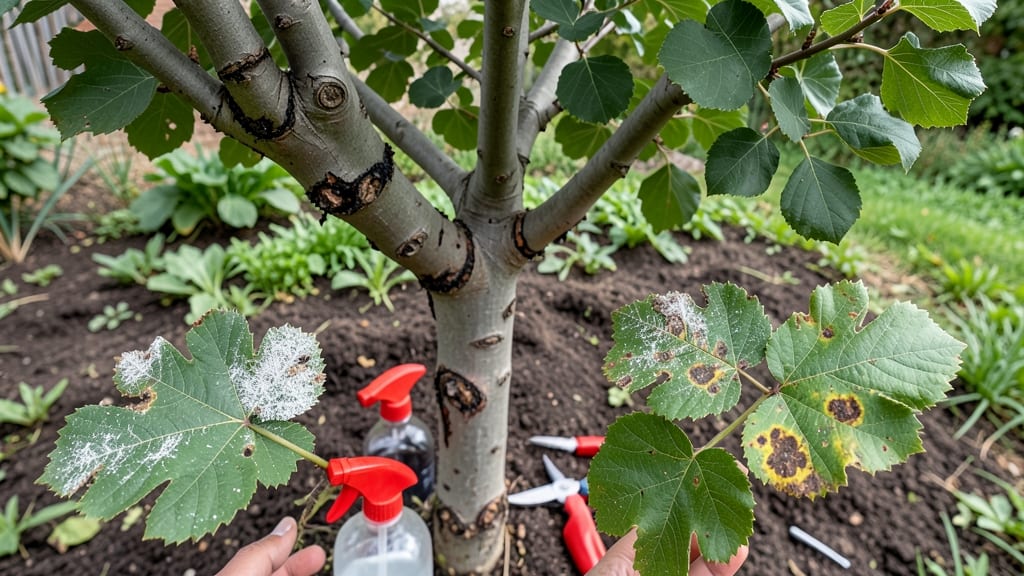
Fruitless mulberry trees are just as susceptible to fruitless mulberry tree diseases as fruiting types—but the damage often looks subtly different. 🌿 I’ve seen powdery mildew turn leaves yellow and drop prematurely, while anthracnose creates sunken black spots that spread like wildfire if you ignore them.
The good news? Fruitless varieties often recover faster because they don’t divert energy to fruit production.
Most problems start with overwatering or poor air circulation, creating the perfect damp conditions for fungal spores. I learned this the hard way when my tree’s leaves curled and developed white, powdery patches—classic powdery mildew.
The key is catching symptoms early: discolored leaves, sticky honeydew, or black spots that ooze when wet.
You’ll restore health with a 3-step approach: prune infected branches (sterilize your tools!), apply neem oil or copper fungicide in the morning, and improve airflow by thinning dense foliage.
Repeat every 7-10 days until new growth appears clean. Fruitless trees bounce back faster than fruiting ones because they focus all their energy on leaves and roots.
Long-term, prevention is easier than cure: water at the base (not overhead), mulch with 3-4 inches of wood chips, and prune in late winter to remove dead wood before spores spread. With these steps, your tree will stay vibrant green and disease-resistant all season.
Root Causes Of Mulberry Tree Ailments
When your fruitless mulberry tree starts showing signs of distress—yellowing leaves, stunted growth, or mysterious spots—it’s often a cry for help from deep-seated issues. Understanding why these problems arise is the first step to restoring your tree’s health.
Below, we break down the most common culprits, from microscopic invaders to environmental stressors, and explain the science behind their damage.
Fungi thrive in moist, warm conditions, making mulberry trees prime targets for diseases like anthracnose, powdery mildew, and root rot. These pathogens spread through spores, which latch onto leaves, stems, or soil and begin feeding on the tree’s nutrients.
- Anthracnose: Caused by the fungus Colletotrichum, this disease creates dark, sunken lesions on leaves and fruit (even if your tree is fruitless, the fungus targets young shoots). It thrives in wet springs and spreads via splashing water or infected tools.
- Powdery Mildew: The fungus Erysiphe coats leaves in a white, powdery film, blocking sunlight and stunting photosynthesis. Poor air circulation (e.g., dense planting or overcrowded branches) accelerates its growth.
- Root Rot: Soil-borne fungi like Phytophthora or Armillaria attack roots in waterlogged or poorly drained soil, cutting off the tree’s water and nutrient supply. Symptoms often appear as wilting or yellowing leaves before root damage is visible.
💡 Pro Tip: Fungal spores love humidity. Prune for airflow, water at the base (not overhead), and avoid mulching too close to the trunk to prevent moisture buildup.
Insects like mulberry pyralid moths, scale insects, and aphids don’t just nibble—they inject toxins, spread viruses, or weaken the tree by sapping sap. Their damage often goes unnoticed until the tree’s vigor plummets.
- Mulberry Pyralid Moths: Their larvae bore into stems and branches, creating tunnels that disrupt nutrient flow. Look for sawdust-like frass (insect droppings) near entry holes.
- Scale Insects: These armored pests suck sap from leaves and bark, leaving sticky honeydew that attracts sooty mold (a secondary fungal infection). Heavy infestations cause leaf drop and stunted growth.
- Aphids: Clusters of these soft-bodied insects distort new growth and excrete honeydew, creating a breeding ground for mold. They thrive in crowded or stressed trees.
🔥 Warning: Some pests, like the mulberry whitefly, also transmit mulberry dwarf virus, which causes leaf curling and reduced photosynthesis—even in fruitless varieties.
Mulberry trees are hardy, but extreme conditions—whether too much sun, too little water, or sudden temperature swings—can trigger defensive (and often harmful) responses. These stressors don’t just harm the tree; they open doors for diseases and pests.
| Stressor | How It Harms the Tree | Signs to Watch For |
|---|---|---|
| Drought | Causes water stress, reducing the tree’s ability to fight off pathogens. Leaves curl inward to conserve moisture, but this also traps humidity and encourages fungal growth. | Wilting, crispy leaf edges, premature leaf drop |
| Overwatering | Leads to oxygen deprivation in roots, inviting root rot. Excess moisture on leaves creates ideal conditions for powdery mildew and anthracnose. | Yellowing leaves, mushy roots, mold on soil surface |
| Temperature Extremes | Cold snaps or heatwaves shock the tree, weakening its immune response. Sudden freezes can burst cells, while prolonged heat increases transpiration (water loss), making the tree more susceptible to pests. | Brown, scorched leaves (heat) or blackened twigs (freeze) |
| Poor Soil | Compacted, nutrient-poor, or overly alkaline/acidic soil starves the tree, making it easier for diseases like verticillium wilt to take hold. | Stunted growth, yellowing between leaf veins, wilting despite adequate water |
✨ Solution: Mulberry trees prefer well-draining, slightly acidic soil (pH 6.0–7.0). Test your soil annually and amend with compost or organic matter to improve resilience.
While mulberry trees are relatively low-maintenance, over-fertilizing or using incompatible pesticides can backfire spectacularly. Excess nitrogen, for example, promotes lush but weak growth—perfect for fungal infections. Meanwhile, broad-spectrum fungicides can kill beneficial microbes that protect the tree’s roots.
- Nutrient Burn: Too much fertilizer (especially synthetic types) damages root tips, reducing water and nutrient uptake. Symptoms mimic drought stress but occur even when soil is moist.
- Pesticide Resistance: Repeated use of copper-based fungicides (common for fungal control) can lead to resistant strains of pathogens like powdery mildew.
- Salt Buildup: Overuse of de-icing salts (in urban areas) or poor-quality water can accumulate in soil, causing osmotic stress and leaf scorch.
🎯 Best Practice: Use a slow-release, organic fertilizer (like compost or worm castings) and alternate fungicide types seasonally to prevent resistance.
Quick Fixes for Mulberry Tree Ailments
Reviving a struggling fruitless mulberry tree starts with identifying the root cause—whether it’s fungal infections, pests, or environmental stress. Below are practical, step-by-step solutions tailored to common issues, along with prevention tips to keep your tree thriving. Let’s get your mulberry back to its healthy, lush self! 🌿💪
Fungal infections thrive in damp, shaded conditions, but they’re beatable with the right care.
🔥 Remove Infected Parts
- Prune away yellowing or spotted leaves, twigs, and branches using sterilized pruners (wipe with rubbing alcohol between cuts).
- Burn or discard (don’t compost!) infected debris to prevent spores from spreading.
🍳 Apply Fungicidal Treatments
- For powdery mildew/anthracnose: Spray with a copper-based fungicide (like copper sulfate) or neem oil solution (1 tbsp neem oil + 1 tsp mild soap per quart of water).
Reapply every 7–10 days until symptoms fade. - For root rot: Improve drainage by amending soil with compost or perlite. If the tree is severely affected, consider replanting in a raised bed with well-draining soil.
🌡️ Adjust Growing Conditions
- Increase airflow by thinning dense foliage or spacing trees 6–10 feet apart.
- Water at the base (avoid overhead sprinkling) and water early in the day so leaves dry quickly.
- Mulch lightly (2–3 inches) with wood chips to retain moisture without suffocating roots.
Pests weaken trees by sucking sap or tunneling into wood—here’s how to evict them.
👨🍳 Blast Off Pests with Natural Sprays
- For scale/aphids: Mix 1 tsp dish soap + 1 quart water and spray directly on pests. Repeat every 5–7 days for 2–3 weeks.
- For borers: Apply beneficial nematodes (like Heterorhabditis bacteriophora) to the soil.
They’ll seek out and kill larvae naturally.
🔪 Prune and Trap
- Cut out heavily infested branches and seal wounds with pruning paint.
- Set up pheromone traps for borers (available at garden centers) to monitor and reduce populations.
🌱 Strengthen Tree Defenses
- Fertilize lightly with a balanced 10-10-10 NPK fertilizer in early spring to boost immunity.
- Encourage natural predators: Ladybugs and lacewings feast on aphids—plant companion flowers like dill or marigolds nearby.
Even fruitless mulberries need the right conditions to stay healthy.
💧 Hydrate Properly
- Deep-water the tree 1–2 times per week (1–2 inches of water per session) during dry spells.
- Mulch heavily (3–4 inches) with straw or shredded bark to lock in moisture.
🌞 Shield from Harsh Sun
- Provide afternoon shade with a light cloth shade cloth (30–50% coverage) if your tree is in a scorching location.
- Avoid transplant shock: If recently planted, water daily for the first 2 weeks and avoid heavy pruning for 6 months.
🌱 Test and Amend Soil
- Check pH (ideal: 6.0–7.0). Use a soil test kit and adjust with lime (to raise pH) or sulfur (to lower pH).
- Add organic matter: Mix in compost or aged manure to improve drainage and nutrient availability.
- 💡 Sanitize tools after pruning to prevent cross-contamination.
- 🎯 Monitor regularly: Inspect leaves and bark weekly for early signs of trouble.
- 🌡️ Time it right: Prune in late winter/early spring to avoid stressing the tree during growing season.
- ✨ Choose resistant varieties: Some fruitless mulberry cultivars (like Morus alba ‘Purple Leaf’) are less prone to diseases.
By tackling issues early and methodically, your fruitless mulberry tree can bounce back stronger than ever. Consistency is key—stick with these fixes, and you’ll be rewarded with vibrant foliage and minimal future problems! 🌟🌳
Frequently asked questions
Are fruitless mulberry trees more or less prone to diseases than fruiting varieties?
Fruitless mulberry trees are generally less susceptible to certain diseases like anthracnose and powdery mildew because they don’t divert energy to fruit production. However, they can still suffer from fungal infections and pests—especially if growing conditions are poor. The key difference is recovery speed: fruitless types bounce back faster when treated.
What are the first signs my fruitless mulberry tree has powdery mildew?
Look for white, powdery patches on upper leaf surfaces—especially on younger leaves. As it progresses, leaves may yellow, curl, or drop prematurely. Check undersides too, where spores often hide. Early intervention with neem oil or copper fungicide stops it from spreading.
Can I use the same fungicide treatments on my fruitless mulberry as I would on fruiting varieties?
Yes, but adjust timing and focus. Fruitless trees don’t need fruit-specific treatments, so prioritize preventative sprays (like neem oil) during humid months. Avoid copper-based fungicides in late summer
How do I know if my tree’s yellow leaves are from disease or just nutrient deficiency?
Disease-related yellowing often appears uneven with spots or powdery coatings, while nutrient deficiency causes uniform yellowing (especially between veins). Check soil pH—mulberries prefer 6.0–7.0. If leaves are small and pale, it’s likely nitrogen deficiency; if they’re crispy, it’s drought stress.
Will pruning help prevent diseases in my fruitless mulberry?
Prune in late winter to remove dead/diseased branches and improve airflow. Sterilize tools with rubbing alcohol between cuts, and avoid heavy pruning during growing season. Thinning dense foliage reduces humidity—where fungal spores thrive.