
Blooming
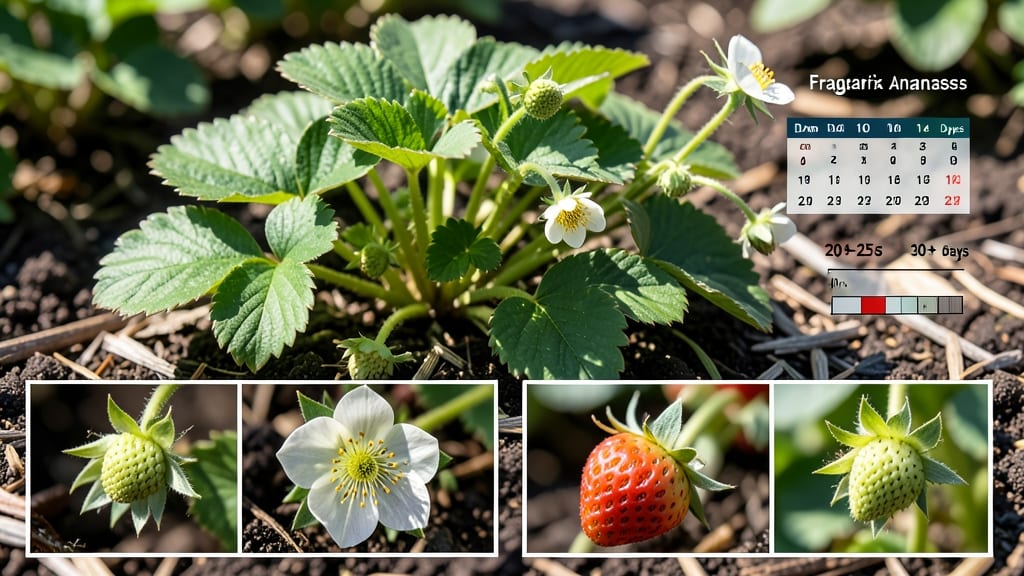
Strawberries usually develop fruit 14 to 21 days after flowering, though this window shifts based on the plant type, local climate, and growing conditions. June-bearing varieties tend to take the full range, while everbearing and day-neutral types often produce fruit faster when given optimal warmth and sunlight.
Understanding this timeline helps gardeners plan better. The fruit's journey begins when pollinated flowers transform into tiny green berries, gradually swelling as sugars develop. 🌱 June-bearing plants, which produce one big harvest, need that full 21-day window because they focus all energy on ripening.
Everbearing types, however, can produce multiple smaller harvests because their growth cycle resets more quickly—sometimes even within 14 days under perfect conditions. Temperature plays a huge role: cooler weather slows sugar conversion, while consistent warmth speeds up the process.
For gardeners eager to see fruit sooner, focus on pollination (bees or gentle shaking helps) and consistent moisture without overwatering. Removing old leaves improves airflow, while balanced fertilizer supports steady growth.
The key is patience—even the fastest varieties need at least two weeks from flower to fruit, and rushing can stress the plant.
💡 In This Article
- Strawberry Flowering to Fruit Timeline by Variety
- Optimizing Conditions for Faster Strawberry Fruit Development
Strawberry flowering to fruit timeline by variety
The journey from strawberry flower to ripe fruit begins with pollination, where bees or wind transfer pollen between blossoms. Once pollinated, the flower's petals wilt and drop, leaving behind a tiny green berry. This marks day 0 of fruit development, and from here, the timeline varies dramatically by variety.
June-bearing strawberries, like 'Jewel' or 'Chandler,' typically take the full 21 days because they devote all their energy to a single massive harvest. Their fruit swells gradually, with sugar content building slowly over cooler spring nights—a process called vernalization that primes them for this extended cycle.
Everbearing varieties, such as 'Seascape' or 'Ozark Beauty,' operate on a faster track, often producing fruit in just 14 days under ideal conditions. These plants can produce multiple flushes of flowers throughout the season, with each cycle resetting the clock.
Day-neutral types like 'Albion' or 'Sequoia' behave similarly, though their speed depends heavily on temperature. When daytime highs reach 75-85°F and nights stay above 55°F, fruit development accelerates—sometimes even reaching 10-12 days in warm climates. The key difference? Everbearing and day-neutral plants prioritize continuous growth over one big harvest.
What most gardeners miss is how light exposure affects this timeline. Strawberries need 6-8 hours of direct sunlight daily for optimal photosynthesis, which fuels fruit growth. Shade delays sugar accumulation, making berries smaller and less flavorful.
I've seen shaded plants take up to 30% longer to develop fruit compared to sun-drenched patches. The fruit's color shift—from green to white, then pink, and finally deep red—is your visual cue for progress.
A fully ripe strawberry will also feel firm yet slightly soft to the touch, with a sweet aroma that fills the air. 🌸
Temperature extremes can throw off the timeline completely. Below 50°F, fruit development stalls as enzymes slow down. Above 90°F, flowers may drop before pollination occurs, a condition called heat stress.
In my own garden, I've noticed that strawberries planted in USDA Zone 7 or warmer often fruit 5-7 days faster than those in cooler Zones 5-6. This is why southern gardeners can enjoy multiple harvests in a single season while northern growers get just one.
Here’s a quick comparison of the three main types:
- June-bearing: 21 days (single harvest, cooler climates)
- Everbearing: 14-18 days (multiple harvests, moderate climates)
- Day-neutral: 10-14 days (continuous harvest, warm climates)
Pro tip: If your strawberries aren’t fruiting within 21 days, check for pollination issues (hand-pollinate with a soft brush) or nutrient deficiencies (add compost or a balanced 10-10-10 fertilizer).
The right conditions can shave days off the timeline—and that’s the difference between a small harvest and a bountiful one. 🌱