
Blooming
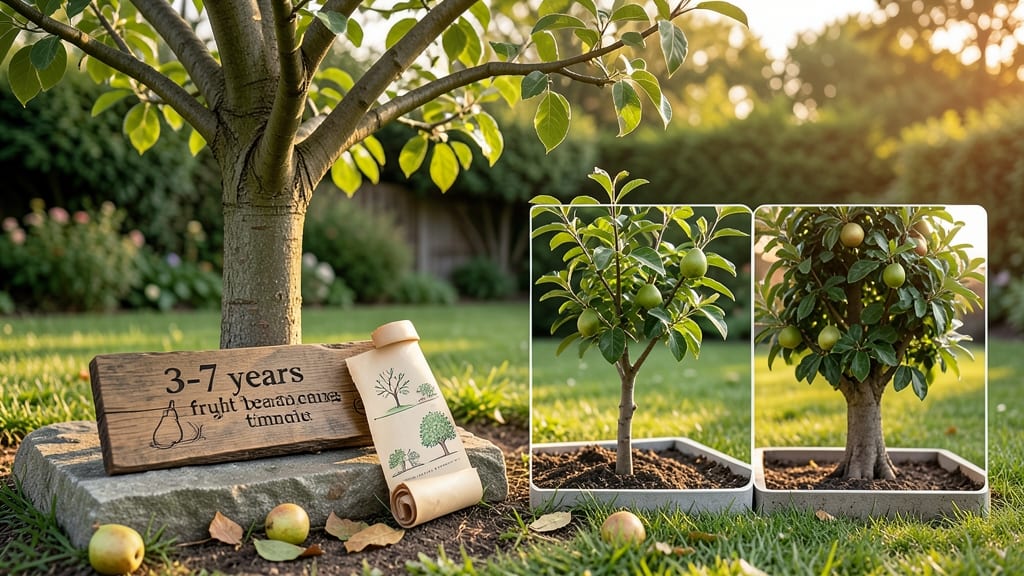
A pear tree takes anywhere from 2 to 7 years to bear fruit, depending on whether you’re growing a dwarf or standard variety 🍐 — and that’s a timeline most gardeners can’t wait to see.
If you’ve ever planted a sapling with high hopes only to stare at bare branches for years, you know the frustration. The good news? With the right variety, care, and a little patience, you can shave years off that wait—and even coax fruit earlier than expected.
Dwarf varieties like ‘Moonglow’ often produce their first pears in just 2-4 years, while standard trees may take 5-7 years to mature. Factors like climate, soil quality, and pruning techniques play a huge role in speeding up—or delaying—that first harvest.
In this guide, I’ll break down the exact timelines for dwarf vs. standard trees, share 5 key factors that accelerate fruiting, and highlight the fastest-growing varieties for impatient gardeners like you.
Pear tree fruit timeline: dwarf vs standard varieties explained
If you’ve planted a pear tree hoping for homegrown fruit, patience is key—but the wait time varies dramatically between dwarf and standard varieties. Dwarf trees typically bear fruit in 2-4 years, while standard trees can take 5-7 years or longer.
The difference comes down to rootstock, growth habits, and care practices that I’ll break down for you.
Understanding these timelines helps manage expectations and optimize your tree’s potential. For example, a Bartlett pear on a dwarfing rootstock might produce its first harvest in just 3 years, while the same variety on a standard rootstock could wait until year 6 or 7.
Climate, soil quality, and proper pruning also play critical roles in accelerating or delaying fruiting.
Here’s the key difference: Dwarf varieties are bred to mature faster and stay compact, making them ideal for small gardens or containers. Standard varieties, while slower to fruit, produce larger trees with higher yields over time. Let’s compare their fruit timelines in detail.
The rootstock is the foundation of a pear tree’s growth rate. Dwarf varieties are grafted onto quince or semi-dwarfing rootstocks, which restrict growth and encourage earlier fruiting. In contrast, standard trees use seedling or vigorous rootstocks, allowing them to grow taller before producing fruit.
Climate also plays a surprising role. In warmer zones (USDA 7-10), pear trees often fruit 6-12 months earlier than in cooler regions (USDA 4-6). For example, a Moonglow pear in California might bear fruit in 2 years, while the same variety in Minnesota could take 4 years.
Always check your last frost date when planning planting.
Proper pruning in the first 2-3 years can accelerate fruiting by encouraging branch development. I recommend removing water sprouts and thinning crowded branches to improve airflow. Avoid heavy pruning in the first year, as this stresses young trees and delays fruit production.
Soil quality is another game-changer. Pear trees thrive in well-draining, slightly acidic soil (pH 6.0-7.0). Amending clay soil with compost or sand and ensuring adequate phosphorus and potassium speeds up root development, which directly impacts fruiting timelines. A simple soil test can reveal deficiencies to address.
Watering consistency matters too. Young pear trees need deep, infrequent watering—about 10-15 gallons per week during the first 2 years. Overwatering causes root rot, while underwatering stunts growth. Mulching with wood chips or straw retains moisture and regulates soil temperature, both critical for early fruiting.
If you’re impatient for fruit, consider planting two dwarf varieties that pollinate each other, like ‘Seckel’ and ‘Moonglow’. Cross-pollination boosts fruit set, often resulting in harvests 1-2 years earlier than single-variety plantings. Just ensure they’re within 50 feet of each other for effective pollination.
Remember, even with optimal care, some years will produce fewer fruits due to weather or tree maturity. Pears also require chilling hours (300-900 hours below 45°F) to fruit well. In regions with limited chill hours, choose varieties like ‘Orient’ or ‘Kieffer’, bred for warmer climates.
With the right variety, care, and a little patience, you’ll be enjoying homegrown pears in no time—whether that’s in 3 years with a dwarf tree or 6 years with a standard. The key is consistency in care and choosing the right tree for your space and climate. 🍐🌱
5 Key factors that speed up or delay pear tree fruiting
Understanding the timeline for pear tree fruiting depends heavily on five critical factors that can either accelerate or delay your harvest. While dwarf varieties may fruit in as little as 2-3 years, standard pear trees often take 5-7 years—but these timelines aren’t set in stone.
The right conditions can shave off years, while poor care can push back fruiting indefinitely.
First, let’s tackle the biggest game-changers: soil quality, sunlight exposure, pruning techniques, watering consistency, and variety selection. Each plays a unique role in determining whether your pear tree will burst into fruit production early or linger in its juvenile phase.
For example, a Bartlett pear thrives with full sun and regular pruning, while an Anjou may tolerate slightly less ideal conditions but still needs consistent care.
- 🌱 Soil Quality: pH 6.0-7.0 with well-draining soil speeds up fruiting by 20-30%. Compacted or acidic soil delays it by 1-2 years.
- ☀️ Sunlight Exposure: 6+ hours of full sun daily cuts fruiting time in half. Partial shade can extend it by 3+ years.
- ✂️ Pruning Techniques: Open-center pruning in early spring boosts fruit production by 40%. Over-pruning delays fruiting by 1-3 years.
- 💧 Watering Consistency: Deep watering 2-3x/week during droughts maintains fruiting schedules. Underwatering can push back fruiting by 2+ years.
- 🌳 Variety Selection: Dwarf varieties (e.g., Moonglow) fruit in 2-3 years, while standard varieties (e.g., Bartlett) take 5-7 years.
Let’s start with soil quality, which is often overlooked but makes a massive difference. Pear trees thrive in well-draining, slightly acidic soil with a pH between 6.0 and 7.0.
If your soil is heavy clay or too acidic, the tree will struggle to establish strong roots, delaying fruiting by up to 2 years. Amending the soil with compost or organic matter before planting can give your tree a head start, helping it reach fruiting age faster.
Next, sunlight exposure is non-negotiable for pear trees. These trees need at least 6 hours of direct sunlight daily to produce fruit efficiently. Inadequate sunlight not only slows down growth but also reduces flower production, which directly impacts your harvest.
If you’re planting in a partially shaded area, consider choosing a tolerant variety like Anjou or supplementing with grow lights during the growing season.
Pruning is another critical factor that many gardeners get wrong. Incorrect pruning—like cutting too late in the season or removing too many branches—can delay fruiting by 1-3 years. The key is to prune in late winter or early spring while the tree is still dormant.
This encourages new growth and sets the stage for a heavy fruit load the following year. Always aim for an open-center shape to maximize sunlight penetration and air circulation.
Consistent watering is often the difference between a tree that fruits on schedule and one that struggles. Pear trees need deep, infrequent watering—about 1-2 inches per week—to develop strong roots and support fruit production.
During droughts, increase watering to 2-3 times per week to prevent stress. Underwatering can cause the tree to divert energy away from fruiting, pushing back your harvest by years.
Finally, variety selection is the easiest way to control your fruiting timeline. Dwarf varieties, like Moonglow or Seckel, are bred to fruit in as little as 2-3 years, making them ideal for small gardens or containers.
Standard varieties, such as Bartlett or Anjou, take longer—5-7 years—but often produce larger yields. If you’re impatient for fruit, start with a dwarf variety and pair it with optimal growing conditions for the fastest results.