
Planting
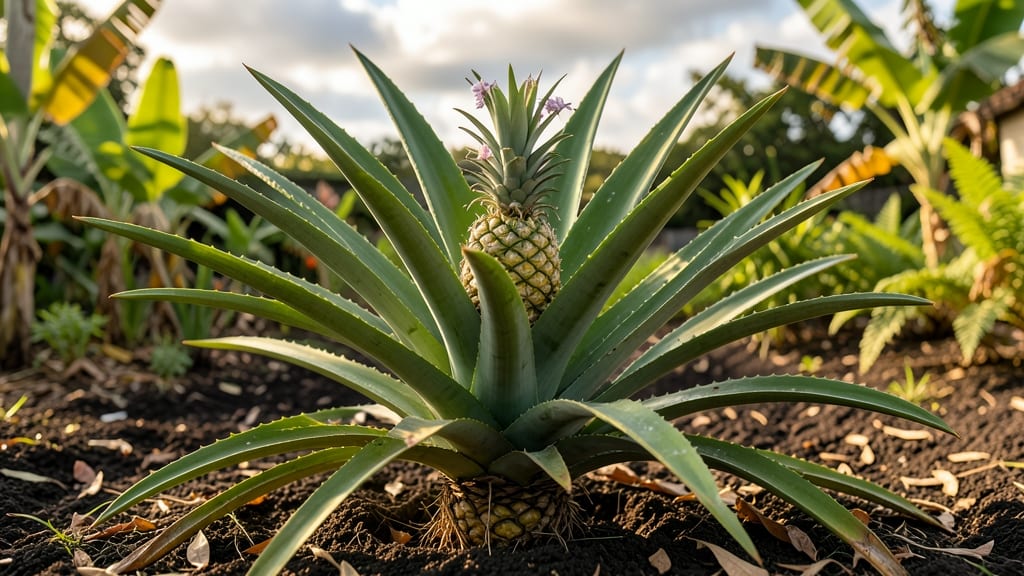
How many fruits does a pineapple plant produce? A pineapple plant produces only one fruit per stem in its lifetime, a unique trait among tropical plants, as it grows from a single flowering spike called the ‘crown’ that develops into a single pineapple after 18-24 months. Offshoots (pups) can later produce additional fruits but require separation and replanting.
A pineapple plant's single-fruit nature comes from its botanical structure. Unlike other tropical plants that produce clusters, pineapples develop from one central flower spike. 🌱 This spike matures into the fruit over 18-24 months, using all the plant's energy.
The good news? Each mature pineapple plant grows 1-8 "pups" (offshoots) at its base—these can be replanted to produce new fruits, effectively multiplying your harvest over time.
This one-fruit-per-stem rule makes pineapple cultivation an investment in patience.
The plant's energy focus on producing that single, large fruit explains why it's so sweet and flavorful. 💛 For gardeners, this means planning ahead: if you want multiple pineapples, you'll need to nurture those pups into separate plants, giving each its own chance to develop that signature tropical fruit.
💡 In This Article
- Why Pineapple Plants Grow Just One Fruit Naturally
- How to Maximize Pineapple Harvests from a Single Plant
Why pineapple plants grow just one fruit naturally
A pineapple plant's single-fruit production stems from its unique monocarpic nature—meaning it invests all its energy into one massive flowering event.
Unlike strawberries that produce multiple fruits from separate flowers or figs that develop from a cluster of tiny flowers, pineapples grow from a single inflorescence, a dense cluster of flowers that forms at the plant's center.
This spike, called the "crown," contains hundreds of tiny flowers that develop synchronously into a single fruit over 18-24 months. 🌱 The plant's hormones, particularly auxin and cytokinin, regulate this process, ensuring all energy flows toward fruit maturation rather than spreading across multiple fruits.
The pineapple's growth habit contrasts sharply with other tropical plants. For example, banana plants produce multiple fruits from a single stem, while citrus trees bear dozens of oranges. The pineapple's singular focus explains its size—weighing 3-10 pounds—as the plant prioritizes one large, nutrient-dense fruit over many smaller ones.
This energy allocation also makes pineapples particularly sweet, as the plant concentrates sugars in the fruit during ripening. The trade-off? The mother plant typically dies after fruiting, leaving only the pups to continue the cycle.
What makes this even more fascinating is the phytohormone balance at play. Auxin, produced at the flower spike, suppresses lateral bud growth, preventing additional fruit formation. Meanwhile, cytokinins promote cell division in the developing fruit.
This hormonal lockstep ensures the pineapple's signature shape and texture—juicy, fibrous, and perfectly balanced between sweetness and acidity. 💛 Without this precise regulation, the plant would either produce multiple small fruits or none at all, illustrating nature's efficiency in resource allocation.
This single-fruit mechanism isn't just a quirk—it's an evolutionary adaptation. Pineapples evolved in South America's harsh environments, where producing one large, nutrient-rich fruit increased survival chances for offspring (the pups).
Compare this to strawberries, which scatter seeds widely through many small fruits, or figs that rely on animal dispersal from clustered fruits. The pineapple's strategy prioritizes quality over quantity, making each fruit a concentrated package of nutrients and flavor.
For gardeners, this botanical reality means planning ahead. If you want multiple pineapples, you'll need to harvest and replant the 1-8 pups that grow at the plant's base. Each pup is a genetically identical clone of the mother plant, ensuring consistent flavor and size.
The key is patience: a pup takes 18-24 months to mature and fruit, just like its parent. This delayed gratification is why pineapple cultivation feels like a long-term relationship with your plants.
One common misconception is that pineapple plants can produce multiple fruits simultaneously. While some commercial growers use hormone treatments to encourage additional flowering spikes, this is rare in home gardens and can stress the plant.
Nature's design favors the single-fruit approach, which explains why wild pineapples are so prized—each one is a masterpiece of tropical botany. 🌿