
Picking
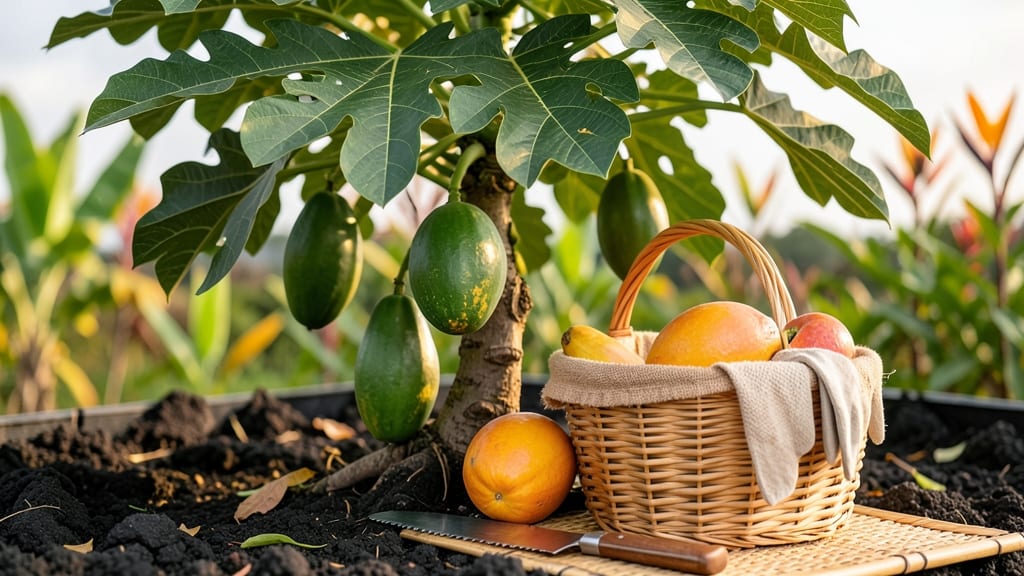
Picking a papaya at its peak sweetness saves you from mushy disappointment or bland underripe fruit. 🌱 The secret lies in three simple checks—color, scent, and that satisfying give when you press gently—that tell you exactly when to pluck it from the tree.
Start with color: ripe papayas turn a deep golden-yellow or orange, sometimes with reddish blushes near the stem. Avoid green ones (still hard) or fully red ones (overripe). Next, sniff near the stem—ripe papayas smell sweetly tropical, like a mix of cantaloupe and honey.
No scent? Not ready yet. Then comes the pressure test: press the fruit gently near the stem. It should yield slightly, like a ripe peach, but not feel mushy. A firm papaya needs more time; one that’s too soft is past its prime.
Size matters too—fully ripe papayas usually weigh 1-2 pounds, depending on the variety. Common mistakes? Picking based on size alone or ignoring the stem end’s color changes. Pro tip: Harvest in the morning when sugars peak. Now go find that perfect papaya!
📚 In This Guide
- What you need
- Instructions
- Tips and common mistakes
- Wrapping up and next steps
What you need
- ● 1-2 ripe (or nearly ripe) papayas – Aim for Carica papaya varieties like 'Solo,' 'SunUp,' or 'Honey Dew' for the best flavor.
- ● Sharp knife or shears – A chef’s knife or pruning shears (for cutting stems) works best.
- ● Small bowl or plate – To catch any juice or seeds when cutting open.
- ● Spoon or fork – For scooping out seeds and checking ripeness.
- ● Paper towels or cloth – To wipe sticky hands or fruit residue.
- ● Scented or unscented lotion – Papaya latex (from unripe fruit) can irritate skin—keep this handy!
- ● Gloves (nitrile or latex-free) – If you’re sensitive to papaya latex or handling multiple fruits.
- ● Small scale (0.1 lb increments) – For weighing your haul if you’re buying by the pound.
- ● Reusable produce bag – Eco-friendly way to transport your papayas.
- ● Ripening trick: A brown paper bag – Speeds up ripening if you pick a slightly green one!
How to pick a ripe papaya: the 3 telltale signs
Papayas ripen fast—miss the window, and you’ll end up with mealy flesh or a rock-hard fruit.
🌿 Step 1: Check the Skin Color for Ripeness
Papayas change color dramatically as they ripen. When unripe, they’re solid green—no give, no sweetness. Look for a shift to yellow-orange or salmon-pink on the skin, especially near the stem. That’s your cue it’s ready. If it’s still mostly green with just a few yellow patches, wait another day or two.
Here’s the thing—some varieties stay green longer. If you’re unsure, gently squeeze the fruit. A ripe papaya yields slightly to pressure, like a soft melon. If it feels firm like a baseball, it’s not ready yet. Overripe papayas get mushy, so don’t wait too long after the color shift.
🌱 Step 2: Smell the Stem End for Sweetness
The stem end is where all the flavor hides. A ripe papaya gives off a sweet, tropical aroma—think honey, mango, and a hint of vanilla. If it smells bland or slightly fermented (like overripe fruit), it’s past its prime. Sniff carefully: that sweet scent means the sugars inside are peaking.
I know it seems weird to sniff fruit, but trust me—this is the fastest way to confirm ripeness. If you’re buying from a store, grab a few and compare the scents. The one with the strongest sweetness will be the juiciest and most flavorful. Pro tip: Avoid papayas with a sour or alcoholic smell—they’ve gone bad.
☀️ Step 3: Test the Weight and Stem for Readiness
A ripe papaya feels heavy for its size, almost like it’s packed with juice. Pick it up—if it’s light, it’s underripe. The stem should also give way slightly when you gently twist it. If it snaps off easily, that’s a good sign. If it resists, the fruit’s still firm and needs more time.
Check the skin texture too. It should feel slightly rough or bumpy, not smooth. Smooth skin usually means it’s overripe. And here’s a trick: Run your thumb over the skin near the stem. If you feel tiny, soft spots, those are the seeds starting to soften—another ripeness signal.
⏰ Step 4: Ripen at Home if Needed (2-Day Speed Method)
If your papaya is close but not quite ripe, don’t toss it. Place it in a paper bag with a banana or apple for 1-2 days. The ethylene gas from the other fruit speeds up ripening. Check daily—it’ll soften fast once started. Remove it from the bag as soon as the skin turns yellow-orange.
Never refrigerate an unripe papaya—cold stops the ripening process. Once ripe, you can store it in the fridge for 3-4 days, but eat it fast. Overripe papayas turn mushy and lose their vibrant color. If you’ve got a few days to wait, leave it at room temperature on the counter instead.
Tips & tricks for perfect papaya selection
Don't let the papaya ripeness game frustrate you—these insider tricks will help you pick the sweetest, juiciest fruit every time.
Color Consistency Matters: In Step 1, when checking for yellow-orange or salmon-pink skin, focus on the area near the stem first. This is where ripening begins, and the color change is most noticeable. If you see uneven coloring with large green patches, even after 2 days, that papaya likely won't ripen properly. I've learned this the hard way—those stubborn green spots often stay that way, no matter how long you wait.
Scent Test is Non-Negotiable: The smell test in Step 2 is your secret weapon. If you're unsure about the scent, compare it to a ripe mango or pineapple—similar tropical sweetness means you're on the right track. I always carry a small bag of ripe bananas in my car to test against when shopping. The stronger that sweet aroma, the more flavor-packed the papaya will be. That vanilla note? That's the real deal—don't settle for anything less.
Weight Check Reveals Juiciness: When testing weight in Step 3, imagine holding a water balloon versus a tennis ball. A ripe papaya should feel like the water balloon—heavy for its size. This weight comes from all that juicy flesh inside. I've found that papayas from 12-16 ounces tend to have the best balance of size and ripeness. If it feels light, it's still firm inside and won't be sweet.
Storage Hack for Ripeness: For the 2-day ripening method in Step 4, place the papaya in a paper bag with a banana or apple, but leave it in a warm spot—not near direct sunlight. I've had the best results when I put the bag in a cupboard near my oven (when it's off). The heat from the oven's residual warmth helps speed up the ripening process without cooking the fruit. And remember, once ripe, papayas only stay perfect for 3-4 days in the fridge—eat them fast!
Pro Tips for Pick A Papaya Fruit
- Don't let the papaya ripeness game frustrate you—these insider tricks will help you pick the sweetest, juiciest fruit every time.
- Color Consistency Matters: In Step 1, when checking for yellow-orange or salmon-pink skin, focus on the area near the stem first.
- Scent Test is Non-Negotiable: The smell test in Step 2 is your secret weapon.
Frequently asked questions
Got questions about picking the perfect papaya? You’re not alone! Here are some of the most common queries—and their answers—to help you score a ripe, delicious fruit every time.
How do I know if a papaya is ripe vs. overripe?
A ripe papaya should yield slightly to gentle pressure (like a ripe avocado) and have a sweet, musky scent near the stem. If it’s too firm, it’s underripe; if it’s mushy or smells fermented, it’s overripe. Pro tip: Check for a golden-orange hue—green means unripe, while fully yellow or brown spots mean it’s past its prime.
How long does a ripe papaya last?
Once ripe, store papayas at room temperature for 2–3 days to enjoy at peak sweetness. For longer storage, refrigerate (uncut) for up to 5–7 days, though texture may soften faster. Cut papayas last 1–2 days in the fridge—eat them fresh or freeze for smoothies!
Can I pick a papaya from a tree at home?
Yes! If you have a papaya tree, wait until the fruit is fully colored (golden-orange) and slightly soft when gently squeezed. Twist gently to detach it from the stem—if it resists, it’s not ready. Warning: Unripe papayas are seedy and bland; let them ripen indoors for 2–3 days.
What’s the best way to buy papayas if I can’t find ripe ones?
Opt for firm but slightly yielding papayas with a sweet aroma. Avoid bruised or shriveled skins. For unripe papayas, speed up ripening by placing them in a paper bag with a banana (ethylene gas from the banana helps). Check daily—ripe in 2–4 days!
My papaya is ripe but has black spots—is it bad?
Small black spots are normal and don’t affect taste or safety. However, if the spots are large, soft, or moldy, toss it. Cut away any discolored areas before eating. Fun fact: Papayas with spots often have more lycopene (a healthy antioxidant)!
Wrapping up and next steps
Picking the perfect papaya is all about trusting your senses—color, scent, and touch are your best guides! 🌟 A ripe papaya should boast a vibrant hue, emit a sweet aroma, and yield slightly to gentle pressure.
With these simple tips, you’ll always bring home a juicy, flavorful fruit ready to elevate your meals or snacks.
Now that you’re a papaya pro, go ahead and try it out at your local market or grocery store. Share your newfound expertise with friends or family—you’ll be the one they turn to for the sweetest, ripest papayas around! 🍈✨