
Landscaping
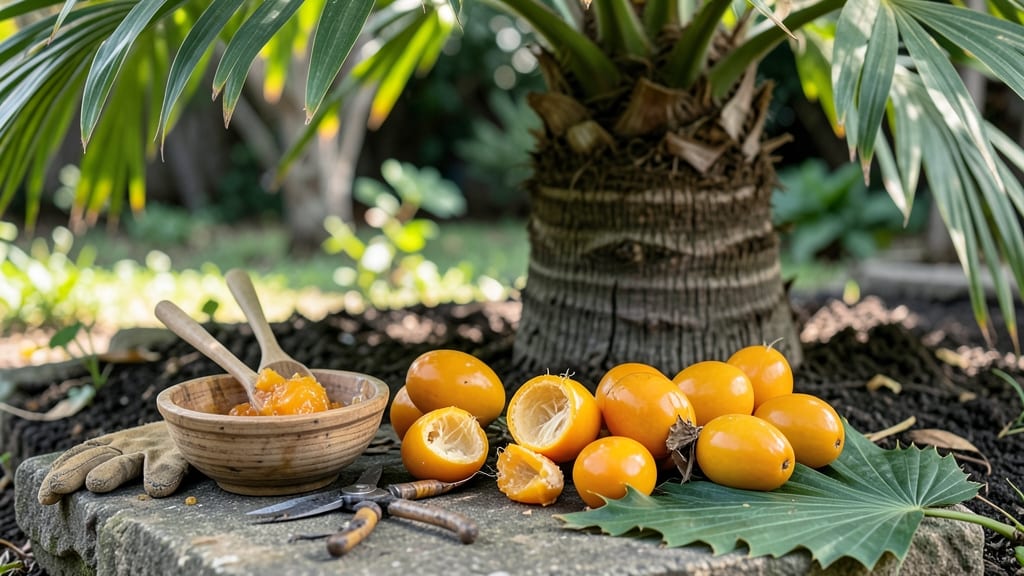
Creating pindo palm fruit jelly from scratch involves blending ripe pindo palm fruit pulp with water, sugar, and citrus juice, then simmering until it reaches a thick, gel-like consistency. The result is a vibrant, translucent spread with tropical undertones that pairs beautifully with pastries or yogurt.
This tropical jelly captures the pindo palm's natural sweetness while maintaining its signature floral notes. 🌿 The fruit's high pectin content—similar to citrus or berries—helps create a firm set without needing additional thickeners. For best results, use fully ripe fruit, as underripe pulp can yield a tart, grainy texture.
Many home cooks enhance the flavor by adding a splash of vanilla extract or a pinch of cinnamon during the final stages of cooking.
What sets pindo palm jelly apart is its unique balance of sweetness and subtle bitterness, which makes it more complex than traditional fruit jellies. The slow simmering process (typically 30-45 minutes) is crucial—it prevents the sugar from overpowering the delicate fruit flavors while ensuring a smooth, glossy finish.
Once set, this jelly keeps well in the fridge for up to 2 weeks, though its vibrant color may fade slightly over time.
💡 In This Article
- Understanding Pindo Palm Fruit and Its Jelly-Making Properties
- Exact Ingredient Ratios and Step-by-Step Jelly Preparation Guide
Understanding pindo palm fruit and its jelly-making properties
The pindo palm fruit (Butia capitata), native to South America, produces a jelly with unique properties that set it apart from other tropical fruits.
Its high pectin content—ranging from 0.8% to 1.2% of its dry weight—is what makes it ideal for jelly-making, similar to apples or citrus fruits but with a distinct floral undertone.
The pectin in pindo palm acts as a natural gelling agent, binding with sugar and water to create that signature wobbly yet firm texture we love in jellies.
Ripeness is critical: fully ripe pindo palm fruit has a deep amber hue and yields a pulp that's naturally sweet with a honey-like richness.
Underripe fruit, however, contains more tartness and less pectin, leading to a jelly that either fails to set properly or develops an unpleasant graininess. 🌟 The fruit's natural sugar content (around 12-15%) also contributes to the jelly's sweetness, though most recipes still require added sugar to achieve the right balance—typically 1:1.5 ratio of fruit pulp to sugar by weight.
What makes pindo palm jelly visually striking is its vibrant amber color, which comes from carotenoids in the fruit's flesh. Unlike citrus-based jellies that often turn cloudy, pindo palm jelly maintains a translucent, glossy finish when properly prepared.
This is partly due to the fruit's lower acidity (pH 4.2-4.5) compared to lemon or lime, which helps preserve the natural pigments during cooking. Traditional harvesters often collect the fruit when it naturally drops from the tree, as this indicates peak ripeness and optimal jelly-making properties.
Comparing it to other palm fruit jellies, pindo stands out for its milder flavor profile. For instance, acai palm jelly tends to be more earthy and less sweet, while coconut water-based jellies lack the depth of pindo's floral notes.
The jelly's texture is also unique—it achieves a gel strength of 300-400 grams/cm² when set properly, giving it that perfect "jiggle" without being too soft or too firm. This balance is what makes it ideal for spreading on toast or pairing with cheese.
One fascinating aspect is how the fruit's natural enzymes break down during cooking. The slow simmering process (30-45 minutes) at 212°F activates these enzymes just enough to soften the pulp while preserving its structural integrity.
Overcooking, however, can lead to a mushy texture or even separation, which is why maintaining a gentle boil is essential.
The addition of lemon juice (about 1 tablespoon per cup of pulp) not only enhances flavor but also helps stabilize the pH, preventing the jelly from becoming too acidic or too alkaline.
For those new to pindo palm jelly, it's worth noting that the fruit's outer husk must be removed before processing. The edible portion is the bright orange pulp inside, which can be extracted by hand or with a food mill.
This step is crucial—any fiber or skin left in the mixture can create a gritty texture in the final jelly. Once you've mastered the extraction, the jelly-making process becomes straightforward, yielding a product that's both visually stunning and delicious.