
Blooming
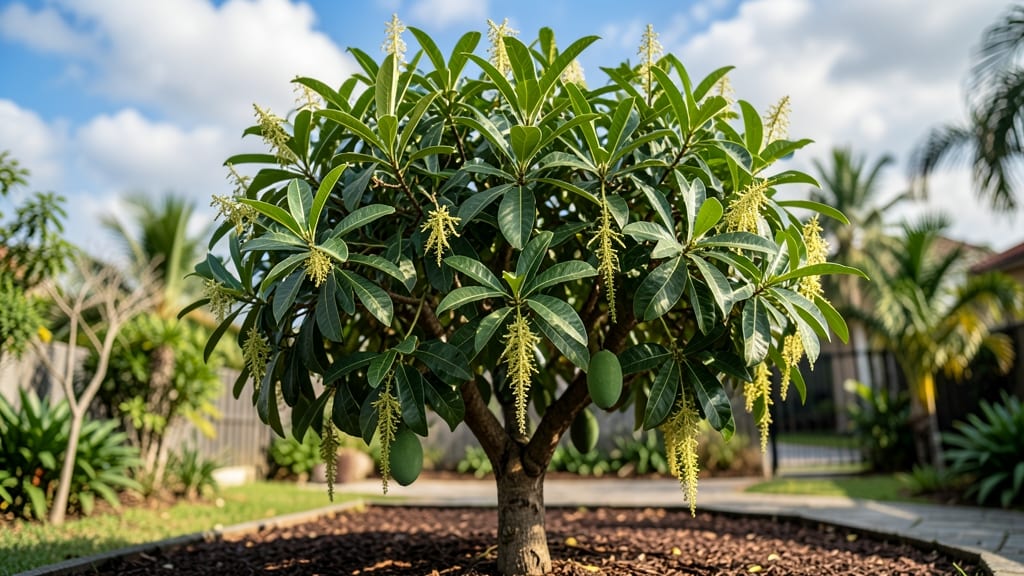
A mango tree takes 2 to 5 years to produce fruit, but the wait depends on your climate, variety, and care—so let’s cut through the guesswork.
If you’ve ever dreamed of plucking ripe, juicy mangoes straight from your backyard tree, patience is key—because mango trees aren’t exactly overnight fruit producers. But how long exactly should you wait before expecting that first harvest?
In General (Tropical/Subtropical) zones 10-11, dwarf varieties like ‘Cogshall’ may bear fruit in as little as 3 years, while standard types can take up to 5+ years. The key? Proper soil, sunlight, and a little extra love during those early years.
Below, I break down the year-by-year growth stages, the factors that speed up (or delay) fruiting, and the telltale signs your 🥭 tree is finally ready to reward you with its first sweet harvest.
Mango tree fruit production timeline: year-by-year growth stages
Growing a mango tree from a tiny seedling to a fruit-bearing giant requires patience and proper care. Unlike fast-growing annuals, mango trees (Mangifera indica) typically take 3 to 6 years to produce their first harvest, with full fruiting capacity often reached by year 5 or 6.
However, this timeline can vary based on variety, climate, and growing conditions. Understanding each growth stage helps you set realistic expectations and optimize care for faster fruit production.
The journey begins with a seedling or grafted sapling, where the first 3 years focus on root and trunk development. During this phase, your tree prioritizes building a strong structural foundation—critical for supporting future fruit loads.
In years 3 to 5, you’ll notice the first signs of flowering, though fruit may not fully ripen. By year 5 and beyond, a healthy mango tree can produce 50 to 100+ fruits annually, depending on the variety and care provided.
Climate plays a massive role in this timeline. Mangoes thrive in USDA zones 10-11 and require 300+ frost-free days. In cooler microclimates (like zone 9b), growth slows, delaying fruiting by 1 to 2 years. Meanwhile, tropical regions like Florida or Hawaii may see earlier flowering, with some dwarf varieties bearing fruit in as little as 2 to 3 years under ideal conditions.
In year 1, your mango tree will focus on root development and early trunk growth. You’ll see it shoot up to 2 to 5 feet tall, but it’s not yet ready for flowering.
This stage is all about building a sturdy foundation, so prioritize well-draining soil, full sun, and consistent watering. Avoid heavy fertilization, as it can encourage leafy growth at the expense of root strength.
By year 2, your tree will reach 5 to 10 feet and develop its first mature leaves. This is when you’ll notice faster vertical growth.
If planted in optimal conditions (zone 10-11), some dwarf varieties like 'Cogshall' or 'Julie' may start showing flower buds by late spring. However, these early flowers often don’t produce viable fruit—they’re more about practicing for the main event.
Year 3 marks a turning point—your tree is now 10 to 15 feet tall and may produce its first real flower clusters. These panicle flowers appear in late winter or early spring and can lead to fruit, but pollination is critical. Mango trees rely on bees, wind, or cross-pollination between varieties. If you’re growing only one tree, consider planting a second compatible variety (like 'Keitt' and 'Haden') to improve fruit set.
If your tree flowers in year 3 or 4, the fruit that forms may not ripen fully due to the tree’s limited energy reserves. This is normal—think of it as a test run.
The first ripe, harvestable mangoes typically appear in years 4 to 6, with 50 to 100 fruits if all conditions are met. Dwarf varieties
5 Factors that speed up (or delay) mango tree fruit production
Your mango tree’s journey to fruiting success isn’t just about time—it’s about creating the perfect growing conditions. While most varieties take 3–6 years to bear fruit, some factors can accelerate this process, while others significantly delay it.
Understanding these variables lets you take control of your tree’s timeline and maximize your harvest potential.
The right climate and region are non-negotiable. Mango trees thrive in USDA Zones 10–11 with 300+ frost-free days and warm temperatures year-round.
Even in slightly cooler zones like Zone 9b, you’ll need to plant in microclimates—like near heat-retaining walls or in containers that can be moved indoors during cold snaps.
Choosing the right mango variety can shave years off your waiting time. Dwarf varieties like 'Cogshall' or 'Julie' are bred to fruit in as little as 2–3 years, while standard types like 'Keitt' or 'Haden' typically take 4–6 years.
Grafted trees also mature faster than those grown from seed, as they inherit the parent tree’s fruiting traits.
Don’t underestimate the power of soil quality. Mango trees demand well-draining, slightly acidic soil (pH 5.5–7.0) rich in organic matter. If your soil is heavy clay or alkaline, amend it with compost, sand, and peat moss to improve drainage and nutrient availability.
Poor soil conditions can delay fruiting by up to 2 years or even stunt flower production entirely.
Consistent watering and fertilization are the backbone of early fruiting. Deep watering 2–3 times per week (daily in extreme heat) keeps roots healthy, while a balanced 6-6-6 fertilizer applied every 4–6 weeks during spring and summer promotes robust growth and flower development.
Over-fertilizing with nitrogen, however, can delay fruiting by encouraging excessive leafy growth instead of flowers.
Finally, strategic pruning techniques can accelerate your mango tree’s fruiting timeline. Practice open-center pruning to improve airflow and sunlight penetration, which reduces disease risk and encourages earlier flower buds.
Prune in late winter or early spring before new growth begins, and avoid heavy pruning once flowers appear to protect your first potential harvest.