
Flowers
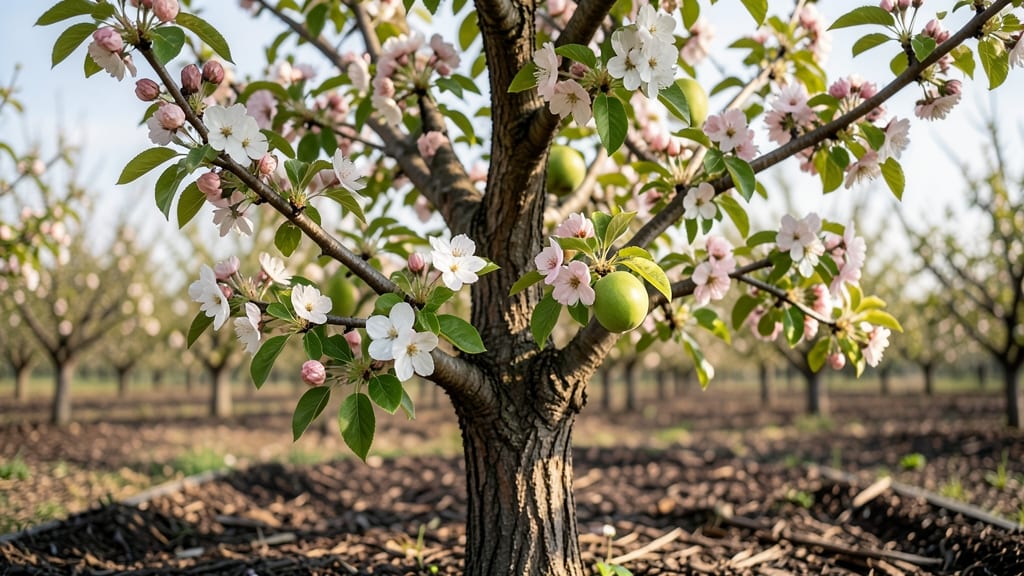
Peach tree flowers turn into fruit only after successful pollination, where bees or wind carry pollen between flower parts. Without this process, the blossoms simply drop without developing fruit.
This transformation relies on peach trees having perfect flowers—each bloom contains both male and female reproductive parts. 🌸 However, not all flowers get pollinated, especially in poor weather or when pollinator activity is low.
The fertilization process triggers fruit development, but environmental factors like temperature and humidity also play critical roles. For example, peach trees often struggle with fruit set in cold springs when bees are less active.
Understanding this process helps gardeners troubleshoot why some trees produce sparse harvests. Hand-pollination with a small brush can help in areas with limited bee activity, while planting pollinator-friendly flowers nearby attracts more bees.
The key is creating optimal conditions for both natural and assisted pollination to maximize your peach tree's fruit potential.
💡 In This Article
- How Peach Tree Pollination Works for Fruit Development
- Boosting Peach Tree Fruit Set with Gardening Techniques
How peach tree pollination works for fruit development
A peach tree's flower contains both male (stamens) and female (pistil) parts in a structure called a perfect flower. The stamens produce pollen grains containing sperm cells, while the pistil's stigma acts as the receptive surface for pollen.
When a bee lands on a flower, its body brushes against the stamens, collecting pollen on its fuzzy legs and abdomen. 🌿 This pollen gets transferred to the next flower's stigma during feeding, creating the essential link for fertilization.
The fertilization process begins when pollen grains land on the stigma and germinate, forming pollen tubes that grow down through the style to reach the ovary. Inside the ovary, the sperm cells fertilize the ovules, triggering the development of seeds.
This entire process takes about 7-14 days under ideal conditions, during which the flower's petals may begin to wilt while the ovary starts swelling into what will become the peach fruit.
Without successful pollination, the flower lacks the biological signal to develop fruit and simply drops off within 2-3 weeks.
Temperature plays a crucial role in this process. Peach trees typically require daytime temperatures above 60°F (15.5°C) during flowering for optimal pollination activity. Below this threshold, bees become less active, and pollen germination slows. Humidity also matters—high humidity can make pollen grains stick together, reducing their ability to transfer effectively.
In my garden, I've noticed that years with cool, rainy springs often result in fewer peaches because pollinators avoid wet conditions, and pollen dispersal becomes less efficient.
Wind can also act as a pollinator, especially in orchards with dense plantings where bees might not reach every flower. However, wind-pollinated peach flowers are far less efficient than bee-pollinated ones because pollen grains are heavier and don't travel as far.
The average peach flower produces about 20-30 pollen grains, but only 1-2 successful pollinations are needed per flower to trigger fruit development. This biological efficiency explains why even small gardens can produce abundant peaches when pollination conditions are right.
Not all flowers on a peach tree will set fruit, even with successful pollination. Trees often exhibit a phenomenon called fruit thinning, where they naturally drop some fertilized flowers to conserve energy for developing the remaining fruit. This process helps ensure the remaining peaches grow larger and healthier.
In commercial orchards, growers sometimes manually thin fruit to improve size and quality, but in home gardens, this is usually a natural process you don't need to intervene in.
One fascinating aspect is how peach trees can self-pollinate, but cross-pollination often produces better fruit. When pollen from one tree fertilizes flowers on another, the resulting peaches may have improved flavor and size. This is why planting multiple peach varieties nearby can boost your harvest.
The scent of peach blossoms actually attracts bees from up to 2 miles (3.2 km) away, making them effective pollinators even for isolated trees.