
Blooming
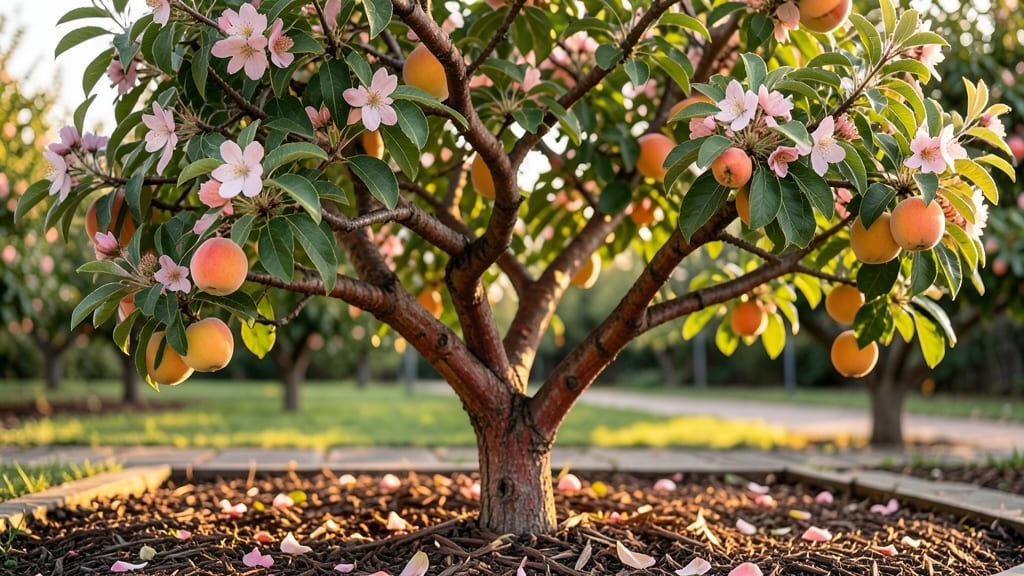
A peach tree takes 2 to 5 years to fruit, depending on variety, care, and climate—but knowing the exact timeline helps you avoid frustration and optimize growing conditions for that first sweet harvest.
Picture this: You’ve just planted your 🍑 peach tree in spring, dreaming of juicy summer fruit. But by Year 2, you’re staring at blossoms with no peaches in sight. Why? Most trees need 2–3 years just to establish roots and blooms before they even try to produce fruit.
And if you’re in Zone 6a, like many gardeners, cooler springs can push that timeline back another year.
The good news? With the right variety—like fast-bearing J.H. Hale or Redhaven—you might get a small harvest by Year 3. But soil pH, sunlight, and pruning play huge roles.
A tree in poor soil or shade could take 5+ years to fruit, while one with full sun and balanced nutrients might surprise you with peaches by Year 2.
Here’s what you’ll learn: the year-by-year timeline for dwarf vs. standard trees, how to speed up fruiting with pruning and fertilizer, and when to expect that first real harvest—plus how to tell if your tree is on track (or needs a little extra love).
Peach tree fruiting timeline: when to expect fruit by variety
Understanding your peach tree's fruiting timeline depends heavily on the variety you choose and your USDA hardiness zone. While some varieties like J.H. Hale may fruit in as little as 2 years, others like Elberta can take 4-5 years to reach full production.
The tree's size category—dwarf, semi-dwarf, or standard—also plays a role in how quickly it matures and bears fruit.
In USDA Zone 6 (a common growing region), most peach trees planted in spring will begin producing small fruit batches by their third year. However, dwarf varieties often fruit 1-2 years earlier than standard trees due to their accelerated growth rate.
For example, a Redhaven dwarf peach tree might yield 5-10 pounds of fruit in its third year, while a standard tree of the same variety could take 5-6 years to reach that level of production.
| Variety | Type | First Fruit (Years) | Full Production (Years) | Notes |
|---|---|---|---|---|
| Elberta | Standard | 4-5 | 5-6 | Late-bearing, needs cross-pollination |
| Redhaven | Semi-Dwarf | 3-4 | 4-5 | Early-bearing, red-skinned fruit |
| J.H. Hale | Dwarf | 2-3 | 3-4 | Cold-hardy, self-pollinating |
| Sanguinole | Standard | 3-4 | 5-6 | Late-season, yellow-fleshed peaches |
| Bonanza | Dwarf | 2-3 | 3-4 | Freestone, early-maturing |
If you're growing peaches in warmer climates (Zones 7-9), your tree may fruit 6-12 months earlier than the timelines above. For example, a Redhaven in Zone 8 could produce its first harvestable fruit in just 2 years with ideal care.
Conversely, cooler zones (Zones 4-5) may delay fruiting by 1-2 years due to slower growth during shorter growing seasons.
Another critical factor is whether your peach tree is self-pollinating or requires cross-pollination. Varieties like J.H. Hale and Bonanza are self-pollinating, meaning they can produce fruit with just one tree.
However, Elberta and Sanguinole need a second tree nearby for proper pollination, which can delay fruit set by 1 year if planted alone.
For container-grown peach trees, fruiting timelines may be slightly delayed due to root restriction. A dwarf peach tree in a 15-gallon pot might take 1 extra year to fruit compared to an in-ground tree.
To compensate, use well-draining potting mix and fertilize with a balanced NPK (10-10-10) every 4-6 weeks during the growing season.
Pruning also impacts fruiting timelines. Heavy pruning in the first 2 years can redirect energy toward fruit production instead of leaf growth. Focus on removing dead or crossing branches and thinning out suckers that grow below the graft union.
This practice can help a standard peach tree reach full production 1 year sooner than an unpruned tree.
Soil quality is another game-changer for peach tree fruiting. Peaches thrive in <
Critical factors that speed up or delay peach tree fruiting
Your peach tree’s fruiting timeline isn’t just about time—it’s about creating the perfect growing conditions. Soil pH, sunlight exposure, and watering consistency are the foundation of fruit production.
Even the most patient gardener will see delays if these basics aren’t met, while optimal care can accelerate fruiting by 1-2 years in some cases.
For example, a dwarf peach tree planted in Zone 7 with full sun and balanced soil might bear fruit in 2-3 years, while the same tree in shady conditions or poor soil could take 5+ years. The difference comes down to these critical factors we’ll explore next.
One of the most common delays I see is lack of blooms in the second or third year. This often stems from over-fertilizing with nitrogen, which promotes leafy growth at the expense of flowers.
Use a balanced 10-10-10 fertilizer in early spring and switch to low-nitrogen (5-10-10) after blooming to encourage fruiting.
If your peach tree has blooms but no fruit, check for poor pollination or late frost damage. Some varieties (like J.H. Hale) are more frost-tolerant, but even they need protection if frost hits during bloom.
Wrap young trees with frost cloth during late spring cold snaps to safeguard next year’s harvest.
Remember, patience is key—but smart care accelerates results. Focus on these five factors, and you’ll see your peach tree shift from leafy growth to fruit production faster than you expect. The first harvest might be small, but each year will bring more abundance as your tree matures.