
Planting
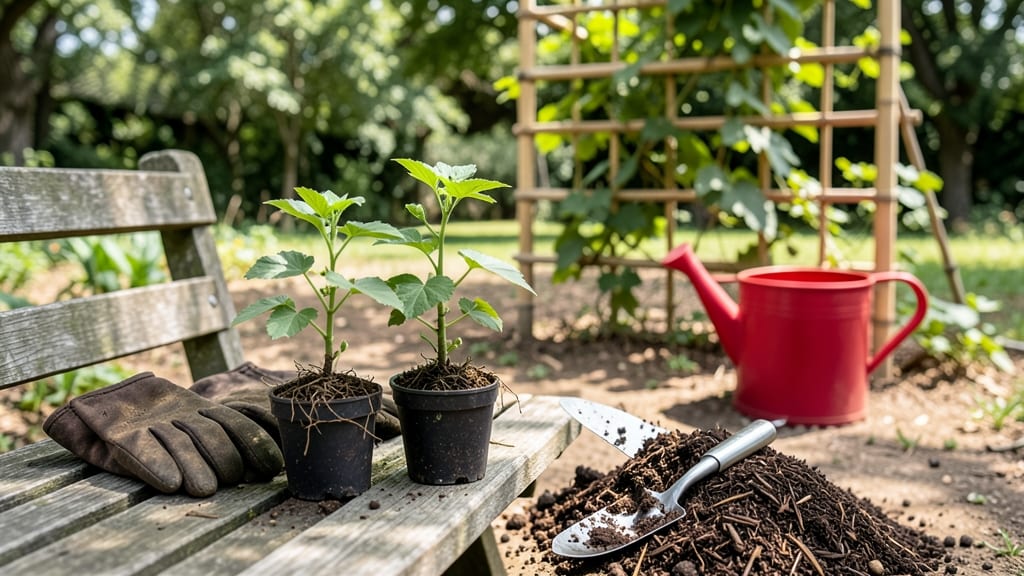
Planting passionfruit starts with a single vine that could climb 20 feet in a single season. 🌿 The key is matching your growing zone to the right variety—whether you're planting seeds or young plants—and giving it the warm, humid conditions it craves.
I learned this the hard way when my first attempt froze in a cold snap, but now I grow them reliably in containers or as a trellis feature.
You'll need well-draining soil mixed with compost, a sunny spot (at least 6 hours of direct light), and a sturdy support structure—think trellis, fence, or even a sturdy post. Passionfruit vines are hungry for nutrients, so enrich the soil before planting, whether you're working in-ground or containers.
For seeds, start them indoors 8-10 weeks before your last frost, while young plants can go out after all danger of frost has passed.
Once planted, keep the soil consistently moist but never soggy, and watch for those signature heart-shaped leaves emerging within weeks. With proper care, you'll see your first flowers by mid-summer, and if pollinated, those exotic fruits will appear by late summer or fall.
The vine's fragrant blossoms alone make the effort worth it.
This method works for both tropical and subtropical varieties, whether you're in Florida, California, or even a warm microclimate in cooler zones. The secret to success is patience—passionfruit vines take time to establish, but once they do, they reward you with abundant harvests for years. Let's get those vines growing!
📚 In This Guide
- What you need
- Instructions
- Tips and common mistakes
- Wrapping up and next steps
What you need
- ● Passionfruit seeds or young plants: Choose from varieties like Purple Passionfruit (Passiflora edulis) or Yellow Passionfruit (Passiflora ligularis). You can buy seeds online or harvest them from ripe fruit (see tips for prep).
- ● Well-draining potting mix: A blend of coconut coir, perlite, and compost (ratio: 40% coir, 30% perlite, 30% compost). Avoid heavy soil—passionfruit hates soggy roots! 🚫💦
- ● Containers or garden space: For containers: 5-gallon pots (minimum) with drainage holes. Use fabric grow bags for better aeration.
- ● For gardens: A sunny spot with 6+ feet of vertical space (trellises or fences work great!). Soil pH should be 6.0–7.5.
- ● Fertilizer: A balanced 10-10-10 or 20-20-20 NPK fertilizer (or organic options like fish emulsion or compost tea).
- ● Trellis or support structure: Sturdy metal or wooden trellis (8–10 feet tall) to guide the vine’s growth.
- ● Pruning shears: Sharp, clean shears for trimming vines and removing dead growth.
- ● Watering can or hose with a gentle spray nozzle: Passionfruit needs consistent moisture but hates waterlogged soil.
- ● Mulch: Straw or wood chips to retain moisture and regulate soil temperature.
- ● Epsom salt: A spoonful in water (1 tbsp/gal) every 4–6 weeks boosts magnesium for vibrant foliage.
- ● Pest control: Neem oil or insecticidal soap to deter aphids and spider mites.
- ● Grow lights: If planting indoors, use full-spectrum LED lights (12+ hours/day) for seedlings.
- ● Gloves: Protect your hands from thorns—passionfruit vines are not for the faint of heart! 😅
Step-by-step instructions for planting passionfruit vines
Here's how I get passionfruit vines thriving in just a few straightforward stages—no complicated tricks.
🌱 Step 1: Choose the Perfect Spot and Prepare the Soil
Passionfruit vines need full sun—at least 6-8 hours daily—and well-draining soil. I pick a location with morning sun and afternoon shade if my climate gets scorching afternoons. The soil should be loose and rich, so I mix 2 inches of compost into the top 12 inches of soil. If your soil is heavy clay, add 1 part perlite to 3 parts soil to improve drainage.
Dig a hole twice as wide as the root ball but only as deep as the container it came in. Passionfruit vines hate sitting too low—their roots need air. I always tap the sides of the hole gently to remove air pockets, then water it deeply before planting. This prevents shock when the roots settle in.
🪴 Step 2: Plant the Vine and Stake for Support
Place the vine in the hole so the top of the root ball sits just below soil level. Fill the hole with soil, pressing lightly around the edges to remove air gaps. I never pack it down too hard—passionfruit roots need room to breathe. Water the base thoroughly after planting to help the soil settle.
Install a 5-6 foot tall trellis or sturdy post right away. Passionfruit vines grow 15-20 feet in ideal conditions, and they need support from day one. Tie the main stem loosely to the trellis with soft plant ties (I use old T-shirts cut into strips). The vine will twine naturally, but securing it early prevents wind damage and keeps growth orderly.
☀️ Step 3: Water, Mulch, and Monitor Growth
Water deeply twice a week for the first month, then taper to once a week once established. The soil should feel dry 2-3 inches down before watering again—passionfruit vines hate soggy roots. I water at the base in the morning to reduce fungal risks. After watering, add 2-3 inches of mulch (straw or wood chips) to retain moisture and regulate temperature.
Watch for new leaves—they’ll appear within 2-3 weeks if conditions are right. Fertilize lightly with a balanced 10-10-10 formula every 4-6 weeks during growing season. Too much nitrogen makes vines leafy but fruitless, so I cut back on fertilizer once flowers start forming. Prune leggy growth in early spring to encourage bushier, fruit-bearing branches.
Tips & tricks for perfect passionfruit planting
Here's what nobody tells you about getting your passionfruit vine off to the strongest start—these are the details that make all the difference.
Location is Everything: While the instructions mention 6-8 hours of sun, I've found that positioning your vine where it gets morning sun and afternoon shade (especially in hot climates) prevents leaf scorch while still maximizing fruit production. If your yard has limited sun, consider planting near a south-facing wall that reflects heat back to the vine. The key is finding that sweet spot where the vine gets plenty of light without getting stressed by midday intensity.
Soil Prep Secret: When mixing your 2 inches of compost into the top 12 inches of soil, I like to add a handful of crushed eggshells to the hole before planting. This provides a slow-release calcium boost that helps prevent blossom end rot in the fruit later on. For clay-heavy soils, I often double the perlite ratio to 1 part perlite for every 2 parts soil—this dramatically improves drainage while still retaining enough moisture for those tropical roots.
Staking Strategy: That 5-6 foot trellis might seem tall, but trust me on this—passionfruit vines grow fast, and you'll thank yourself later when you don't have to wrestle with a 15-foot monster. I like to install a secondary support wire about 3 feet up the trellis to help guide the vine's growth pattern. This creates better air circulation around the plant and makes future pruning easier. Use soft plant ties every 12 inches up the trellis to keep the vine growing upward rather than sprawling outward.
Watering Wisdom: The twice-weekly watering schedule works great, but I've learned that checking soil moisture with your finger (2-3 inches down) is more reliable than sticking to a rigid schedule. In summer months, you might need to water every other day, while winter watering can drop to once every 10 days. The key is to keep the soil consistently moist but never soggy—passionfruit roots rot faster than you'd think when they're waterlogged.
Pro Tips for Plant Passionfruit
- Here's what nobody tells you about getting your passionfruit vine off to the strongest start—these are the details that make all the difference.
- If your yard has limited sun, consider planting near a south-facing wall that reflects heat back to the vine.
- Soil Prep Secret: When mixing your 2 inches of compost into the top 12 inches of soil, I like to add a handful of crushed eggshells to the hole before planting.
Frequently asked questions
Got questions about growing your own passionfruit? You’re not alone! Here are answers to the most common queries to help you cultivate a thriving vine with confidence.
Can I grow passionfruit in a pot, or does it need a garden?
Passionfruit thrives in containers if you choose the right variety. Opt for Passiflora edulis (purple passionfruit) or Passiflora ligularis (sweet granadilla), as they’re more compact. Use a 5-gallon pot or larger with drainage holes, and ensure it gets 6+ hours of sunlight daily. Just keep in mind—potted vines may produce fewer fruits than garden-grown ones.
How long does it take for passionfruit to bear fruit after planting?
Patience is key! Most passionfruit vines take 12–18 months to mature and produce fruit, depending on climate and care. Passiflora edulis (purple) may fruit faster (12–15 months), while tropical varieties like Passiflora quadrangularis (giant granadilla) can take up to 2 years. Prune regularly to encourage growth and fruit production.
Do passionfruit vines need pollinators, or can they self-pollinate?
Passionfruit vines can self-pollinate, but they produce far more fruit with help from bees, butterflies, or even hand-pollination. If your area lacks pollinators, use a soft paintbrush to transfer pollen from male to female flowers (look for the swollen base on female blooms). Morning is the best time for this task!
What should I do if my passionfruit leaves turn yellow or wilt?
Yellowing leaves often signal overwatering, underwatering, or nutrient deficiencies. Check the soil—it should stay moist but not soggy. If leaves curl or droop, reduce watering. For yellowing between veins, your vine may need more iron or zinc (use a chelated fertilizer). Pests like spider mites can also cause wilting—inspect undersides of leaves and treat with neem oil if needed.
Can I grow passionfruit from store-bought fruit, or do I need seeds?
Yes! Save seeds from ripe passionfruit, rinse them, and let them dry for 24 hours. Plant them ½ inch deep in well-draining soil. However, seed-grown vines may not be true to the parent plant—for consistent results, buy certified seeds or young plants from a nursery. Pro tip: Store-bought seeds often produce wild-type passionfruit with unique flavors!
Wrapping up and next steps
Planting passionfruit is a rewarding journey that brings vibrant blooms and delicious fruit to your garden!
With the right location, support structure, and care, you’ll be enjoying homegrown passionfruit in no time. 🌱 Start small, stay patient, and soon you’ll be harvesting the sweet, tangy treats nature intended.
Ready to dive in? Grab your gloves, pick a sunny spot, and get growing! Need more tips? Check out our guide on passionfruit care essentials to keep your vine thriving year-round.