
Pruning
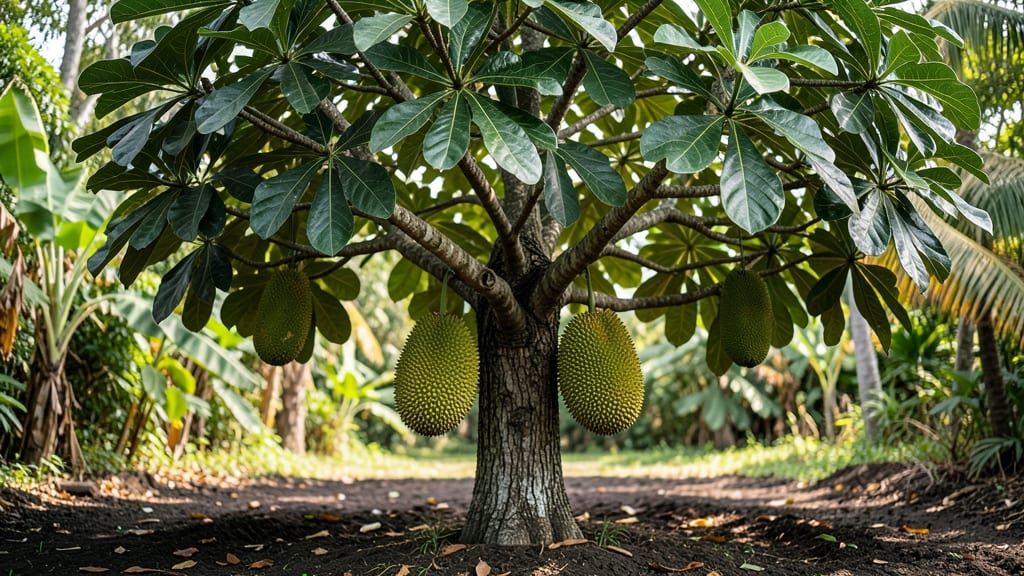
The Spanish name for jackfruit is jacote or fruta de pan, with jacote being the most widely recognized term in Central and South American countries where it grows. Pronunciation typically follows ha-KOH-teh or ha-KOH-chay, reflecting regional Spanish dialects.
The name jacote originates from indigenous languages like Taíno and has been adopted across Latin America, particularly in countries like Costa Rica, Panama, and Nicaragua. 🌿 Meanwhile, fruta de pan (literally "bread fruit") appears more frequently in Colombia and Venezuela, where jackfruit's starchy texture resembles baked bread.
These variations reflect both historical trade routes and local culinary traditions.
In culinary contexts, jacote is the go-to term in most tropical regions, while fruta de pan often appears in recipes emphasizing its unique texture. For example, in Costa Rican chicharrón de jacote, the name highlights the meaty, shredded texture when cooked.
Understanding these regional differences helps you navigate menus and recipes accurately.
Pronunciation can trip up even fluent Spanish speakers—the 'j' in jacote sounds like an English 'h,' while the 'te' ending makes it distinct from jacarandá, a completely different tree. 💫 Mastering these details ensures you're ordering the right fruit or following recipes correctly, especially when shopping in local markets.
💡 In This Article
- Regional Spanish Names for Jackfruit Across Latin America
- Pronunciation Tips and Common Mispronunciations to Avoid
Regional Spanish names for jackfruit across Latin America
The linguistic diversity of jackfruit's Spanish names reveals fascinating historical and cultural connections. The term jacote traces back to indigenous Taíno and Carib languages, where it originally described the fruit's distinctive appearance and texture.
When Spanish colonizers encountered it in the Caribbean and Central America, they adapted this indigenous name, preserving its phonetic structure while integrating it into Spanish phonology. 🌿 This explains why jacote dominates in countries like Costa Rica, Panama, and Nicaragua—areas with strong indigenous linguistic legacies.
In contrast, fruta de pan (breadfruit) emerged in regions where jackfruit's starchy, dense flesh was compared to baked bread. This name became more common in Colombia and Venezuela, where jackfruit's culinary role often mirrors that of breadfruit—a tropical staple with similar versatility.
The difference reflects how local food traditions shape terminology: jacote emphasizes the fruit's identity as a unique tropical species, while fruta de pan highlights its functional similarity to breadfruit in regional cuisines.
Geography also plays a key role in these variations. Jackfruit thrives in lowland tropical regions, and its cultivation spread through trade routes that connected the Caribbean with Central and South America.
In countries like Honduras and Guatemala, jacote remains standard, while in Colombia's coastal regions, fruta de pan appears more frequently due to historical interactions with Caribbean trade networks. This geographic pattern shows how language evolves through both natural distribution and human movement.
What most people don't realize is that these names aren't just regional preferences—they reflect how jackfruit fits into local diets. In Costa Rica, jacote appears in dishes like chicharrón (fried jackfruit), where its meaty texture is the star.
Meanwhile, in Colombia, fruta de pan often appears in sweet preparations, like jackfruit-infused desserts that mimic bread-based sweets. The terminology isn't arbitrary; it's a linguistic map of how the fruit is used and valued in each culture. 💫
Even within countries, you'll find micro-variations. For example, in Panama, some older generations might use jacote, while younger urban populations in cities like Panama City might default to fruta de pan due to broader Caribbean influences.
These shifts highlight how language evolves even within single nations, shaped by migration, media, and culinary trends.
For practical purposes, here's a quick regional guide to help you navigate menus and recipes:
- Central America: jacote (Costa Rica, Panama, Nicaragua, Honduras)
- Caribbean Coast: fruta de pan (Colombia, Venezuela, parts of Nicaragua)
- Andean Regions: jacote (Ecuador, Peru—though less common)
- Urban Markets: fruta de pan may appear more frequently due to broader trade influences
The key takeaway? Always check the context—whether you're reading a recipe from rural Costa Rica or an urban market in Medellín, the name can tell you a lot about how the fruit is prepared and appreciated in that specific place. 🌎