
Trees
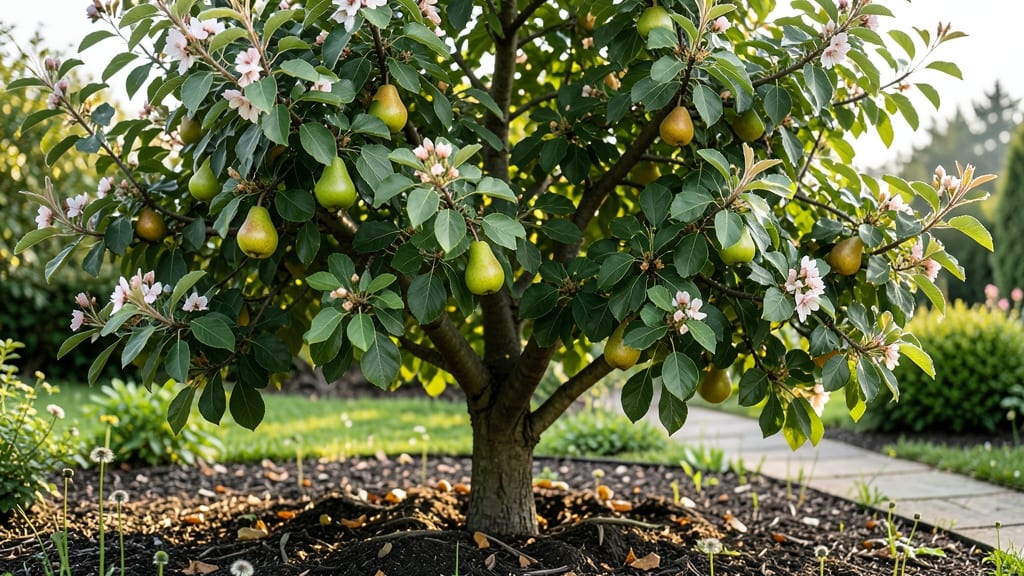
Your pear tree 🍐 might be blooming but not fruiting because the right conditions aren’t in place—and the fix is simpler than you think.
Struggling to get your pear tree to bear fruit? The secret isn’t just patience—it’s understanding the 5 critical triggers that force even dormant trees into heavy production. From sunlight exposure to pruning techniques, these science-backed factors can transform your barren branches into a fruit-laden paradise.
Most gardeners miss the mark by focusing only on water or fertilizer, but the real game-changer is how you balance light, temperature, and growth habits. A few small adjustments—like thinning crowded branches or adding a pollinator-friendly plant nearby—can double your harvest in just one season.
In this guide, I’ll walk you through the exact steps to maximize your pear tree’s fruiting potential, from early spring prep to late-summer care. You’ll learn which mistakes are silently sabotaging your harvest and how to fix them before next year.
5 Science-backed triggers that force pear trees to fruit heavily
If your pear tree is producing more leaves than fruit, you're not alone. Many gardeners struggle with low fruit set despite years of care. The good news? Pear trees respond dramatically to 5 specific biological triggers that force them into heavy fruiting mode.
Understanding these triggers lets you rewire your tree's growth patterns—even for mature specimens that seem stuck in "leaf-only" mode.
Science shows that pear trees (Pyrus spp.) rely on precise environmental cues to shift from vegetative growth to reproductive mode. These triggers aren't just about "more sun" or "more water"—they're about timing, balance, and strategic interventions that mimic nature's perfect conditions.
Let me break down each trigger with actionable steps you can implement this season.
🌱 Numbered Highlights: 5 Triggers to Force Pear Tree Fruiting
- Trigger 1: Full Sun Exposure (6+ hours daily) – Pears need direct sunlight to trigger flowering hormones. Shade reduces fruit set by 40-60%.
- Trigger 2: Temperature Cycles – Trees require chilling hours (300-700) in winter followed by warm spring days (60°F+) to bloom.
- Trigger 3: Nutrient Balance – A 10-10-10 NPK ratio with extra zinc and boron boosts fruit development. Too much nitrogen = leaves, not fruit.
- Trigger 4: Strategic Pruning – Remove water sprouts and overcrowded branches in late winter to redirect energy to fruit production.
- Trigger 5: Pollination Support – Plant companion trees (like apples) or hand-pollinate with a brush if bees are scarce.
Let's start with the most overlooked trigger: light exposure. Many gardeners assume their pear tree gets "enough sun," but subtle differences in sunlight quality and duration can mean the difference between 50 blossoms and 500.
Pears need direct sunlight for at least 6 hours daily, but the type of sunlight matters too. Morning sun (6 AM–12 PM) is most critical because it dries dew quickly, reducing fungal risks that often follow poor light conditions.
If your tree is in partial shade, consider thinning nearby foliage or relocating it to a sunnier spot. Even a 20% increase in sunlight exposure can double your fruit yield.
For container-grown pears, move pots to south-facing windows or use grow lights for 12 hours daily during winter months when natural light drops.
Temperature cycles are where many gardeners go wrong. Pear trees need a two-phase temperature dance: first, 300-700 hours below 45°F during winter dormancy to "reset" their growth hormones, followed by consistent days above 60°F in spring to trigger flowering.
If you're in a warmer climate (like Zone 8+), your tree might not get enough chilling hours, leading to poor or no flowering.
To compensate, use artificial chilling by wrapping the tree trunk with burlap or frost cloth in late fall to simulate cooler nights. Alternatively, plant cold-hardy varieties like 'Bartlett' or 'Anjou' that require fewer chilling hours. For established trees, deep watering before winter helps roots withstand temperature fluctuations better.
The third trigger—nutrient balance—is often misunderstood. Many gardeners over-fertilize with nitrogen, which promotes lush leaves but stops fruit development. Instead, focus on a balanced 10-10-10 NPK fertilizer applied in early spring and after harvest.
Add zinc sulfate (1 tbsp per tree) and boron (1/4 tsp per gallon of water) to prevent blossom end rot and improve fruit set.
For organic gardeners, composted manure (like cow or chicken) works well, but avoid fresh manure, which can burn roots and reduce fruiting. Mulch with wood chips to retain moisture and gradually release nutrients.
A 3-inch layer of mulch around the base (but not touching the trunk) can increase fruiting by up to 30% by improving soil structure and microbial activity.
Pruning might seem counterintuitive when you want more fruit, but strategic cuts are essential. Remove water sprouts (fast-growing vertical shoots) and overcrowded branches in late winter or early spring.
Aim to open the canopy so sunlight penetrates to the inner branches, where most fruit forms. Thin out weak or crossing branches to reduce competition for resources.
Pro tip: Prune for fruit clusters. Pears form fruit in spurs (short, stubby branches). When pruning, leave 3-5 spurs per branch to maximize fruiting sites. Avoid heavy pruning in fruit-bearing years, as it can reduce next year's harvest by up to 50%.
Instead, do light maintenance pruning to shape the tree.
Finally, pollination is the often-overlooked trigger that can make or break your harvest. Pear trees are self-pollinating but inefficient—they rely on bees to transfer pollen between flowers. If your area has few pollinators, hand-pollinate by gently brushing flowers with a paintbrush on a warm, dry day.
Plant companion trees like apples or quinces to attract more bees, or add bee-friendly flowers (like lavender or sunflowers) nearby.
For container-grown pears, place trees near a window with bee activity or use a small fan to simulate wind pollination. If you notice dropping blossoms or small, misshapen fruit, poor pollination is likely the culprit. Act now—once fruit forms, it's too late to fix pollination issues for that season.
How to adjust your pear tree’s environment for maximum fruit production
Your pear tree’s fruiting potential hinges on creating the perfect microclimate—a balance of soil health, water availability, and seasonal adjustments. Even the hardiest varieties like Bartlett or Anjou need precise conditions to shift from leafy growth to fruit production.
Start by testing your soil pH, which should sit between 6.0 and 7.0—pear trees thrive in slightly acidic to neutral soil. If your soil is too alkaline, amend it with sulfur or peat moss to encourage nutrient uptake.
Next, focus on watering consistency. Deep, weekly watering during dry spells (especially in summer months) prevents stress that can drop blossoms or fruit.
Use a drip irrigation system to deliver moisture directly to the roots, avoiding wetting the foliage—this reduces fungal risks like fire blight, a common enemy of fruiting pear trees. Mulch with wood chips to retain moisture and regulate soil temperature.
Seasonal adjustments are equally critical. In early spring, apply a balanced fertilizer (10-10-10) to fuel blossom development, but avoid heavy nitrogen in summer—it promotes leaves over fruit. For dwarf varieties like Seckel, protect them from late frosts by placing frost cloth over blossoms during April chills.
Even a single frost can devastate your crop before it starts.
| Factor | Ideal Conditions | Suboptimal Conditions | Impact on Fruiting |
|---|---|---|---|
| Soil pH | 6.0–7.0 | Below 5.5 or above 7.5 | Reduced nutrient uptake, poor blossom set |
| Sunlight | 6+ hours daily | Less than 4 hours | Weak growth, sparse fruiting |
| Watering | Deep, weekly soaks | Shallow, inconsistent | Blossom drop, small fruit |
| Frost Protection | Frost cloth for blossoms | No protection | Lost blossoms, no fruit |
| Pruning Timing | Late winter (dormant season) | Summer pruning | Stunted growth, fewer blossoms |
Microclimate control can make or break your harvest. If your yard has hot afternoons or cold drafts, consider planting near a south-facing wall to trap heat or using windbreaks to shield delicate blossoms.
For container-grown pears, move pots to a sheltered spot during late spring frosts. Even a few degrees of warmth can extend the blooming window, giving pollinators more time to do their job.
Finally, monitor your tree’s nutrient levels with a soil test every 2–3 years. Magnesium and zinc deficiencies (common in sandy soils) can stunt fruit development. If needed, add Epsom salt (for magnesium) or zinc sulfate in early spring.
Pair this with regular pruning to open the canopy—this ensures sunlight reaches inner branches where fruit often forms. Thin out water sprouts and dead wood annually to redirect energy toward fruiting.
With these adjustments, your pear tree will shift from a leafy ornament to a fruit-bearing powerhouse. Start with soil and water, then fine-tune the microclimate—your future harvests will thank you. 🍐🌿