
Fertilization
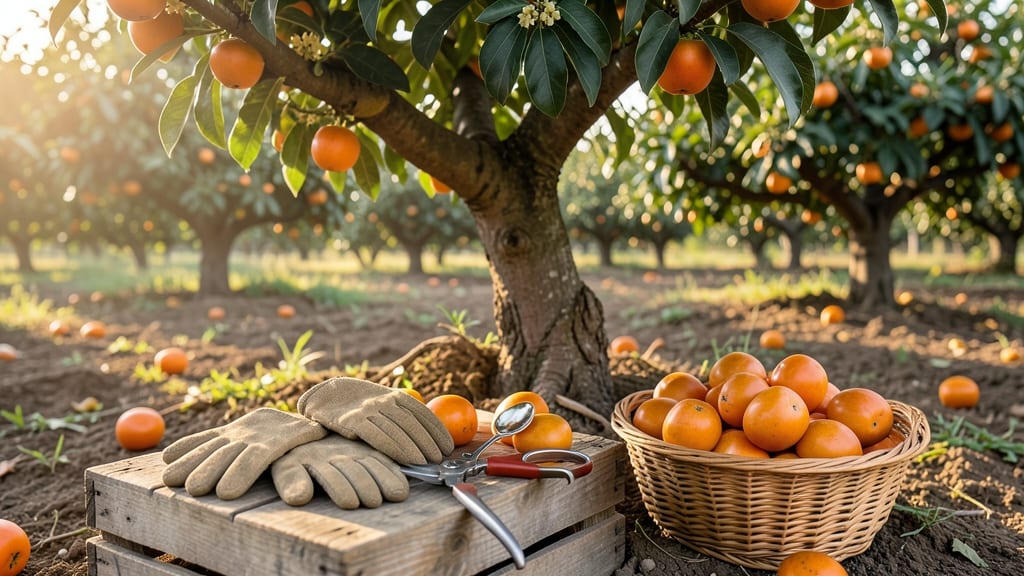
To test persimmon fruit ripeness with a spoon, press gently into the flesh—when it yields slightly without resistance, the fruit is perfectly ripe and ready to eat. Unripe persimmons stay firm and bitter, so avoid testing them until they soften naturally.
This simple spoon test works because persimmon flesh undergoes a dramatic transformation as it ripens. 🌱 The fruit's starches break down into sugars, and tannins—those compounds that make unripe persimmons astringent—dissolve, leaving a sweet, velvety texture.
I've found that Fuyu persimmons (the non-astringent variety) often pass this test earlier than Hachiya types, which need more time on the vine. The key is patience: pressing too hard on an unripe fruit won't change its texture, but it might bruise the skin.
For those without a spoon handy, other ripeness cues include the stem detaching easily from the fruit (a sure sign of ripeness) and a sweet, honey-like aroma at the stem end.
Color changes can be misleading—some persimmons stay green even when fully ripe—so always combine visual checks with the spoon test for accuracy. Pro tip: Store unripe persimmons at room temperature to speed up ripening, then refrigerate them once ripe to extend shelf life.
💡 In This Article
- Why the Spoon Test Works for Persimmon Ripeness
- Alternative Ripeness Tests for Persimmons Beyond the Spoon
Why the spoon test works for persimmon ripeness
Persimmons undergo a fascinating biochemical transformation as they ripen, and the spoon test directly measures these changes at a cellular level. When unripe, persimmon flesh contains high levels of starches and tannins—compounds that create that signature astringent bite.
The cell walls remain rigid, making the fruit feel firm to the touch, almost like biting into a firm apple. As ethylene gas (the ripening hormone) triggers enzymatic activity, these starches convert into sugars, while the tannins break down into simpler, non-astringent compounds.
This process softens the flesh and sweetens the flavor, which is exactly what the spoon detects.
The ideal ripeness point occurs when the flesh yields to gentle pressure—about 1/8-inch indentation with a spoon—without feeling mushy. At this stage, the fruit's sugar content typically reaches 15-20% of its dry weight, compared to just 5-8% in unripe persimmons.
The texture becomes velvety rather than firm, and the aroma shifts from neutral to a rich, honey-like scent. 🌟 For comparison, think of how a ripe avocado gives slightly under pressure while still maintaining shape, but persimmons are more delicate—they should feel like ripe peaches rather than overripe bananas.
This test works because persimmons are non-climacteric (they ripen on the tree) but continue ripening after harvest, making texture the most reliable indicator. The spoon's gentle pressure mimics how your teeth would interact with the fruit, providing an instant read on edibility.
What's interesting is that different varieties respond differently: Hachiya persimmons (the astringent type) often need 2-3 weeks of post-harvest ripening at room temperature, while Fuyu persimmons (non-astringent) can be eaten when still firm. This is why the spoon test becomes your best friend—it accounts for these variety-specific ripening curves.
There's also a scientific reason why you shouldn't press too hard: excessive force can rupture the fruit's cell membranes prematurely, accelerating spoilage. The ideal test involves pressing with just enough pressure to create a slight dimple—about 5-10 pounds of force (similar to pressing a ripe tomato).
This gentle approach preserves the fruit's natural ripening process while giving you an accurate reading. 🔥 For those curious about the numbers, persimmon flesh at peak ripeness has a shear force value of 0.5-1.0 N (Newtons), compared to 3.0-5.0 N when unripe—a measurable difference that explains why the spoon test feels so intuitive.
What most people don't realize is that persimmons actually become overripe quickly after reaching perfect ripeness. The sugar content peaks, then begins converting into alcohol and other compounds, making the fruit grainy and fermented-tasting.
This is why timing your spoon test is crucial—you're not just checking for ripeness, but also avoiding that window where the fruit becomes unpleasantly soft. The sweet spot is that just-ripe moment when the flesh yields like a ripe pear but still holds its shape.
For a visual comparison, imagine pressing your thumb into a ripe persimmon versus an unripe one: the ripe fruit gives way like a soft cushion, while the unripe one feels like pressing into a hard rubber ball.
This tactile difference isn't just subjective—it's a direct result of the fruit's pectin breakdown during ripening.
The pectin in cell walls softens, allowing the flesh to become more pliable. 💫 This is why the spoon test remains the gold standard among persimmon enthusiasts—it combines simplicity with scientific accuracy, giving you a reliable way to determine when your fruit is at its edible best.