
Propagation
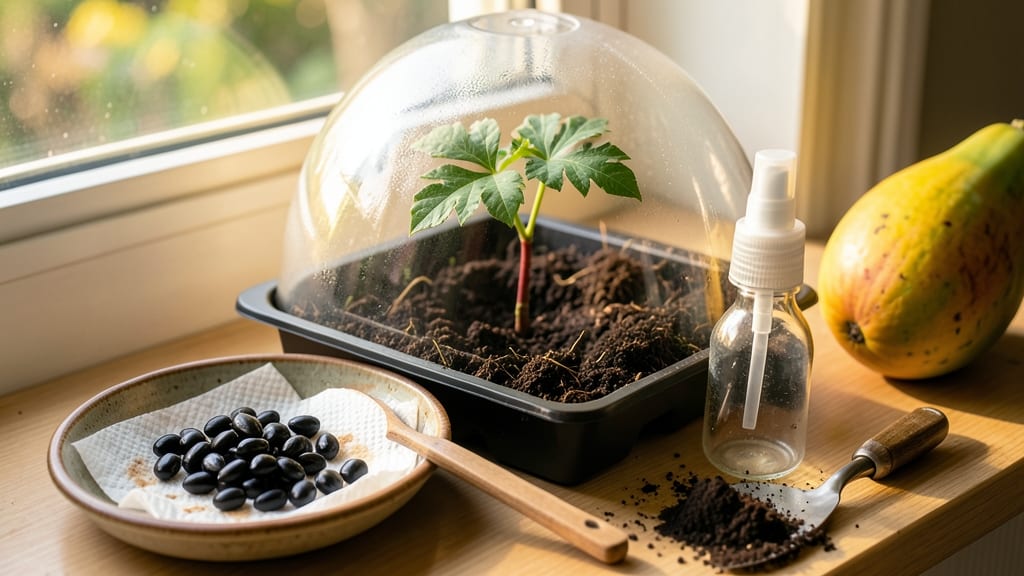
Planting papaya seeds from fruit gives you a tropical tree that starts with a single bite. 🌱 I’ve grown papayas from grocery store fruit—and the first leaves appear in just 3 weeks with the right setup.
The secret isn’t fancy equipment; it’s timing, moisture, and a little patience to outsmart mold and slow starts.
You’ll need ripe papaya (the darker the better), a shallow tray, damp paper towels, and a sunny spot. No greenhouse? No problem. A clear plastic bag over seedlings creates a mini greenhouse effect that speeds up germination. The key is keeping seeds moist but not soggy—think damp sponge, not swamp.
By week 4, you’ll see sturdy seedlings with real leaves, ready to transplant. These aren’t just pretty plants—they’ll grow into trees that produce fruit in 1-2 years if you’re in the right climate.
Even if you live in a cooler zone, the foliage is striking enough to grow as an ornamental.
Common pitfalls? Overwatering (mold wins) and impatience (seeds can take 10-21 days). The payoff? Fresh papaya from your own tree—or a conversation piece that makes neighbors jealous. Let’s get those seeds sprouting!
📚 In This Guide
- What you need
- Instructions
- Tips and common mistakes
- Wrapping up and next steps
What you need
- ● Ripe papaya fruit – Choose a fully ripe, organic papaya (the riper, the better for seed viability!)
- ● Sharp knife or spoon – For scooping out seeds (a butter knife works in a pinch!)
- ● Water – Room-temperature, filtered if possible (seeds hate chlorine!)
- ● Small container or bowl – For rinsing seeds (a shallow dish or even a clean yogurt cup)
- ● Paper towels or coffee filter – To drain excess water and encourage germination
- ● Plastic bag or airtight container – For creating a mini greenhouse effect (a ziplock bag works!)
- ● Seed-starting mix or well-draining potting soil – Avoid garden soil (it’s too dense for tiny seeds!)
- ● Small pots or seed trays – 2–3 inch pots or a tray with drainage holes (3–4 pots per fruit is ideal)
- ● Spray bottle – For gentle watering (keeps seeds moist without drowning them)
- ● Sunny windowsill or grow light – Papaya seeds need warmth (70–85°F) and light to sprout!
- ● Humidity dome or plastic wrap – Speeds up germination by trapping moisture.
- ● Heating mat – If your home runs cool, this keeps seeds cozy (75–80°F is perfect!).
- ● Fertilizer (balanced, low-dose) – Like a 5-5-5 or fish emulsion (wait until seedlings have 2–3 leaves!).
- ● Labels & marker – To track planting dates (papayas grow fast—you’ll want to remember when you started!).
- ● Tweezers or toothpick – For gently handling delicate sprouts.
Step-by-step instructions for planting papaya seeds from fruit
Here's how to transform a store-bought papaya into a thriving tropical seedling in just 3 weeks.
🌱 Step 1: Extract and Prepare the Seeds
Start with a ripe papaya—its flesh should yield slightly when pressed. Cut the fruit open lengthwise and scoop out the seeds with their surrounding gelatinous pulp. Real talk: you'll need about 4-6 seeds per serving to ensure good germination rates. I like to separate them carefully, using a spoon to gently scrape away excess fruit while preserving the seed's protective coating.
Rinse the seeds under cool running water to remove any remaining fruit residue. This prevents mold and ensures clean germination. Place the cleaned seeds in a small bowl and cover them with lukewarm water for 24 hours. The seeds will swell slightly—this softens the outer coating and speeds up germination. Don't skip this soak; dry seeds can take weeks longer to sprout.
💧 Step 2: Set Up Germination Containers
Fill small nursery pots (about 2-3 inches deep) with a well-draining seed-starting mix. I prefer a blend of 50% peat moss and 50% perlite to prevent root rot in these tropical seeds. Moisten the mix until it's damp but not soggy—think of a wrung-out sponge. Tap the pots gently to settle the soil without compacting it.
Plant 1-2 seeds per pot at a depth of about ½ inch. Press them lightly into the soil so they make good contact. Cover the pots with clear plastic wrap or a humidity dome to trap warmth and moisture. Place them in a warm spot—75-85°F is ideal—like on top of a refrigerator or near a sunny window. You'll see sprouts in 7-14 days, but don't be surprised if some take longer.
☀️ Step 3: Provide Light and Monitor Growth
The moment the first true leaves appear (not the initial seed leaves), remove the plastic cover immediately. Papaya seedlings need bright, indirect light for 6-8 hours daily to prevent leggy growth. A south-facing window works, but if your seedlings stretch toward the light, supplement with a grow light positioned 6 inches above the plants.
Water gently from the bottom of the pots to avoid disturbing the delicate roots. You'll know it's time to water again when the top ½ inch of soil feels dry to touch. Overwatering is the fastest way to kill these tropical seedlings—root rot will turn the leaves yellow and mushy. If you see this, reduce watering and improve drainage immediately.
🌿 Step 4: Transplant and Encourage Strong Growth
Once seedlings develop 3-4 true leaves (usually after 3-4 weeks), transplant them into slightly larger pots (about 4-5 inches deep) with fresh potting mix. Gently tease apart the roots if you planted multiple seeds per pot—this prevents competition and encourages bushier growth. I like to use biodegradable pots at this stage so I can transplant again without disturbing the roots later.
Fertilize lightly with a balanced liquid fertilizer (10-10-10) diluted to half strength. Papaya seedlings are hungry but sensitive—too much fertilizer burns their tender roots. Apply it every 2 weeks and watch for dark green, glossy leaves as a sign of healthy growth. Pinch off any flowers that appear now; the plant needs to focus on leaf and root development before fruiting.
Tips & tricks for perfect papaya seedling growth
Transforming papaya seeds into thriving tropical plants requires patience and precision—here's how to maximize your success from day one.
Seed Selection: Choose seeds from a fully ripe papaya—they'll have a higher germination rate. I've found that seeds from organic papayas often perform better, possibly due to fewer chemical residues. Look for seeds that are plump and surrounded by their gelatinous coating; these tend to sprout most reliably within the 7-14 day window mentioned in Step 2.
Germination Environment: Maintaining that 75-85°F temperature range is crucial, but consistency matters more than exact degrees. I've had success using a seedling heat mat set to low heat (around 75°F) under the germination pots. The key is keeping the environment warm and humid—think of it like creating a mini tropical greenhouse. If your home stays cooler than 70°F, consider placing the pots on top of your refrigerator or near a sunny window with a heat source.
Light Transition: When removing the plastic cover after true leaves appear, do it gradually over 2-3 days. Start by lifting the cover for just 15 minutes daily, then increase exposure time. This gradual transition prevents shock to the delicate seedlings. I've seen seedlings develop leggy growth when exposed to full light too quickly—this happens when they stretch toward any available light source.
Transplanting Strategy: For the 3-4 week transplant stage, I recommend using biodegradable pots that can be planted directly into the ground later. This eliminates the need for root disturbance during your final planting. When teasing apart roots from multiple seeds, work gently but firmly—you want to separate them without tearing the delicate root hairs. Think of it like untangling hair rather than pulling apart wet clay.
Pro Tips for Planting Papaya Seeds From Fruit
- Transforming papaya seeds into thriving tropical plants requires patience and precision—here's how to maximize your success from day one.
- Seed Selection: Choose seeds from a fully ripe papaya—they'll have a higher germination rate.
- Germination Environment: Maintaining that 75-85°F temperature range is crucial, but consistency matters more than exact degrees.
Frequently asked questions
Got questions about growing papayas from seed? You’re not alone! Here are answers to the most common queries to help you succeed with your tropical adventure.
Can I grow a papaya tree from any store-bought fruit?
Most store-bought papayas are hybrid varieties bred for sweetness, not propagation. While you can plant the seeds, the resulting tree may not produce fruit identical to the parent. For better success, use seeds from a ripe, organic papaya or a known heirloom variety. If you’re unsure, ask your local tropical fruit vendor!
How long does it take for papaya seeds to sprout?
Papaya seeds typically sprout within 7–14 days under ideal conditions (warmth, moisture, and indirect light). If your seeds haven’t sprouted in 3 weeks, they may need more warmth (ideally 75–85°F) or better moisture. Avoid overwatering—keep the soil damp but not soggy!
What’s the best temperature for germinating papaya seeds?
Papaya seeds thrive in warmth—aim for 75–85°F (24–29°C). If your home is cooler, place the seed tray on a heating mat or near a sunny window. Avoid cold drafts or air conditioning, as chilly temps can delay or prevent germination. A mini greenhouse or clear plastic wrap can help retain heat!
Can I plant papaya seeds directly in the ground?
While you can plant seeds outdoors in warm climates (USDA Zones 10–11), starting them indoors (or in a greenhouse) gives them a 3–4 week head start and protects young seedlings from pests or frost. If planting outside, wait until soil temps are consistently above 60°F (15°C) and choose a spot with full sun.
Why aren’t my papaya seedlings growing tall?
Slow growth in papaya seedlings is often due to cool temps, low light, or overcrowding. Ensure they get 6+ hours of sunlight daily and thin seedlings to 12 inches apart once they’re 2–3 inches tall. Yellow leaves? Check for overwatering—papayas hate soggy roots. A balanced fertilizer (like 10-10-10) can also give them a growth boost!
Can I grow papayas indoors?
Papayas can grow indoors, but they need plenty of light (a south-facing window or grow lights) and a warm, humid environment. They’ll likely stay small and may not fruit well without 12+ hours of sunlight daily. If you’re set on indoor growth, choose a dwarf variety (like ‘SunUp’) and be prepared for slower progress. A greenhouse or sunroom works best!
Wrapping up and next steps
Growing papaya from seed is a rewarding journey that brings tropical vibes to your garden in just three weeks! 🌱 With the right preparation—like choosing ripe fruit, proper drying, and a cozy germination setup—you’ll soon be nurturing a thriving seedling.
Whether you’re a green thumb or a curious beginner, this method is simple and exciting.
Now that you’re armed with knowledge, take the next step! Grab a papaya from your grocery store or local market, and start your own seedling today. Share your progress with fellow plant lovers—you might just inspire someone else to grow their own tropical treasure! 🌟