
Trees
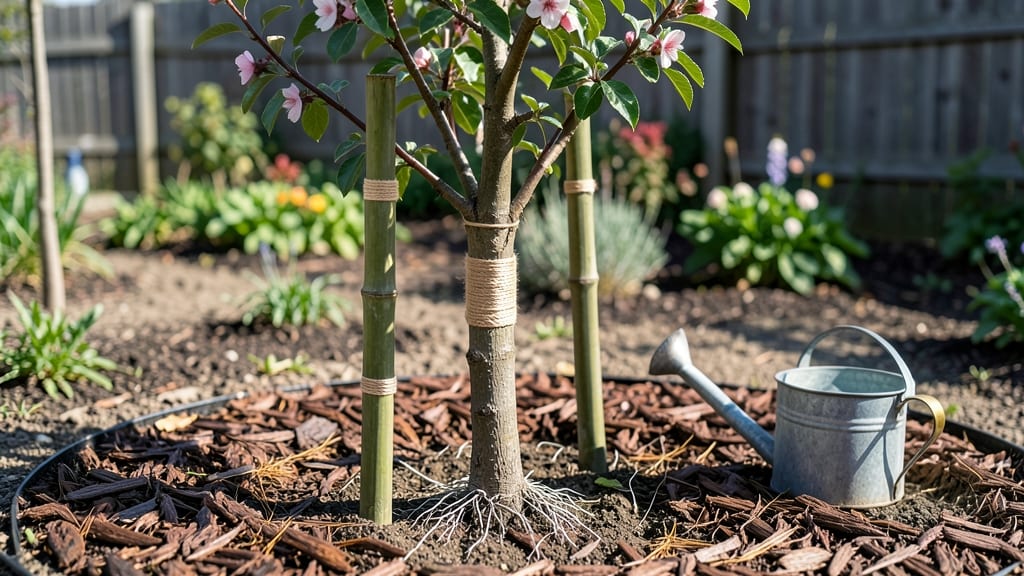
Staking fruit trees isn’t just about keeping them upright—it’s the difference between a tree that thrives and one that struggles to grow straight. 🌳 I’ve seen young fruit trees lean dangerously after just one storm, only to recover with proper support.
The right stakes and technique give your tree confidence to focus on roots and fruit instead of fighting the wind.
You’ll need 2-3 stakes per tree (depending on size), tree ties that won’t cut into bark, and a little patience. Most gardeners stake too tightly or use the wrong materials—both can strangle growth.
The goal is gentle guidance, not a rigid cage. A single stake at a 45-degree angle behind the tree’s natural lean usually does the trick for most varieties.
Within a season, you’ll notice stronger trunk development and fewer broken branches. Apples, peaches, and cherries all benefit, especially in windy areas. The best part? Proper staking means your tree puts energy where it counts—into healthier roots and bigger harvests next year.
Start now, and by next spring, your tree will stand tall on its own. Just remember: check ties every few weeks as the trunk grows thicker. No need for fancy equipment—just the right approach.
📚 In This Guide
- What you need
- Instructions
- Tips and common mistakes
- Wrapping up and next steps
What you need
- ● Stakes: 3–5 bamboo or wooden stakes (per tree), 5–6 feet tall (or slightly taller than your tree).
- ● Metal or plastic tree ties (biodegradable preferred) – 10–20 per tree, depending on tree size.
- ○ Support System: 1 tree collar guard (optional but recommended to protect the trunk).
- ● 1–2 T-posts or heavy-duty stakes (for windy areas).
- ● Tools: Hand pruners or shears (for trimming if needed).
- ● Measuring tape or ruler (to ensure proper stake placement).
- ● Gloves (to protect your hands from splinters or rough bark).
- ● Mulch (to stabilize soil and retain moisture around the base).
- ● Tree guards or shields (to prevent animals from chewing stakes).
- ● Adjustable stake clamps (for easier tightening as the tree grows).
- ● Watering can or hose (to keep the tree hydrated post-staking).
How to stake fruit trees for optimal stability and growth
Proper staking helps young trees develop strong root systems and upright growth—here's my battle-tested approach.
🪴 Step 1: Choose the Right Stakes and Ties
For 4 young fruit trees, use 4-foot wooden or metal stakes (1 per tree) with 1-inch wide fabric ties (3 per stake). The stakes should be 2-3 times the tree's height—so a 3-foot tree gets a 6-foot stake. I avoid plastic stakes because they can cut into bark as the tree grows.
Drive the stake 3-4 inches deep into the soil at a 45-degree angle away from the prevailing wind. The top of the stake should extend 6-12 inches above the tree's highest branch. This angle prevents wind from pushing the tree against the stake and damaging the trunk.
☀️ Step 2: Position the Tree and Secure the Stake
Place the tree in its permanent location, ensuring the graft union (the bulge near the base) is 2-4 inches above soil level. This prevents the graft from being buried, which can cause the tree to produce unwanted suckers. Gently wiggle the tree to check for loose soil—if it moves, firm the base.
Attach the first tie 6-12 inches above the graft union, wrapping it loosely around the trunk and stake. Use a figure-eight pattern to prevent cutting into the bark. The tie should be snug enough to hold the tree upright but loose enough to allow slight trunk movement—this encourages natural strength development.
🌿 Step 3: Add Additional Ties for Stability
Install a second tie 12-18 inches above the first, and a third 18-24 inches above that. These ties should be spaced evenly to distribute pressure and prevent the tree from bending between supports. I adjust the ties as the tree grows, always keeping them loose enough to slide two fingers under the fabric—too tight restricts growth.
Check the ties every 2-4 weeks during the first year. If the tree outgrows the stake (you'll see the top branches bending away), remove the stake entirely and let the tree stand alone. I've seen trees with stakes left in too long develop weak, spiral trunks from constant pressure.
⏰ Step 4: Monitor and Adjust Through the Growing Season
After 6-8 weeks, reassess the staking system. If the tree is upright and stable, you can remove one tie at a time, starting with the lowest. By the end of the first growing season, most trees no longer need staking—unless they're in high-wind areas. Watch for leaning or bending trunks as a sign the stakes are still needed.
In winter, remove all stakes and ties before heavy snow or ice can damage the bark. I mark the stake removal date on my calendar—late fall—so I don’t forget. A tree that’s been staked properly for a season will stand strong on its own, with a straight trunk and well-balanced canopy.
Tips & tricks for perfect fruit tree staking
These battle-tested insights will help you avoid common mistakes and give your young trees the strongest possible start.
Stake Placement Precision: When positioning your 4-foot stakes at a 45-degree angle, imagine drawing a diagonal line from the tree's base toward the prevailing wind direction. The stake's top should clear the highest branch by 6-12 inches—this prevents wind from creating a seesaw effect that could snap weak branches. I've seen too many trees with stakes that were either too short (allowing excessive sway) or too tall (creating leverage points that bend trunks).
Tie Technique That Works: The figure-eight pattern for your fabric ties isn't just decorative—it's essential. Cross the tie at the back of the trunk where the bark is thickest, then bring it forward to create the figure-eight shape. This distributes pressure evenly and prevents the tie from cutting into the cambium layer (the growth layer just under the bark). I learned this the hard way after seeing girdling marks on several trees from improperly tied stakes.
Growth Monitoring System: Mark your calendar for the 6-8 week reassessment point—this is when you'll notice whether your trees have developed enough trunk strength. Look for three key indicators: (1) The trunk should be straight when viewed from all sides, (2) The ties should show minimal wear, and (3) The tree should sway slightly when gently pushed (like a healthy sapling). If you see any bending at the tie points, it's time to remove stakes gradually, starting with the lowest.
Seasonal Stake Removal: Late fall is the perfect time to remove all stakes and ties before winter sets in. The dormant season gives trees time to recover from any minor stress caused by staking. I've noticed that trees staked through winter often develop weak spots where the bark was compressed against the ties. Remove stakes completely by late fall to allow for natural trunk thickening during the winter months.
Pro Tips for Staking Fruit Trees
- These battle-tested insights will help you avoid common mistakes and give your young trees the strongest possible start.
- Stake Placement Precision: When positioning your 4-foot stakes at a 45-degree angle, imagine drawing a diagonal line from the tree's base toward the prevailing wind direction.
- Tie Technique That Works: The figure-eight pattern for your fabric ties isn't just decorative—it's essential.
Frequently asked questions
Got questions about staking fruit trees? You’re not alone! Here are some of the most common concerns—plus clear, actionable answers to help you support your trees like a pro.
When is the best time to stake a young fruit tree?
Stake your tree as soon as you plant it—ideally within a few days. Young trees need support immediately to establish stability, especially in windy areas. If you miss the window, wait until spring before new growth begins, but avoid staking during extreme weather.
How tall should the stake be for a fruit tree?
The stake should be 2/3 the height of the tree (e.g., 4–6 feet for a 6-foot sapling). Bury it one-third of its length into the soil to ensure it’s sturdy. Use a 2–3 inch diameter stake for most fruit trees—thicker stakes prevent bending but may restrict root growth if too large.
Can I reuse stakes from last year’s fruit tree?
Reusing stakes is fine if they’re still in good condition—no rot, cracks, or splinters. However, sterilize them first by soaking in a 10% bleach solution (1 part bleach to 9 parts water) for 10 minutes to kill bacteria or fungi. Avoid stakes that’ve been buried in contaminated soil.
What should I do if my staked tree leans or the stake breaks?
If the tree leans, loosen the ties slightly and gently guide it upright before retightening. For a broken stake, replace it immediately with a temporary support (like a bamboo pole) while you install a new, properly sized stake. Never leave a tree unsupported—it risks uprooting or snapping.
Are there alternatives to traditional stakes for fruit trees?
Yes! Try these options:
- Tree ties + bamboo poles: Lightweight and adjustable for young trees.
- Wire cages: Great for windy areas—wrap the tree loosely in galvanized wire.
- Living stakes: Plant fast-growing willow or dogwood cuttings alongside the tree for natural support.
Choose based on your tree’s size, soil type, and local climate.
Wrapping up and next steps
Staking your fruit trees isn’t just about keeping them upright—it’s an investment in their long-term health, resilience, and productivity. 🌱 By choosing the right materials, following proper techniques, and monitoring growth, you’re setting the stage for stronger roots, better fruit yield, and fewer headaches down the road.
Whether you’re a seasoned gardener or just starting out, every stake you plant is a step toward a thriving orchard.
Ready to take the next step? Start with one tree this season—grab your supplies, follow the guidelines, and watch your fruit trees grow with confidence! 🌳 For even more success, consider joining local gardening groups or forums to share tips and celebrate your progress together.