
Vegetables
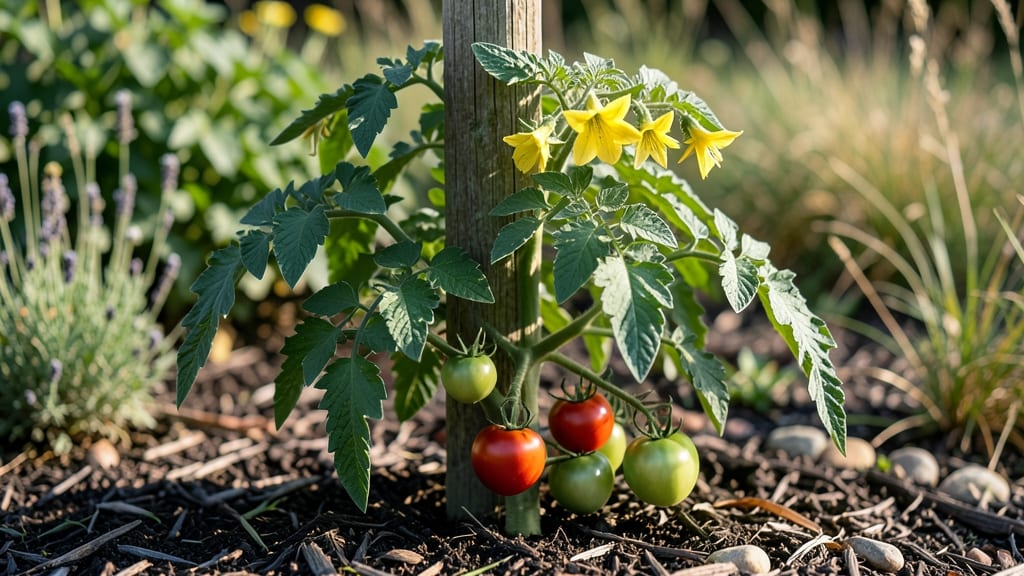
Tomatoes are botanically classified as fruits because they develop from the flower’s ovary and contain seeds, even though they’re often used as vegetables in cooking. Their sweet, fleshy texture aligns with fruit characteristics under scientific definitions.
This classification stems from how plants reproduce: fruits form from fertilized flowers and contain seeds, while vegetables refer to other edible plant parts like leaves or stems. 🌱 The confusion arises because tomatoes are savory in flavor and used in savory dishes, but scientifically, they’re fruits.
Even botanists like Charles Darwin studied tomato classification, proving their fruit status through seed development.
What makes this distinction important? It affects how we understand plant biology and even gardening practices.
For example, growing tomatoes requires treating them as fruits—providing proper pollination support and harvesting when fully ripe for best flavor. 🍅 This knowledge helps gardeners maximize yield and quality, whether growing heirloom varieties or hybrid types.
💡 In This Article
- Botanical Classification: Why Tomatoes Meet Fruit Criteria
- Growing Tomatoes for Optimal Fruit Production
Botanical classification: why tomatoes meet fruit criteria
At its core, the classification of tomatoes as fruits hinges on their reproductive biology. According to botanists, a fruit is defined as the mature ovary of a flowering plant, typically containing seeds.
Tomatoes fit this definition perfectly—their familiar red (or sometimes yellow, green, or purple) globes develop directly from the flower's ovary after fertilization. Inside each tomato, you'll find hundreds of tiny seeds embedded in the fleshy tissue, a hallmark of fruit development. 🌱
This scientific definition contrasts sharply with culinary classifications, where "vegetable" refers to any edible plant part except for fruits, nuts, and grains. Tomatoes are often used in savory dishes like salads, sauces, and stews, leading to their common mislabeling.
However, botanically, they're no different from apples, peaches, or cucumbers—all of which are fruits. Even the word "tomato" comes from the Nahuatl word "tomatl," meaning "swelling" or "fruit." The confusion arises because we associate "fruit" with sweet desserts, not savory meals.
The key mechanism here involves pollination and seed dispersal. When a tomato plant flowers, bees and other pollinators transfer pollen, leading to fertilization. The ovary then swells and develops into the fruit, protecting the seeds until they're ready to germinate.
This process is identical in tomatoes to that of other fruits like strawberries or avocados. The fleshy texture we enjoy is actually an adaptation to attract animals that will eat the fruit and disperse the seeds through their droppings—a classic evolutionary strategy for seed propagation.
Consider this comparison: A cucumber is botanically a fruit (it develops from flowers and contains seeds), yet we use it in salads alongside tomatoes. Similarly, bell peppers are fruits too, despite being cooked like vegetables. The distinction becomes clearer when examining the plant's reproductive structures.
Tomatoes grow from the flower's ovary just like peppers or eggplants, while vegetables like lettuce or carrots come from leaves or roots. This biological reality explains why tomato plants produce flowers first—those flowers are essential for fruit development.
One common misconception is that only sweet-tasting plants are fruits. However, flavor isn't part of the botanical definition. Some fruits are tart (lemons), others are bitter (persimmons), and tomatoes fall into the savory category.
Their umami-rich taste comes from compounds like glutamates and amino acids, which are chemically distinct from the sugars found in sweet fruits. This savory profile is why tomatoes work so well in savory dishes, despite their botanical classification.
The practical implications of this classification extend beyond the dinner table. For gardeners, understanding that tomatoes are fruits means focusing on conditions that optimize fruit production: adequate sunlight (6-8 hours daily), proper pollination (hand-pollinating if needed), and balanced nutrients (especially phosphorus for flowering).
The plant's energy goes into developing fruits, not leaves or stems, which is why pruning can redirect resources toward larger, healthier tomatoes. 🌿
Even famous figures have weighed in on this debate. Charles Darwin himself studied tomato classification in the 19th century, noting how their fruit development mirrored that of other plants. His observations helped solidify the botanical definition we use today.
The confusion between culinary and botanical terms persists, but the science remains clear: tomatoes are fruits by every measurable standard.