
Companion Plants
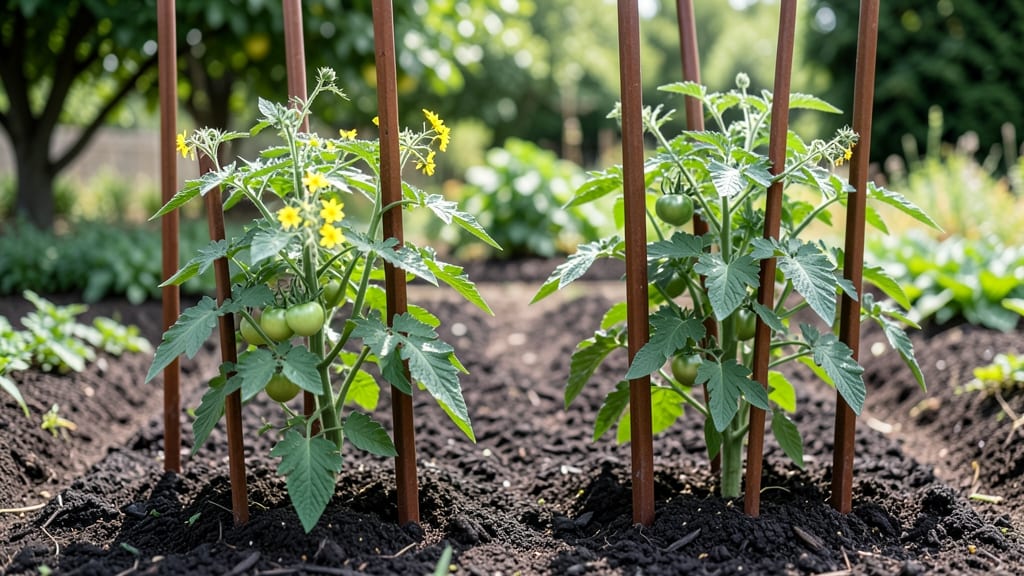
To produce fruit, you don't always need two tomato plants—self-pollinating types like cherry tomatoes set fruit independently, while cross-pollinating varieties (such as beefsteak) benefit from nearby plants or manual assistance. Outdoor plants rely on wind or pollinators, but indoor growers often need to shake plants or use a brush to mimic natural pollination.
Most home gardeners assume two tomato plants are necessary for fruit production, but the truth depends on the variety.
Self-pollinating tomatoes (like 'Sweet 100' cherries) have both male and female parts in their flowers, so they can fertilize themselves. 🌱 However, cross-pollinating varieties need pollen transfer between plants to trigger fruit development.
The key difference lies in flower structure—self-pollinators have flowers that close tightly around their reproductive parts, while cross-pollinators often require external agents like bees or wind to move pollen.
Indoor growers face an extra challenge since controlled environments lack these natural helpers, which is why gentle shaking or brush pollination becomes essential for consistent yields.
Even with one plant, you can maximize fruit production by choosing the right variety and employing simple techniques. For instance, growing a self-pollinating type like 'Tiny Tim' eliminates the need for companion plants entirely.
If you're working with cross-pollinating varieties, a small handheld brush can work wonders—just lightly tap the flowers to release pollen. Pruning also plays a role: removing suckers (side shoots) redirects the plant's energy toward fruit development rather than leaf growth. The bottom line?
With the right approach, a single tomato plant can produce a surprising harvest—you just need to understand its pollination needs first.
💡 In This Article
- How Tomato Pollination Works for Fruit Development
- Boosting Tomato Fruit Production Without Multiple Plants
How tomato pollination works for fruit development
Tomato flowers contain both male and female reproductive parts, but their arrangement determines whether they're self-pollinating or cross-pollinating. Self-pollinators like 'Sweet 100' cherry tomatoes have flowers where pollen from the anthers (male parts) naturally lands on the stigma (female part) as the flower opens.
This process happens automatically, requiring no outside help. In contrast, cross-pollinators like 'Brandywine' beefsteak tomatoes need pollen from another plant to fertilize their flowers, as their stigmas are positioned to receive pollen from different flowers.
The flower structure plays a critical role: self-pollinating varieties often have flowers that close tightly around their reproductive parts, creating a built-in pollen transfer system. Cross-pollinating flowers typically remain open longer, making them dependent on wind, bees, or other pollinators.
Humidity also affects pollen viability—dry conditions can cause pollen to become too brittle to transfer effectively, while high humidity may promote fungal growth that interferes with pollination. 🌬️ Outdoor plants usually rely on these natural factors, but indoor environments often lack them, which is why many growers see reduced fruit set without intervention.
Environmental factors like temperature matter too. Pollen production peaks at 70-80°F, while cooler conditions slow the process. Bees are most active between 8:00 AM and 10:00 AM, which is why early morning is the best time for natural pollination.
If you're growing indoors without pollinators, you're essentially creating a controlled environment where these natural processes don't occur—hence the need for manual techniques like shaking or brushing flowers to mimic wind or bee activity.
Even with one plant, you can observe the pollination process up close. Self-pollinating flowers will often show signs of successful pollination within 24-48 hours, like the flower wilting and a tiny fruit beginning to form.
Cross-pollinating flowers may take longer to show signs of fertilization, and without pollen transfer, they'll simply drop off without producing fruit. This is why some gardeners notice their beefsteak tomatoes setting fewer fruits when grown alone compared to when they have companion plants.
Here's what's happening at the cellular level: when pollen lands on the stigma, it germinates and grows a pollen tube down through the style to the ovary. This tube carries sperm cells that fertilize the ovules, which then develop into seeds while the surrounding ovary grows into the tomato fruit.
Without successful pollination, the flower simply withers away—no fruit forms. Understanding this process helps explain why some tomato varieties struggle to produce fruit when grown in isolation.
For indoor growers, this means recreating natural pollination conditions. A simple handheld brush can transfer pollen between flowers, while gently shaking the plant mimics wind pollination. The key is consistency—pollination needs to happen during the flower's receptive period, typically the first 2-3 days after opening. 🌱