
Trees
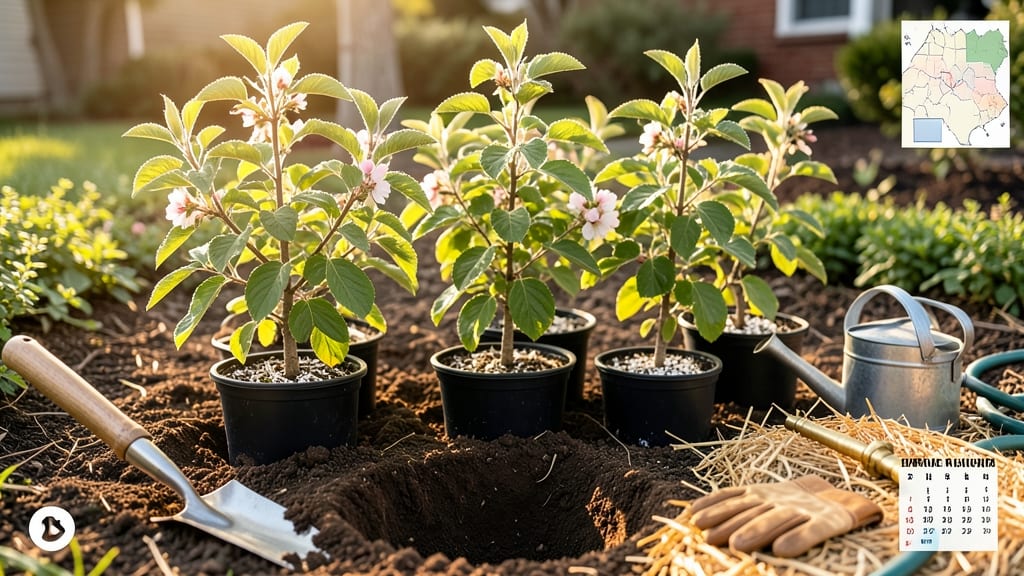
Planting fruit trees in Kansas at the right time—late winter to early spring—sets the stage for a bountiful harvest 🍎, but timing is everything with chill-hour needs and frost risks.
Get it wrong, and you could end up with a tree that either struggles to fruit or gets wiped out by a late freeze. Kansas’ 5b-7a zones and unpredictable frost dates mean the 2-4 week window between February and April is critical.
Below, I break down the exact months for your favorite varieties—apples, peaches, and plums—plus how to adjust for your region’s frost risks and soil conditions.
You’ll learn how to read chill-hour requirements, spot the best local varieties, and use soil thermometers to nail your planting date for maximum success.
Kansas fruit tree planting timeline by chill-hour requirements
Kansas gardeners face a unique challenge when planting fruit trees: the state's variable chill-hour requirements combined with unpredictable frost patterns. Northern Kansas (USDA Zone 5b-6a) needs 700-1,000 chill hours, while southern Kansas (Zone 6b-7a) thrives with 500-800 chill hours.
Timing is everything—plant too early, and frost zaps young roots; too late, and trees struggle to establish before winter.
For apples and cherries, which demand the most chill hours, I recommend planting in late February to early March in northern Kansas. Southern Kansas gardeners can extend the window until mid-April for varieties like 'Honeycrisp' apples or 'Montmorency' cherries.
Peaches and plums, with lower chill needs, offer more flexibility but still require precise timing to avoid late frosts.
Here’s my Kansas-specific chill-hour planting guide, broken down by tree type and region. Use this as your roadmap to avoid common mistakes like frost damage or poor root establishment.
| Fruit Tree | Chill-Hour Needs | Best Planting Window (Northern KS) | Best Planting Window (Southern KS) | Key Varieties |
|---|---|---|---|---|
| Apples | 700-1,000 hours | Late Feb - Early Mar | Mid-Mar - Mid-Apr | 'Honeycrisp', 'Gala', 'Fuji' |
| Peaches | 500-800 hours | Early Mar - Early Apr | Mid-Mar - Late Apr | 'Reluctant', 'Redhaven', 'Elberta' |
| Cherries | 800-1,000 hours | Late Feb - Early Mar | Mid-Mar - Early Apr | 'Montmorency', 'Stella', 'Black Tartarian' |
| Plums | 400-700 hours | Early Mar - Late Mar | Mid-Mar - Mid-Apr | 'Stanley', 'Satsuma', 'Methley' |
🌱 Pro Tip: Bare-root trees establish faster—plant them as soon as soil is workable (around 40°F).
In northern Kansas, where frosts linger longer, I prioritize late February to early March for high-chill varieties like 'Honeycrisp' apples. The soil is cold but workable, and trees can establish roots before the spring thaw.
For peaches and plums, which need fewer chill hours, I often push planting to early April to avoid late frosts that can damage blossoms.
Southern Kansas gardeners have a 2-3 week advantage. The USDA Zone 6b-7a region allows planting until mid-April for most varieties. This extended window reduces frost risk but requires monitoring local frost forecasts. For example, 'Reluctant' peaches thrive in southern Kansas but may bloom too early in northern zones.
One mistake I see often? Planting container-grown trees in late spring (May-June). While possible, these trees struggle to establish roots before winter. If you must plant later, choose dwarf varieties like 'Columnar' apples or 'Pixwell' peaches, which adapt better to shorter growing seasons.
For fall planting, limit yourself to container-grown trees in September-October. The goal is to give roots time to establish before winter dormancy. Avoid bare-root trees in fall—they’re better suited for dormant-season planting in late winter. Always mulch heavily (3-4 inches) to insulate roots from temperature swings.
Use a soil thermometer to confirm planting readiness. Ideal soil temps hover around 40-50°F. If temps drop below 35°F, delay planting until conditions stabilize. In Wich
How to adjust planting dates for Kansas’ frost zones & microclimates
Kansas’ frost zones can shift planting windows by weeks—sometimes even months—between northern and southern regions.
For example, Wichita (Zone 7a) often enjoys 2-3 weeks earlier last-frost dates than Kansas City (Zone 6a), meaning peach trees might thrive in late February in Wichita but risk frost damage if planted before mid-March in KC.
Understanding these microclimate differences is key to avoiding late-spring frosts that can devastate young fruit trees.
Even within the same city, urban heat islands or elevated garden beds can create warmer microclimates that allow earlier planting.
For instance, a south-facing slope in Hays (Zone 5b) might safely accommodate apple trees in early April, while a low-lying area in the same town could face frost risks until mid-May.
Using local frost-date data from sources like the Kansas State University Extension ensures you’re planting at the right time for your specific location.
⚠️ callout warning
Even if buds look healthy, a 28°F night in late April can kill newly planted fruit trees. Peach and cherry trees are especially vulnerable—delay planting until after average last frost dates (check K-State’s frost maps). For extra safety, use row covers or plant low-chill varieties like ‘Redhaven’ apples or ‘Reluctant’ peaches.
To fine-tune your planting schedule, invest in a soil thermometer—these tools measure root-zone temperatures, which can be 5-10°F warmer than air temps. For bare-root fruit trees, wait until soil temps reach 45°F (ideal for root establishment).
In southern Kansas (Zones 7a-7b), this might mean planting apple trees in late February, while northern Kansas (Zones 5b-6a) gardeners should hold off until mid-April.
Another trick? Monitor cherry blossom timelines in your area—when local ornamental cherries bloom signals peak frost risk for fruit trees. In Topeka, this often falls around mid-April, so delay planting stone fruits (peaches, plums) until after blossoms fade.
For pome fruits (apples, pears), which tolerate slightly cooler temps, you can plant 2-3 weeks earlier than stone fruits.
Don’t forget windbreaks—Kansas’ prevailing westerlies can dry out young trees or expose them to windburn. Planting near hedgerows or fences on the west side of your orchard can create a protective microclimate, allowing you to plant 1-2 weeks earlier in exposed areas.
Pair this with mulching (4-6 inches of straw) to insulate roots and retain moisture, which is critical in drought-prone years like 2022.
Finally, keep a planting journal for at least 3 years to track how your local microclimate affects fruit tree success. Note unusual frost events, soil warming trends, and tree survival rates—this data will help you adjust future planting dates.
For example, if your ‘GoldRush’ apple trees consistently struggle when planted before May 1st in Salina, shift your schedule accordingly. With these adjustments, you’ll maximize your orchard’s potential and enjoy bountiful harvests year after year. 🌳