
Trees
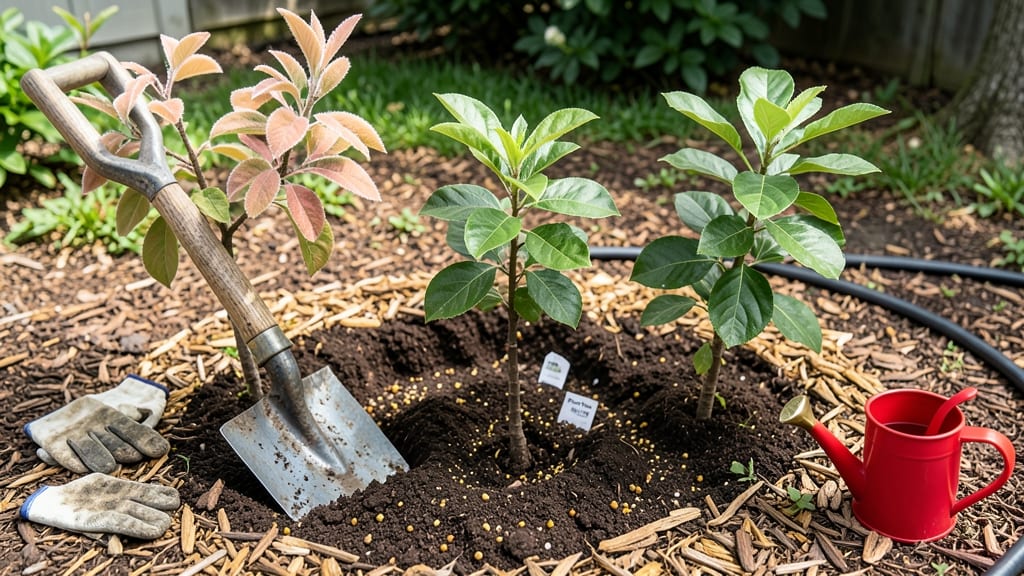
To plant fruit trees in Tennessee at the right time means catching the narrow window between dormancy and bud break—typically late winter to early spring, when the soil is workable but the tree isn’t yet awake.
Tennessee’s mild winters and hot summers create the perfect climate for growing fruit trees—but planting at the wrong time can mean poor root establishment or even tree failure. Timing is everything for maximizing yield and long-term success in USDA Zones 7a and 7b.
If you’ve ever watched a newly planted 🍎 tree struggle through a late frost or wilt in summer heat, you know how critical the planting window is.
The key is balancing soil temperature, frost risk, and tree dormancy—each factor shifts slightly depending on whether you’re in Nashville’s cooler microclimate or Memphis’s warmer pockets.
Below, I break down the exact months for bare-root vs. container-grown trees, how to adjust for your Tennessee county, and the 3 pro tips that keep young trees thriving through unpredictable spring weather.
Best planting months for fruit trees in Tennessee’s zone 7a-7b climate
Tennessee’s USDA Zones 7a-7b offer ideal conditions for growing fruit trees, but timing your planting correctly is critical. The best window for planting most fruit trees is during dormancy, which in Tennessee typically runs from late winter to early spring (February–April).
This period allows roots to establish before the tree wakes up in spring, ensuring strong growth and higher yields.
For bare-root trees, this timing is especially important because they need moist soil but shouldn’t be planted when the ground is frozen.
In Tennessee, this usually means February to early March, before the soil warms too much. Container-grown trees, on the other hand, can be planted a bit later—up to April—since their roots are already established in soil.
Here’s a quick reference for optimal planting times based on fruit tree type and form:
| Fruit Tree Type | Best Planting Months | Key Considerations |
|---|---|---|
| Apples (e.g., Fuji, Gala) | February–March (bare-root) or April (container) | Needs cross-pollination. Avoid planting after last frost. |
| Peaches (e.g., Elberta, Redhaven) | February–March (bare-root) or early April (container) | Blooms early—protect from late frosts in spring. |
| Pears (e.g., Bartlett, Anjou) | February–March (bare-root) or April (container) | Tolerates partial shade but prefers full sun. |
| Citrus (e.g., Meyer Lemon, Orange) | March–April (container only) | Not cold-hardy—plant after last frost and protect from frost. |
| Fall Planting (All Types) | October–November (container only) | Roots establish before winter, but avoid planting too late. |
While late winter to early spring is the ideal window for most fruit trees, Tennessee’s microclimates can shift planting times slightly. For example, elevated areas like the Cumberland Plateau may experience earlier frosts, so planting in March might be safer.
Conversely, warmer southern regions like Memphis could extend the window into early April.
For bare-root trees, the goal is to plant them as soon as the soil is workable but before buds begin to swell. In Tennessee, this usually means February to early March.
If you miss this window, wait until fall (October–November), but avoid planting in summer due to heat stress and poor root establishment.
If you’re planting container-grown trees, you have a bit more flexibility. These trees can be planted up to April, as long as the soil isn’t frozen.
However, avoid planting during extreme heat, which can shock the roots. Fall planting (October–November) is also an option for container-grown trees, allowing roots to establish before winter dormancy.
Citrus trees are a special case in Tennessee’s Zone 7a-7b. Since they’re not cold-hardy, they must be planted after the last frost date, typically mid to late March.
Use container growing or plant them in a protected microclimate, like near a south-facing wall, to extend their growing season.
One common mistake is planting too early or too late. Planting bare-root trees in frozen soil can damage roots, while planting too late in spring may delay root establishment.
Always check the soil temperature—it should be at least 40°F (4°C) for safe planting. Use a soil thermometer to monitor conditions if you’re unsure.
To maximize success, amend the planting hole with compost or well-rotted manure to improve drainage and fertility. Mulch around the base of the tree with 2–4 inches of organic mulch to retain moisture and regulate soil temperature.
This is especially important in Tennessee’s clay-heavy soils, which can become compacted and waterlogged.
Finally, remember that tree size and variety can influence planting timing. Dwarf varieties, for example, may establish more quickly and tolerate a slightly later planting window than standard-sized trees. Always check the specific care guidelines for your chosen variety to fine-tune your planting schedule.
How to choose the perfect planting window for your Tennessee county
Selecting the right time to plant fruit trees in Tennessee depends on your USDA Zone (7a or 7b) and the type of tree you’re planting. In my experience, the last frost date and soil temperature are the two most critical factors.
For most Tennessee counties, this means aiming for early spring (February–April) or late fall (October–November).
Spring planting gives young trees time to establish roots before summer heat, while fall planting allows roots to grow slowly in cooler soil. However, peach and plum trees are exceptions—they need to be planted in late winter to avoid blooming too early and getting damaged by late frosts.
Always check your county’s average last frost date, which typically falls between mid-March and early April.
Planting bare-root trees before the ground thaws (before soil temperatures reach 40°F) can stunt root growth. Conversely, planting after the first frost (mid-October) risks exposing trees to winter stress. Use this Tennessee frost map to guide your timing: TN Ag Extension provides county-specific data.
For container-grown trees, the window is slightly wider—plant in spring or early fall—but avoid extreme heat or cold. Always water deeply after planting to reduce transplant shock.
Start by researching your county’s microclimate. For example, Nashville (Zone 7a) has a later last frost than Chattanooga (Zone 7b), so adjust your timeline accordingly. Use a soil thermometer to confirm temperatures—roots need consistent warmth to grow.
If you’re planting citrus trees, wait until soil temps stay above 60°F for at least a week, as they’re sensitive to cold.
Another pro tip: Test your soil’s pH before planting. Most fruit trees thrive in slightly acidic soil (pH 6.0–7.0). If your soil is too alkaline, amend it with sulfur or peat moss before digging the planting hole.
The hole should be twice as wide as the root ball but only as deep. This prevents root girdling and encourages outward growth.
For dwarf varieties like columnar apples or semi-dwarf peaches, timing is even more critical. These trees mature faster but are more vulnerable to late-season frosts. Plant them in early spring (March) to give them a head start.
If you’re in a warmer microclimate (e.g., Memphis), you can push planting to late April, but monitor weather forecasts closely.
Finally, avoid common mistakes like planting too deep or ignoring mulch application. Spread 3–4 inches of organic mulch (like wood chips) around the base to retain moisture and regulate soil temperature.
Water deeply once a week for the first month, then taper off as roots establish. With the right timing and care, your fruit trees will thrive in Tennessee’s climate! 🌳