
Propagation
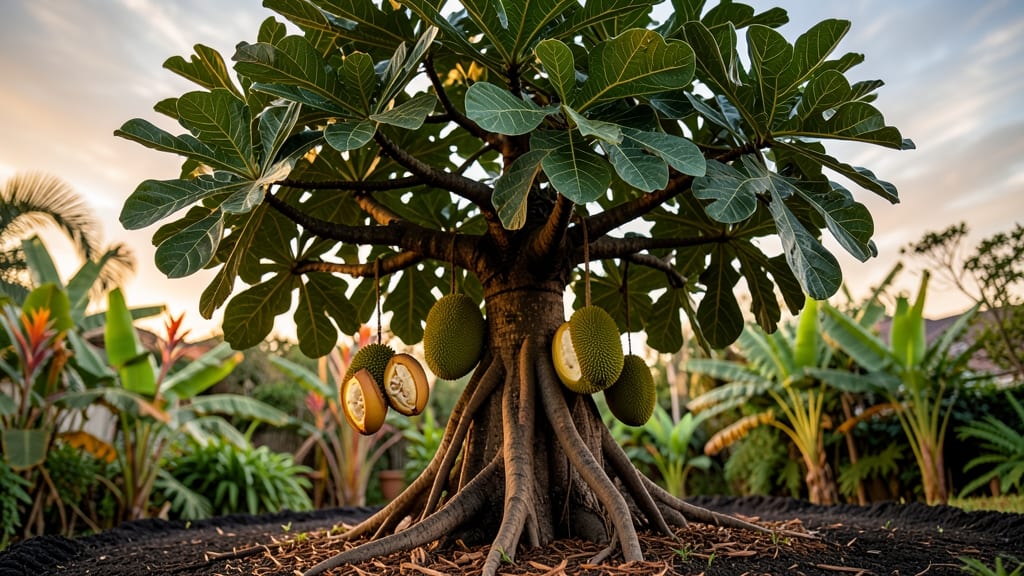
Jackfruit comes from the Western Ghats mountain ranges in southwestern India and Sri Lanka, where its natural tropical climate provides ideal conditions for growth. Today, it's cultivated extensively across Southeast Asia, South America, and Florida's subtropical zones due to its remarkable adaptability and growing global popularity.
This tropical fruit's origins trace back thousands of years to India's lush Western Ghats forests, where wild jackfruit trees still grow alongside cultivated varieties. 🌿 The region's warm, humid climate—with temperatures between 70-90°F and abundant rainfall—created the perfect environment for jackfruit to evolve into the massive, versatile fruit we know today.
What's fascinating is how jackfruit's natural resilience allowed it to spread beyond its native range, thriving in diverse ecosystems from Thailand's rice paddies to Brazil's Atlantic forests.
The fruit's global journey began with ancient trade routes, but modern cultivation expanded dramatically during the 19th century when European colonizers introduced it to tropical regions worldwide. Today, Thailand remains the world's largest producer, while Florida's subtropical climate has made it a key supplier for North American markets.
The tree's ability to tolerate various soil types—from sandy to clay—has further contributed to its widespread success across continents.
💡 In This Article
- Jackfruit’s Native Habitat and Historical Origins
- Modern Jackfruit Cultivation Zones Worldwide
Jackfruit’s native habitat and historical origins
The jackfruit tree's natural homeland lies in the Western Ghats mountain range, where elevations between 500-1,500 meters create a microclimate perfect for its growth. This region's annual rainfall of 2,000-4,000 mm provides the consistent moisture jackfruit trees need, while temperatures averaging 75-85°F during growing seasons prevent fruit stress.
The dense, evergreen forests of the Western Ghats act as a protective canopy, shielding young trees from extreme sun exposure while allowing mature trees to develop their massive, umbrella-like canopies.
Archaeological evidence suggests jackfruit was domesticated around 4,000-5,000 years ago in this region, with ancient Sanskrit texts from 1000 BCE describing its medicinal and culinary uses.
The fruit's rapid spread through Southeast Asia occurred through natural seed dispersal by animals and birds, which carried the large, fibrous fruits across river systems and forest clearings.
What makes jackfruit uniquely adapted to this environment is its ability to grow in both well-drained soils and slightly waterlogged conditions—a trait that would later help it thrive in diverse global climates.
The jackfruit tree's impressive size—some reaching 80-100 feet tall—reflects its evolutionary adaptation to compete for sunlight in dense forests.
Its deep root system allows it to access water from deep underground, while the tree's ability to flower and fruit multiple times per year (unlike many tropical fruits) maximizes its reproductive success.
These biological advantages explain why jackfruit became a staple in ancient Indian diets and why it remains one of the most productive tropical fruits today.
One fascinating aspect of jackfruit's native ecology is its symbiotic relationship with certain insect species. The tree's flowers produce nectar that attracts specific pollinators, while the fruit's fibrous pulp provides food for animals that aid in seed dispersal.
This ecological balance created an ideal environment for jackfruit to evolve into the massive, nutrient-dense fruit we recognize today—with individual fruits weighing up to 80 pounds and containing hundreds of individual seed pods.
The Western Ghats' biodiversity hotspot status also meant jackfruit had to develop natural defenses against pests. Its thick, spiky exterior protects the soft interior from many predators, while the fruit's high fiber and sugar content provides energy for animals that can penetrate its defenses.
This combination of protective adaptations and nutritional value explains why jackfruit became such a vital part of the region's ecosystems and human cultures.
What's particularly interesting is how jackfruit's native range extends slightly into Sri Lanka, where similar ecological conditions exist. The fruit's ability to thrive in both countries' tropical climates—with their distinct monsoon patterns—demonstrates its remarkable adaptability.
This natural resilience would later prove crucial as jackfruit spread to new continents with vastly different growing conditions.