
Fertilization
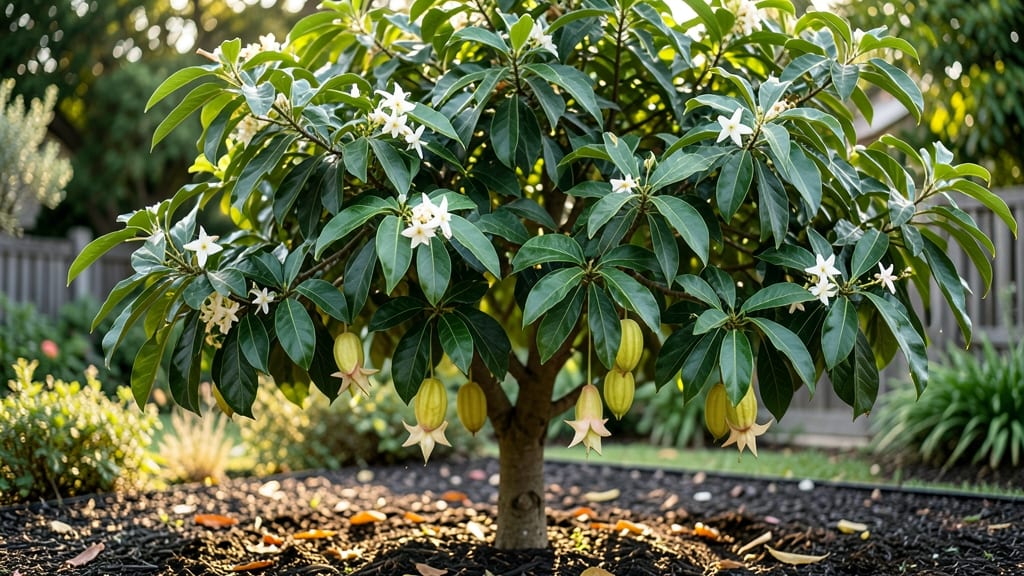
Star fruit grows best in tropical and subtropical climates, particularly in Southeast Asia, Central America, and parts of South America, where consistent warmth and high humidity support its year-round cultivation.
This tropical fruit demands specific conditions to thrive—ideal temperatures between 75°F and 85°F and humidity levels above 60%. 🌴 The soil must be well-draining yet rich in organic matter, with a slightly acidic pH between 5.5 and 6.5.
In regions like Thailand and Vietnam, these conditions create perfect environments for commercial production, while Florida and Israel have adapted by using irrigation systems to maintain the necessary moisture levels.
The key to successful star fruit cultivation lies in mimicking its natural tropical habitat, whether through natural climate advantages or controlled agricultural techniques.
Beyond the obvious tropical zones, star fruit also adapts well to subtropical areas with careful management. For instance, Florida's Everglades region produces high-quality star fruit thanks to its warm winters and abundant rainfall, while Israel's Negev Desert cultivation relies entirely on advanced irrigation.
These examples show how star fruit can thrive beyond its native tropical origins when given the right growing conditions.
💡 In This Article
- Climate and Soil Needs for Star Fruit Cultivation
- Top Star Fruit Growing Regions Worldwide
Climate and soil needs for star fruit cultivation
Star fruit, or Averrhoa carambola, demands precise environmental conditions to flourish. The plant thrives in temperatures between 75°F and 85°F, with minimal tolerance for frost—even brief exposure below 32°F can damage leaves and fruit.
This tropical fruit's sensitivity to cold explains why it rarely grows in temperate climates without greenhouse protection. The plant's native range in Southeast Asia and the Pacific Islands offers these stable conditions year-round, where warm nights and sunny days create perfect growing environments.
Humidity plays a crucial role too—star fruit requires levels above 60% to prevent stress and ensure proper fruit development. Low humidity causes the fruit to develop a bitter taste and reduces yield.
In regions like Thailand, where annual humidity averages 75-85%, star fruit trees produce sweet, crisp fruit with minimal bitterness. Soil composition is equally vital: star fruit prefers well-draining, slightly acidic soil with a pH between 5.5 and 6.5.
Sandy loam soils with organic matter improve root growth and nutrient absorption, while waterlogged conditions lead to root rot—a common issue in heavy clay soils.
The fruiting cycle depends heavily on these conditions. Star fruit trees typically bear fruit 6-12 months after planting, with peak production occurring in their third to fifth year. In tropical regions, trees can produce 2-3 crops annually when given consistent warmth and water.
The fruit's distinctive star shape develops best under these ideal conditions, with the five ridges forming more sharply in high-humidity environments. Without proper climate control, trees may produce smaller, less flavorful fruit or fail to fruit altogether.
Seasonal variations also matter. While star fruit grows year-round in its native tropical zones, subtropical regions like Florida experience slower growth during cooler months. Here, growers use drip irrigation systems to maintain soil moisture and windbreaks to protect trees from cold winds.
The plant's sensitivity to temperature fluctuations means even a few degrees below optimal can stunt growth or cause fruit drop. This is why commercial star fruit production relies so heavily on selecting the right growing zones—where natural conditions already provide the necessary warmth and humidity.
One fascinating adaptation is how star fruit trees respond to day length. In tropical regions, they flower and fruit continuously, while in subtropical areas, they may enter a brief dormant phase during winter.
This seasonal behavior affects harvest timing—growers in Florida, for example, time planting to ensure fruit ripens before the first frost. The tree's ability to adjust its growth cycle demonstrates its resilience, but only within narrow environmental parameters.
For home growers in less ideal climates, container cultivation offers a solution. Star fruit trees can thrive in large pots with proper drainage, allowing growers to move them indoors during cold months. This method maintains the tree's health while replicating tropical conditions through controlled watering and humidity levels.
The key takeaway? Star fruit's success depends on replicating its natural tropical environment—whether through natural climate advantages or careful agricultural techniques.