
Picking
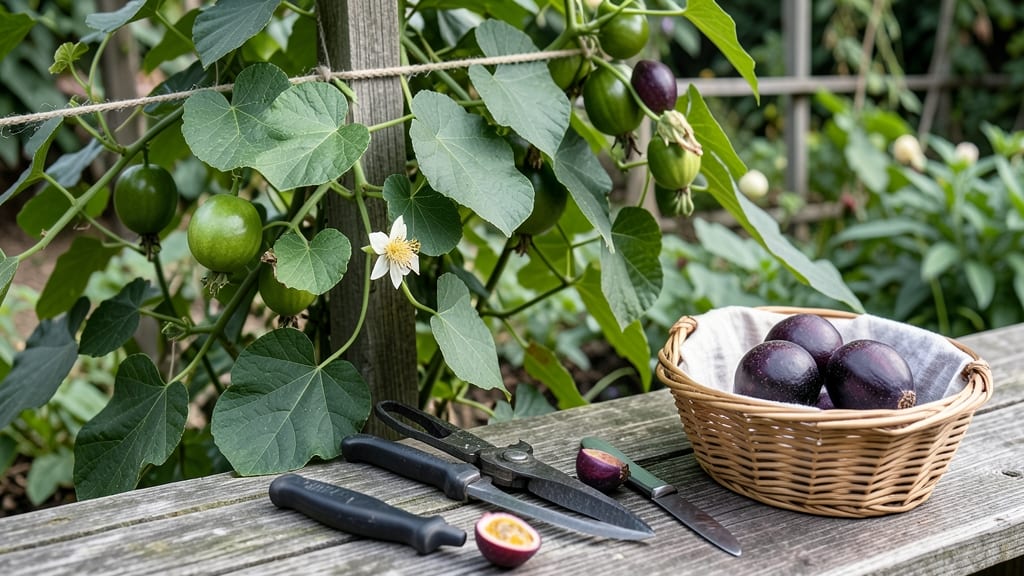
Passionfruit do not ripen off the vine after picking, so harvesting at peak ripeness is crucial. Look for deep purple or yellow skin, slight softness when gently squeezed, and a sweet, floral aroma before harvesting for optimal flavor and texture.
Unlike many tropical fruits, passionfruit rely on the vine to fully develop their sugars and soften their pulp.
Once picked, they won't mature further—meaning underripe fruit stays hard and tart, while overripe fruit turns mushy. 💫 I've learned that patience pays off here; waiting for the perfect moment ensures that sweet, floral burst of flavor you crave in desserts or drinks.
For the best results, harvest in the morning when temperatures are cooler, as this preserves the fruit's natural sugars. Always use clean pruners and wear gloves—passionfruit vines have tiny, sharp thorns that can leave painful scratches.
The color shift from green to deep purple (or yellow for some varieties) is your clearest visual cue, but never judge ripeness solely by appearance.
💡 In This Article
- Why Passionfruit Must Be Picked at Peak Ripeness
- How to Test Passionfruit Ripeness Before Harvesting
Why passionfruit must be picked at peak ripeness
The ripening process of passionfruit is fundamentally different from many other fruits because it relies entirely on the vine's energy. Unlike apples or bananas that continue to ripen after picking due to ethylene gas production, passionfruit stop developing sugars and softening the moment they're detached.
This is because their ripening mechanism is tied to the vine's photosynthesis and nutrient transport system, which shuts down once the fruit is harvested.
Botanically, passionfruit develop their signature sweetness through a complex interaction between starch conversion and sugar accumulation. At 20-25°C (68-77°F), the ideal growing temperature, the fruit's pulp gradually transforms from a firm, tart state to a creamy, sweet consistency.
The seeds also play a role—their development signals when the fruit is ready, as they reach full size only when the fruit is perfectly ripe. Harvesting too early means you'll get a hard, seedy fruit with minimal flavor, while waiting too long risks overripeness and mushy texture.
What most people don't realize is how dramatically ethylene production changes after picking. While still on the vine, passionfruit produce ethylene (the ripening hormone) at a steady rate, but this process halts completely within 24 hours of detachment.
This is why you'll never get that perfect balance of sweetness and texture if you pick too soon. The fruit's natural sugars, which can reach 12-15% concentration at peak ripeness, will never develop fully once off the vine.
Consider this: A passionfruit picked when just turning purple will taste bland and mealy, while one harvested at the perfect moment will burst with that signature floral-citrus flavor. The difference isn't just in taste—it's in the entire eating experience.
The pulp should be velvety rather than grainy, and the seeds should be fully formed but still firm. This is why professional growers often harvest in the morning when temperatures are cooler, as this preserves the fruit's natural sugar content and prevents premature softening.
There's also a scientific reason why passionfruit skin color changes dramatically at ripeness. The deep purple hue comes from anthocyanins, antioxidants that develop as the fruit matures. These compounds not only give the fruit its vibrant color but also contribute to its health benefits.
When you pick too early, you're missing out on these beneficial compounds along with the full flavor profile.
The seed development is another critical indicator. At peak ripeness, passionfruit seeds should be fully formed but still firm to the touch. If they're too soft or the fruit feels hollow when shaken, it's overripe.
This is your body telling you the fruit has passed its prime—something that's impossible to correct once picked.