
Trees
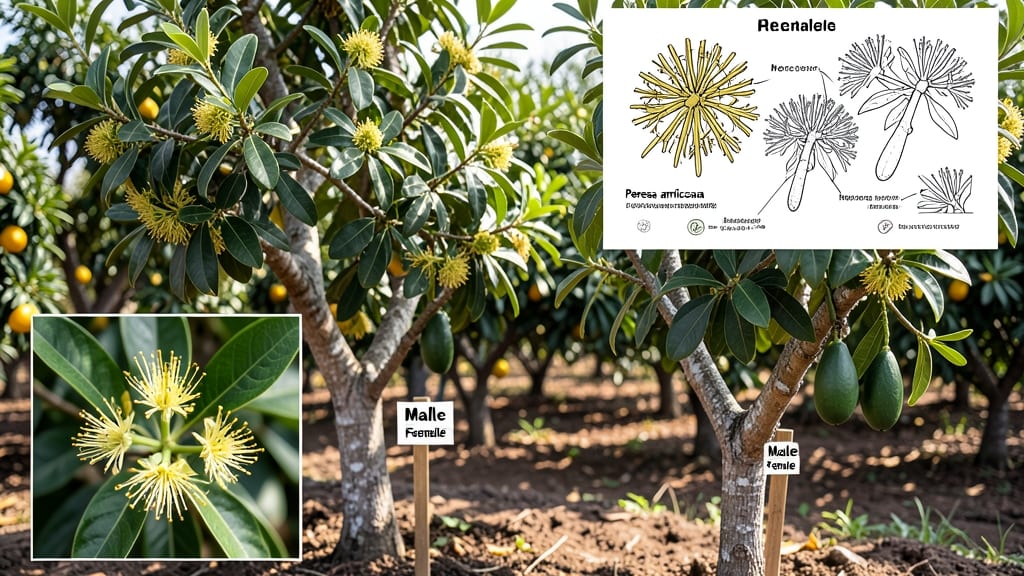
You need two avocado trees to produce fruit because most varieties depend on cross-pollination between Type A and Type B trees, which release pollen at different times of day. Planting both types together creates the necessary conditions for successful fruit development.
Avocado trees have a fascinating pollination system where Type A trees release pollen in the morning and Type B trees in the afternoon. 🌿 This timing difference means a single tree can't pollinate itself—it needs a partner of the opposite type within 50-100 feet to ensure fruit sets properly.
While some modern hybrids can self-pollinate, traditional varieties like Hass and Fuerte still require this classic A/B pairing for optimal yields.
What makes this especially important for home gardeners is that even if you plant two trees, their compatibility matters.
For example, pairing a Hass (Type B) with a Fuerte (Type A) creates ideal conditions for fruit production, while planting two Hass trees together would be a waste of space and resources. The key is understanding your local climate's flowering patterns and selecting varieties that bloom at similar times.
💡 In This Article
- Understanding Avocado Tree Pollination Types (A vs B)
- Choosing the Best Avocado Tree Pairings for Your Garden
Understanding avocado tree pollination types (a vs B)
Avocado trees have a unique biological system where pollination depends on timing. Type A trees release pollen in the early morning (around 6:00 AM to 9:00 AM), while Type B trees release pollen in the late afternoon (around 12:00 PM to 3:00 PM).
This staggered schedule means a single tree can't pollinate itself—its flowers open at the wrong time for its own pollen to reach them. 🌞 The flowers also close within 24 hours, leaving a very narrow window for successful cross-pollination.
This timing mechanism is why planting both types is essential. When a Type A tree's flowers open in the morning, they're receptive to pollen from Type B trees that was released the previous afternoon.
The reverse happens in the afternoon: Type B flowers open to receive morning pollen from Type A trees. Without this precise timing, flowers fail to set fruit, and the tree produces little to nothing.
Even if you have two trees of the same type, their pollen won't align with each other's receptive periods.
Most commercial varieties follow this pattern, including popular types like Hass (Type B) and Fuerte (Type A). However, some modern hybrids have been bred to be self-pollinating, meaning they can produce fruit alone. These varieties are becoming more common in nurseries but still represent a small fraction of available options.
The key difference is that self-pollinating trees have flowers that remain open longer or release pollen at overlapping times, creating their own internal pollination system.
What makes this even more interesting is how climate affects flowering. In warmer regions, trees may flower multiple times a year, increasing the chances for successful pollination. In cooler climates, flowering may be more seasonal, requiring careful selection of varieties that bloom at similar times.
For example, a Hass tree (Type B) planted in Florida might not pair well with a Fuerte (Type A) from California unless their flowering seasons align within a 2-3 week window.
Here's what happens when you get the pairing wrong: Type A trees planted alone will have flowers that open in the morning but receive no compatible pollen, while Type B trees will have afternoon flowers that also go unpollinated.
The result is a tree that looks healthy but produces almost no fruit—a frustrating outcome for gardeners who expect a bountiful harvest. 🍑 This is why nurseries often sell "A/B pairs" specifically designed to complement each other.
For those who want to experiment, some varieties like Reed and Lamb Hass can produce fruit when planted alone, though yields are typically lower. These exceptions prove that while the classic A/B system works reliably, nature always has surprises in its genetic toolkit.