
Succulent
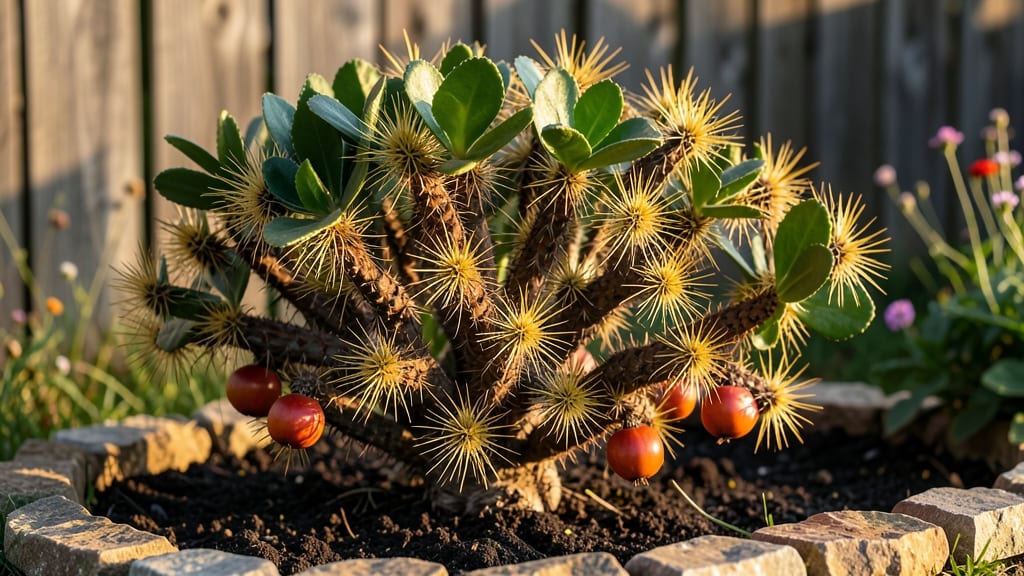
Fruit on cactus comes from edible varieties like prickly pear, dragon fruit, and barberry cactus, each needing specific care—bright sunlight, controlled watering, and well-draining soil—to produce ripe, flavorful fruit while preventing rot or pest issues.
Not all cacti bear edible fruit—only certain species like prickly pear (tuna) or dragon fruit (pitaya) produce harvestable varieties. 🌵 The key to fruiting success lies in mimicking their native environments: prickly pear thrives in hot, arid climates with minimal water, while dragon fruit prefers slightly more humidity and cooler nights.
I’ve found that overwatering is the #1 mistake—most cactus fruits rot if the soil stays soggy. For best results, use a sandy, gritty mix and water only when the top inch is completely dry.
Once ripe, harvesting requires caution—prickly pear fruits are covered in tiny spines that can irritate skin, so I always wear gloves and use a knife to cut the fruit from the pad.
Dragon fruit, on the other hand, has a smooth skin but still needs careful handling to avoid damaging the delicate fruit. Store harvested fruit in the fridge for up to a week, or freeze prickly pear pulp for smoothies.
The flavor varies wildly: sweet-tart prickly pear contrasts with dragon fruit’s mild, kiwi-like taste.
💡 In This Article
- Identifying Edible Cactus Fruits and Their Growing Conditions
- Step-by-Step Guide to Harvesting and Storing Cactus Fruit
Identifying edible cactus fruits and their growing conditions
Edible cactus fruits like prickly pear and dragon fruit develop from specific botanical structures. Prickly pear (Opuntia spp.) produces fruit directly from its pads, while dragon fruit (Hylocereus spp.) grows from night-blooming cactus flowers.
The key difference lies in their growth habits: prickly pear thrives in USDA zones 9-11 with full sun exposure (6+ hours daily), while dragon fruit prefers zones 10-12 with slightly cooler nights (60-70°F) to trigger fruiting.
Both require well-draining soil (60-70% sand/perlite mix) to prevent root rot, which is the #1 enemy of fruiting success.
The visual cues for ripeness vary by variety.
Prickly pear fruits turn from green to vibrant red, purple, or yellow when ripe, while dragon fruit develops a bright pink or yellow skin with a slightly leathery texture. 🌵 The internal structure also differs: prickly pear contains small, edible seeds, while dragon fruit has a speckled interior resembling kiwi.
Temperature plays a critical role—prickly pear needs consistent warmth (above 75°F) to set fruit, whereas dragon fruit may need a brief cool snap (50-55°F) to initiate flowering.
Soil composition directly impacts fruiting potential. Both varieties reject heavy clay soils, which trap moisture and invite fungal diseases. Instead, aim for a sandy-loam mix with pH 6.0-7.0.
Prickly pear benefits from minimal fertilization (balanced 10-10-10, every 6 weeks), while dragon fruit responds better to potassium-rich feeds (like banana peel compost) to sweeten the fruit. Overwatering triggers blossom drop—a common issue where flowers fall before fruiting, often due to inconsistent moisture levels.
Pest management is another critical factor. Mealybugs and scale insects thrive on stressed cacti, reducing fruiting capacity. I’ve found that neem oil sprays (1 tbsp per gallon of water, applied weekly) deter pests without harming beneficial insects.
For dragon fruit, watch for red spider mites in dry conditions, which can cause leaf drop and stunted fruit development. Prickly pear, meanwhile, may face cactus moth larvae, which burrow into pads—handpick these pests during early morning hours when they’re sluggish.
Climate adaptation is key for home growers. In cooler regions, prickly pear can be grown in containers (15+ gallon pots) and overwintered indoors near a sunny window. Dragon fruit, however, is less frost-tolerant and may need row covers during unexpected cold snaps below 40°F.
Both varieties reward patience: prickly pear may take 2-3 years to fruit, while dragon fruit can take 18-24 months from planting to harvest. The payoff? A single healthy plant can produce 50+ fruits per season, making the effort worthwhile.
For visual identification, here’s a quick comparison:
- Prickly Pear: Oval-shaped fruit (3-6 inches), covered in glochids (tiny spines), skin turns bright red/purple when ripe
- Dragon Fruit: Oval or heart-shaped (4-6 inches), smooth skin, pink/yellow exterior with speckled interior
- Barberry Cactus: Small berry-like fruit (1 inch, red/orange), grows on Berberis species (not a true cactus but often confused)
The flavor contrast is equally striking: prickly pear offers a tart-sweet taste with a mucilaginous texture, while dragon fruit is mildly sweet with kiwi-pitaya notes. Understanding these distinctions helps you choose the right variety for your climate and culinary goals. 💫