
Vegetables
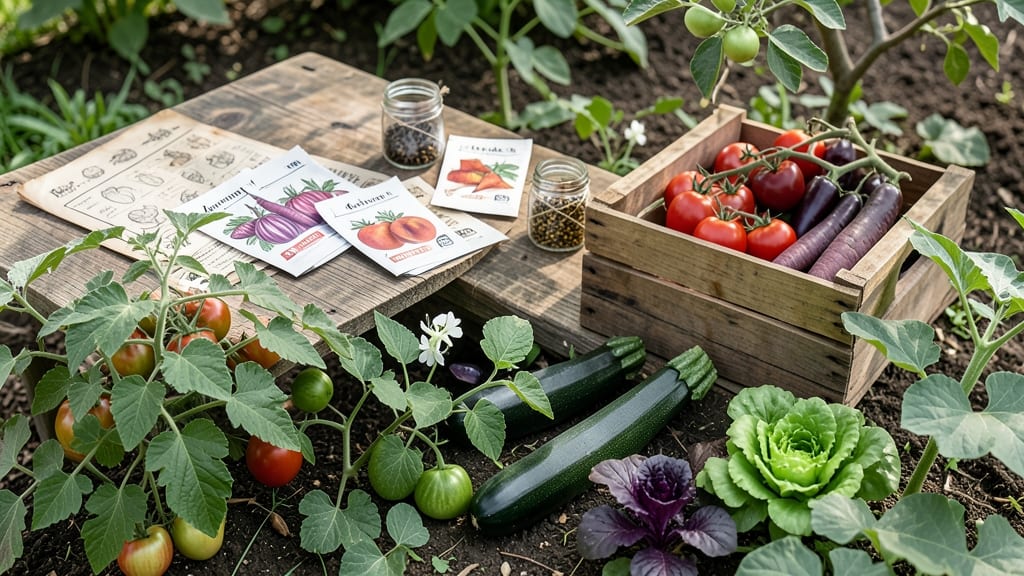
Heirloom fruit and vegetable seeds deliver flavors and textures that store-bought varieties can't match—like sweet, fragrant tomatoes that burst with juice or heirloom carrots with rainbow-colored cores. 🌱 I started with just three varieties last spring, and my garden became a taste test of what modern agriculture forgot: real flavor, vibrant colors, and plants that grow true to their heritage year after year.
The secret to success begins with seed selection: look for varieties adapted to your climate, with traits like disease resistance or early maturity.
My Brandywine tomatoes and Danvers carrots thrived in my zone 6 garden, while Black Krim tomatoes needed extra support but rewarded me with fruit so rich it changed how I cook. Most heirloom packets include growing tips—don't ignore them, especially for fussy plants like peppers or melons.
You'll harvest produce that tastes like childhood memories—tomatoes with complex flavors, beans with crisp texture, and apples that stay fresh for months. The first bite of a homegrown heirloom often stops people in their tracks.
Plus, saving seeds from your best plants means you'll never pay retail prices again, and you'll create your own garden legacy.
These varieties do require patience: some take longer to mature, and their open-pollinated nature means you can't patent them like hybrids. But the payoff—flavor, biodiversity, and connection to gardening traditions—makes every extra week worthwhile. Here's how to get started with confidence.
Seeds Degrade Over Time
Preserving the genetic legacy of heirloom varieties isn’t just about nostalgia—it’s rooted in science. When seeds fail to germinate or produce weak plants, the culprits often lie in natural biological processes, environmental stressors, or poor storage practices.
Understanding these causes helps gardeners take corrective action and extend the lifespan of their seed collection.
Heirloom seeds, unlike hybrid varieties, are open-pollinated, meaning they rely on natural cross-pollination. Over generations, this can lead to:
- Genetic drift: Random fluctuations in gene frequencies reduce genetic diversity, making plants less resilient to pests, diseases, or environmental changes.
- Inbreeding depression: If seeds are saved from a small, closely related population (e.g., a single plant), offspring may inherit recessive traits that weaken vigor, size, or yield.
💡 Pro Tip: To combat this, save seeds from multiple healthy plants (at least 10–20) and avoid isolating varieties. If possible, cross-pollinate with unrelated heirloom lines to reintroduce genetic vigor.
Seeds have a finite shelf life, determined by their moisture content, temperature exposure, and storage conditions. Most heirloom seeds retain viability for:
- 1–5 years: Common vegetables like tomatoes, peppers, and beans.
- 5–10+ years: Hardier seeds (e.g., peas, onions, carrots) when stored properly.
- Decades or longer: Extremely dry seeds (e.g., some beans, squash) in ideal conditions.
After this window, enzymatic degradation and lipid peroxidation (fat breakdown in seed tissues) accelerate, killing the embryo. 🔥 Actionable Fix: Test seed viability annually by:
- Placing 10 seeds between damp paper towels in a sealed bag.
- Checking for sprouts in 7–14 days. If <50% germinate, replenish your stock.
Seeds are living organisms, and their storage environment directly impacts longevity. Common mistakes include:
| Problem | Why It Matters | Solution |
|---|---|---|
| High humidity (>35%) | Promotes fungal growth and mold, which destroy seed coats and embryos. | Use silica gel packets or rice grain in airtight containers. |
| Temperature fluctuations | Speeds up metabolic activity, depleting stored energy reserves faster. | Store in a cool, dark place (50–70°F / 10–21°C), like a root cellar or fridge. |
| Light exposure | Triggers premature germination or photooxidation, breaking down seed chemistry. | Use opaque containers (e.g., glass jars with black tape or metal tins). |
| Poor airflow | Traps moisture and volatile organic compounds (VOCs) from seeds, accelerating decay. | Store in breathable materials (e.g., paper envelopes inside sealed jars). |
✨ Expert Hack: For long-term storage (<10+ years), freeze seeds in vacuum-sealed bags with a desiccant to halt aging.
Seeds aren’t immune to invaders. Common threats include:
- Insects (weevils, moths): Lay eggs in seed coats, and larvae consume embryos.
- Fungi (Aspergillus, Penicillium): Produce mycotoxins that inhibit germination.
- Bacteria (e.g., Pseudomonas): Thrive in damp conditions, causing rot.
🎯 Prevention:
- Inspect seeds before storage—discard any with holes, discoloration, or mold.
- Freeze seeds for 72 hours to kill insects before storing.
- Use neem powder or diatomaceous earth in seed containers as a natural deterrent.
Revive Your Seed Collection Now
Growing heirloom varieties is a rewarding journey, but even the most prized seeds can face challenges—whether from poor storage, pests, or environmental stress. The good news?
Most issues have simple, effective fixes. Below, we’ll tackle common problems with step-by-step solutions and prevention tips to keep your seeds thriving for seasons to come.
---
Cause: Old seeds, improper storage, or moisture damage. Solution: - Test viability first: 🧪 Place a damp paper towel in a sealed bag with 10 seeds. Check for sprouts in 3–7 days. If fewer than 50% sprout, your batch may need refreshing. - Rehydrate dry seeds: 💧 Soak seeds in lukewarm water for 4–12 hours (except hard-coated varieties like peas). Drain and plant immediately. - Adjust planting conditions: 🌡️ Heirloom seeds often need warmth (70–85°F) and consistent moisture. Use a seedling heat mat if germination stalls.
Prevention: ✔ Store seeds in airtight, moisture-proof containers with silica gel packets. ✔ Label seeds with date and variety—replace after 3–5 years (vegetables) or 2–3 years (fruits).
---
Cause: Fungal infections (e.g., damping-off) or insect damage (weevils, mold). Solution: - Disinfect seeds: 🧴 Soak in a 10% hydrogen peroxide solution (3% strength) for 10 minutes, then rinse thoroughly. - Treat soil: 🌿 Mix 1 part cinnamon or diatomaceous earth into 10 parts potting mix to deter fungi and pests. - Quarantine new seeds: 🏷️ Plant a small batch first to monitor for issues before full-scale sowing.
Prevention: ✔ Rotate crops annually to prevent soil-borne diseases. ✔ Freeze seeds for 72 hours to kill pests before planting (safe for most varieties).
---
Cause: Depleted soil, improper pH, or lack of organic matter. Solution: - Boost soil health: 🍂 Amend beds with compost, worm castings, or aged manure (2–3 inches mixed into the top 6 inches of soil). - Test pH levels: 📊 Heirloom plants thrive in 6.0–7.0 pH. Use a soil test kit and adjust with lime (to raise pH) or sulfur (to lower it). - Side-dress with nutrients: 🥬 Mid-season, add a balanced organic fertilizer (like fish emulsion) or foliar spray with seaweed extract.
Prevention: ✔ Plant cover crops (e.g., clover or vetch) in off-seasons to replenish nitrogen. ✔ Mulch heavily (straw or wood chips) to retain moisture and nutrients.
--- Cause: Sudden temperature swings damaging young plants. Solution: - For frost-sensitive seeds: 🌡️ Use row covers or cold frames to trap heat. Plant in low-lying areas where cold air settles last. - For heat stress: 🌞 Provide afternoon shade with floating row covers or shade cloth (30–50% coverage).
Water deeply in the early morning. - Adjust planting times: 📅 Check your last frost date and use season extenders (like hoop houses) for early/late plantings.
Prevention: ✔ Hardening off seedlings gradually before transplanting (acclimate to outdoor temps over 7–10 days). ✔ Choose heat-tolerant heirlooms (e.g., ‘Cherokee Purple’ tomatoes or ‘Amarillo’ peppers) for hot climates.
--- Cause: Unpredictable traits from cross-pollination or hybrid vigor loss. Solution: - Isolate plants: 🌸 Use mesh bags or cages for pollination control if saving seeds from heirlooms. - Hand-pollinate: 🐝 Transfer pollen with a paintbrush between flowers of the same variety to ensure purity. - Start fresh: 🌱 If traits degrade, source certified organic heirloom seeds from reputable suppliers like Baker Creek or Seed Savers Exchange.
Prevention: ✔ Grow at least 10 plants of the same variety to maintain genetic diversity. ✔ Avoid planting hybrids if you plan to save seeds—stick to open-pollinated heirlooms.
--- - Label everything: 🏷️ Use waterproof tags or a garden journal to track varieties, planting dates, and issues. - Rotate seed storage spots: 🧊 Move containers to the coldest, darkest part of your fridge or freezer (not the door!) to prevent temperature fluctuations. - Share with seed libraries: 🌍 If your seeds fail, trade with local growers to access diverse genetics.
--- By addressing these common pitfalls proactively, your heirloom garden will flourish with vibrant, productive plants year after year. Happy growing! 🌱🍅
Frequently asked questions
How do I know if a seed packet is truly heirloom?
Look for labels that say "open-pollinated," "heirloom," or "non-GMO." Avoid hybrid seeds—these won't produce true-to-type plants if you save seeds. Reputable seed companies like Baker Creek or Seed Savers Exchange clearly mark heirloom varieties. Always check the fine print for terms like "F1 hybrid" or "patented."
Can I save seeds from store-bought heirloom produce?
Yes, but only if the fruit or vegetable is labeled as an open-pollinated heirloom variety. Many grocery store heirlooms are hybrids or treated with fungicides that can inhibit germination. Start with seeds from organic markets or certified heirloom sources for best results.
Why do my heirloom seeds take longer to germinate?
Heirloom varieties often have thicker seed coats that require scarification (scratching or soaking) or stratification (cold treatment). Try soaking seeds in warm water for 12-24 hours before planting, or rub them gently with sandpaper. Most heirlooms need consistent moisture and 65-85°F soil temps to sprout.
How should I store heirloom seeds long-term?
Keep seeds in airtight, opaque containers with silica gel packets in a cool, dark place (50-70°F). For maximum longevity, freeze seeds in vacuum-sealed bags with a desiccant. Label each container with the variety and date—most heirloom seeds stay viable for 3-5 years, though some last decades.
What's the best way to prevent cross-pollination when saving seeds?
Isolate plants by 100-200 feet or use mesh bags over flowers during pollination. For small gardens, hand-pollinate using a paintbrush to transfer pollen between flowers of the same variety. Never plant different heirloom varieties of the same species too close together if you want to maintain pure lines.