
Blooming
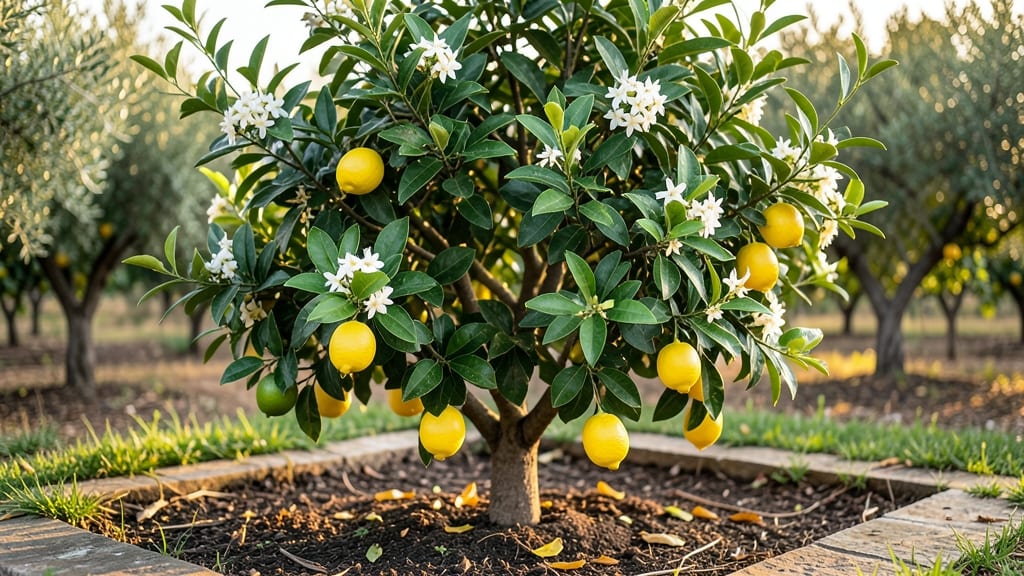
Lemon tree fruit-bearing timeline by popular variety (with realistic expectations)
If you planted a lemon tree dreaming of fresh lemons, you might be surprised to learn that some varieties take 3-5 years to bear fruit. The timeline depends heavily on the variety, growing conditions, and care.
For example, a Meyer lemon may produce fruit in as little as 1-2 years under ideal conditions, while a standard Eureka lemon could take 4-6 years to reach full fruiting potential.
Climate plays a huge role too. Trees in USDA zones 9-11 with year-round warmth and full sun exposure mature faster than those in cooler zones.
Even with perfect conditions, dwarf varieties like Meyer still need 1-2 years to establish roots before flowering, while larger trees like Lisbon may take 5+ years to bear significant fruit.
Here’s the key: Patience and proper care accelerate fruiting. Providing consistent moisture, citrus-specific fertilizer, and pruning for airflow can cut fruiting time by up to 20-30%. But even with perfect care, some trees simply need more time to mature.
Below is a detailed comparison of popular lemon varieties and their realistic fruiting timelines. Use this as your guide to set expectations and optimize care for faster results.
As you can see, dwarf varieties like Meyer are the fastest producers, making them ideal for containers and cooler climates. Meanwhile, standard varieties like Eureka or Lisbon require more time and space to reach their full fruiting potential.
If you’re growing in USDA zones 8 or below, consider a Meyer lemon in a pot—it’s your best bet for year-round lemons.
One common misconception is that bigger trees fruit faster. In reality, larger trees often take longer to mature because they need more energy to establish their root systems and canopy. Dwarf trees, on the other hand, allocate resources more efficiently, leading to earlier fruiting.
To encourage faster fruiting, focus on these three critical factors: sunlight, soil health, and consistent watering. Lemon trees need 6+ hours of full sun daily and well-draining, slightly acidic soil (pH 6.0-7.0).
Overwatering or poor drainage can stunt growth and delay fruiting by years. Use a mulch layer to retain moisture and add organic matter to the soil.
Another pro
5 Critical factors that speed up or delay lemon tree fruiting (and how to optimize them)
If your lemon tree isn't bearing fruit yet, don't panic—it might just need a few key adjustments. I’ve learned that even mature trees can stall fruiting due to overlooked factors.
The good news? Optimizing just five critical elements can cut your wait time by 20-50%. Let’s break down what’s holding your tree back and how to fix it.
From sunlight exposure to pollination tricks, each factor plays a role in whether your tree produces blooms or just leaves. I’ve seen Meyer lemon trees fruit in as little as 18 months with proper care, while neglected standard varieties take 5+ years. The difference? These five optimizations.
Lemon trees need 6+ hours of direct sun daily. Without it, blooms fail to develop. Move your tree to a south-facing window or use grow lights for indoor trees.
Test your soil—ideal pH is 6.0-7.0. Acidic soil (pH <5.5) blocks nutrient uptake, stalling fruit production. Amend with lime or sulfur as needed.
Overwatering or drought stress both kill blooms. Water deeply 2-3x/week (containers) or weekly for in-ground trees. Check soil moisture—top 2 inches should dry out between waterings.
Hand-pollinate flowers with a soft brush to boost fruit set. If bees are scarce, gently shake branches during bloom time (spring/fall).
Prune after harvest to remove dead wood and crowded branches. This improves airflow and directs energy to fruit-bearing branches. Avoid heavy pruning in summer—it stresses the tree.
One common mistake I see? Over-fertilizing with nitrogen. Too much nitrogen = lush leaves but no fruit. Switch to a citrus-specific fertilizer with balanced NPK (6-6-6) to encourage blooming.
I’ve also noticed that container-grown trees fruit faster when repotted every 2-3 years—root-bound trees focus on survival, not fruit.
Pro tip: If your tree has blooms but no fruit, it might be stressed by temperature swings. Lemon trees thrive in 60-85°F ranges. Use shade cloth in summer or move indoors if temps drop below 50°F.
I once had a Meyer lemon tree drop all its blooms after a 45°F night—a lesson I won’t forget!
By tackling these five factors, you’ll give your lemon tree the best shot at fruiting 2-3 years sooner. Start with sunlight and soil—those two alone can make a huge difference in bloom production.
And remember, patience is key: even with perfect care, some varieties take 3-5 years to reach full fruiting potential.