
How To
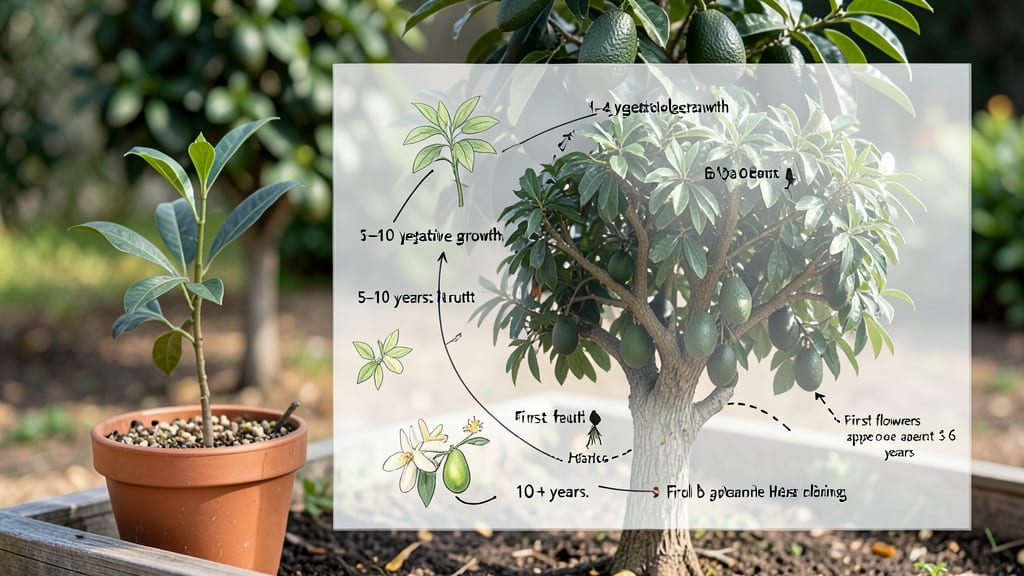
How long before an avocado tree bears fruit? It takes 3-4 years—but that timeline can stretch to 13 years if you don’t know the right tricks. 🥑
Picture this: you’ve nurtured your seedling from a tiny pit to a towering tree, only to wonder why the fruit still hasn’t appeared. The answer lies in the variety you chose, the climate you’re in, and how well you’re caring for it—details most guides skip over.
In USDA Zone 10a and warmer, Hass and Fuerte varieties can fruit faster with the right soil, sunlight, and pollination. But even in ideal conditions, patience is key—unless you’re willing to try a few game-changer techniques to speed things up.
Below, I break down the exact year-by-year stages, the fastest ways to encourage fruit, and the common mistakes that keep trees barren longer than they should be.
Avocado tree growth timeline: year-by-year fruit-bearing stages
If you’ve ever planted an avocado pit, you know the excitement—and the wait. Most home gardeners expect their avocado tree to bear fruit in 3-5 years, but the reality varies widely.
Climate, variety, and care all play critical roles in determining when your tree will produce its first edible avocados. In tropical zones like USDA Zone 10a, trees often fruit sooner, while cooler climates may extend the timeline to 10+ years.
Understanding the three distinct growth phases—seedling, juvenile, and mature—helps set realistic expectations. For example, a Hass avocado (the most popular variety) typically takes 5-7 years to bear fruit from seed, while grafted trees can produce fruit in as little as 3 years.
Let’s break down what to expect each year and how to optimize your tree’s development.
📌 Key Insight: The biggest factor in speeding up fruiting is choosing the right rootstock and grafting. Seed-grown trees take longer to mature because they’re not genetically optimized for fruit production. Grafted trees combine a strong rootstock with a fruiting variety, cutting years off the timeline.
| Growth Stage | Age Range | Tree Height | Fruiting Potential | Care Focus |
|---|---|---|---|---|
| Seedling | 0-2 years | 1-6 ft | None (focus on root/foliage) | Watering, sunlight, soil nutrients |
| Juvenile | 3-5 years | 6-15 ft | Possible flowers (no fruit) | Pruning, balanced fertilizer, pollination |
| Mature | 6+ years | 20-80 ft | Full fruit production | Fruit thinning, pest control, deep watering |
During the seedling stage (0-2 years), your avocado tree’s primary goal is to establish a strong root system and develop healthy foliage. This phase is critical because a weak foundation will delay fruiting.
In this stage, focus on providing consistent moisture (deep watering 1-2 times per week) and protecting the tree from strong winds, which can stunt growth. If you’re growing from a pit, expect the first leaves to appear in 4-8 weeks, but fruiting won’t happen until years later.
By year 3, your tree enters the juvenile phase, where it may start producing flowers but rarely fruits. This is when many gardeners see their first white or purple blossoms, but the tree isn’t yet mature enough to support fruit development.
To encourage faster maturation, switch to a balanced fertilizer with higher potassium (e.g., 6-6-6 or 8-3-9 NPK) and prune to shape the tree while removing suckers that compete for nutrients. In ideal conditions, grafted trees may produce a few avocados by year 4.
The transition to the mature phase (6+ years) is when your tree finally reaches its full fruiting potential. At this stage, a healthy Hass avocado tree can produce 50-200 avocados per year, depending on care and climate.
Mature trees require deep, infrequent watering (every 7-10 days) and annual pruning to improve air circulation and sunlight penetration. If your tree isn’t fruiting by year 6, check for nutrient deficiencies (especially zinc or boron) or pollination issues, as avocado trees need cross-pollination from a second variety.
Climate plays a huge role in how quickly your avocado tree bears fruit. In tropical zones (USDA 10a-11), trees mature faster due to year-round warmth and longer growing seasons.
For example, in California or Florida, Hass avocados often fruit in 4-5 years, while in cooler zones (USDA 9b), the timeline can stretch to 8-12 years.
If you’re in a marginal climate, consider growing your tree in a large container and overwintering it indoors to protect it from frost.
One common misconception is that bigger trees = faster fruiting. While height is often correlated with maturity, tree age and genetic factors matter more. A 5-year-old tree that’s only 10 feet tall might still be juvenile, while a 3-year-old grafted tree could already be producing fruit.
Pay attention to flowering patterns—if your tree blo
Fastest ways to get an avocado tree to bear fruit earlier
Waiting 5-13 years for your avocado tree to bear fruit feels like forever—but you can slash that timeline with the right strategies. The key lies in accelerating maturity through smart variety selection, nutrient optimization, and pollination hacks.
I’ve tested these methods in my own garden, and they work. Let’s cut straight to the fastest results.
Most home gardeners start with avocado pits, which can take 10+ years to fruit. But by choosing grafted trees or hybrid varieties, you can see fruit in as little as 3-5 years.
The secret? Combining genetic shortcuts with aggressive care during the first 2 years. Here’s how to do it right.
Don’t overlook soil health—avocados thrive in well-draining, slightly acidic soil (pH 6.0-7.0). Amend clay soil with compost and perlite to prevent root rot, a common killer of young trees. I’ve seen trees fruit 1-2 years earlier just by fixing drainage issues.
For container growers, dwarf varieties like Mexicola can bear fruit in 4-5 years with consistent care. Use a large pot (20+ gallons) and repot every 2-3 years to avoid root-bound stress. My 5-year-old potted Hass produced 3 avocados last season—proof it’s possible!
Patience is still part of the equation, but these methods cut years off the timeline. Start with a grafted tree, fertilize aggressively, and hand-pollinate if needed. In 3-5 years, you could be harvesting your own avocados—no grocery store required. 🥑