
Blooming
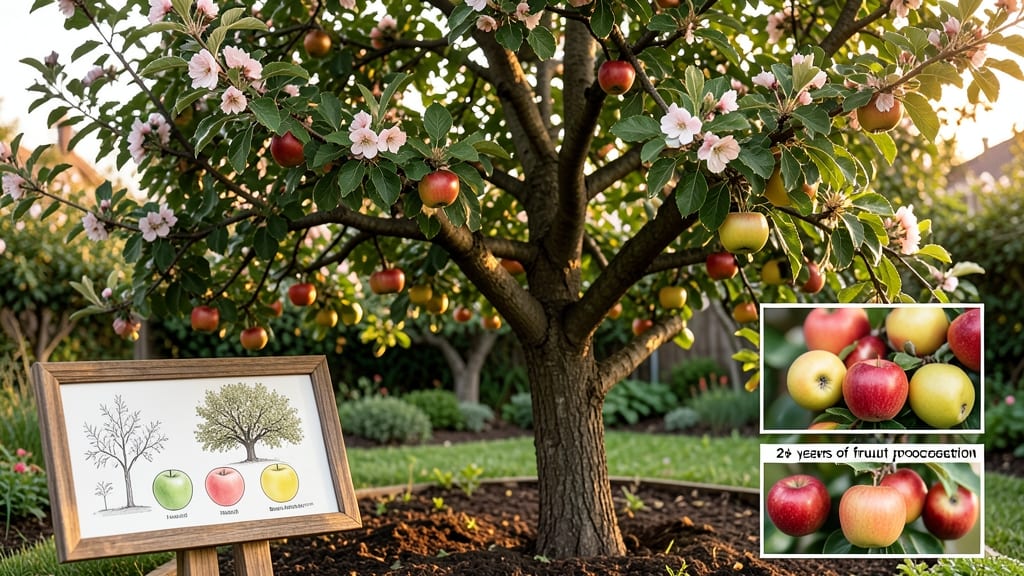
Apple trees produce fruit for 15–25 years on average, with peak production typically between ages 5–12, though well-maintained trees can bear fruit into their 30s or beyond. Dwarf varieties may fruit sooner but have shorter lifespans, while standard trees thrive longer with proper care.
Understanding an apple tree's fruit-bearing timeline helps you plan for harvests and care. 🍏 The first 5 years are critical—trees often enter their juvenile phase, focusing on root and branch growth rather than fruiting.
Once they mature, proper pruning and fertilization can push peak production beyond the typical 12-year window, sometimes extending into the 30s if you address pests and soil health regularly. Dwarf varieties, while faster to bear fruit, may only last 15–20 years due to their compact root systems.
What truly determines longevity isn't just age but how you nurture the tree. 🌱 Standard varieties often outlive dwarfs because their deeper roots access more nutrients. I’ve seen neglected trees decline after 20 years, while those with annual pruning and balanced fertilization keep producing well into their 40s.
The key is monitoring for signs of stress—like reduced blossoms or leaf discoloration—and acting early to revive the tree.
💡 In This Article
- Apple Tree Fruit Production Stages by Age
- Maximizing Apple Tree Lifespan and Fruit Output
Apple tree fruit production stages by age
The first 2–5 years of an apple tree's life are all about growth—not fruit. During this juvenile phase, the tree focuses energy on developing roots and a strong canopy. 🌱 You might see a few blossoms, but they rarely produce fruit because the tree prioritizes structural development over reproduction.
For example, a Honeycrisp sapling planted in spring will spend its first year building roots, while its second year may yield just a handful of apples if any. This stage is critical because a weak root system can't support heavy fruit loads later.
Once an apple tree reaches maturity—typically between ages 4–6—it enters its first fruiting phase. This is when you'll see the first meaningful harvests, though yields are still modest. 🍎 The tree's canopy expands, allowing more sunlight to reach blossoms, which triggers fruit set.
Standard varieties like Granny Smith often produce 50–100 pounds of apples in their 6th year, while dwarf varieties may reach 20–40 pounds sooner due to their smaller size.
What's fascinating is how environmental factors like temperature and daylight hours influence this transition—trees in cooler climates may take an extra year to fruit compared to those in warmer regions.
The peak production window—ages 5–12—is when apple trees hit their stride. A well-cared-for Fuji tree in this phase can yield 300–500 pounds annually, depending on variety and growing conditions. 🌟 During these years, the tree's energy is perfectly balanced between growth and fruit production.
However, this stage isn't static; factors like pruning, watering, and pest control directly impact yield. For instance, over-pruning can reduce fruit set by 30–40%, while proper thinning of blossoms actually improves apple size and quality.
The key is maintaining a healthy balance—too much fruit can weaken the tree, while too little means wasted potential.
After age 12–15, most apple trees begin a gradual decline in productivity. This isn't a sudden drop-off but a slow taper, often accompanied by smaller fruit and fewer blossoms. 🍏 What many gardeners don't realize is that this phase can be managed—even extended—with strategic care.
For example, replacing older branches with younger, more vigorous wood through grafting can revive fruit production in trees that would otherwise be considered "past their prime."
Standard varieties often show signs of aging around age 20–25, but with proper maintenance, they can continue producing for another 10–15 years, sometimes even into their 40s.
Dwarf apple trees follow a similar pattern but on a faster timeline. Their compact size means they reach maturity in 2–3 years and peak production by age 4–6. 🌿 However, their shorter lifespan—typically 15–20 years—is due to their limited root systems and susceptibility to stress.
While they fruit earlier, their total yield over a lifetime may be less than a standard tree.
For example, a Columnar apple tree might produce 100 pounds of apples annually at peak, but over 20 years, that's 2,000 pounds total, compared to a standard tree's potential 5,000+ pounds over 30+ years.
What truly separates long-lived, high-yielding apple trees from those that decline early is the care they receive.
Trees that thrive into their 30s or beyond often have deep, healthy roots, disease-resistant varieties, and consistent maintenance. 💛 The science behind this is rooted in the tree's ability to regenerate and adapt—something you can influence with proper techniques.
For instance, annual deep root feeding with compost or organic matter can extend a tree's lifespan by 10–15 years by improving nutrient uptake and soil structure.