
Trees
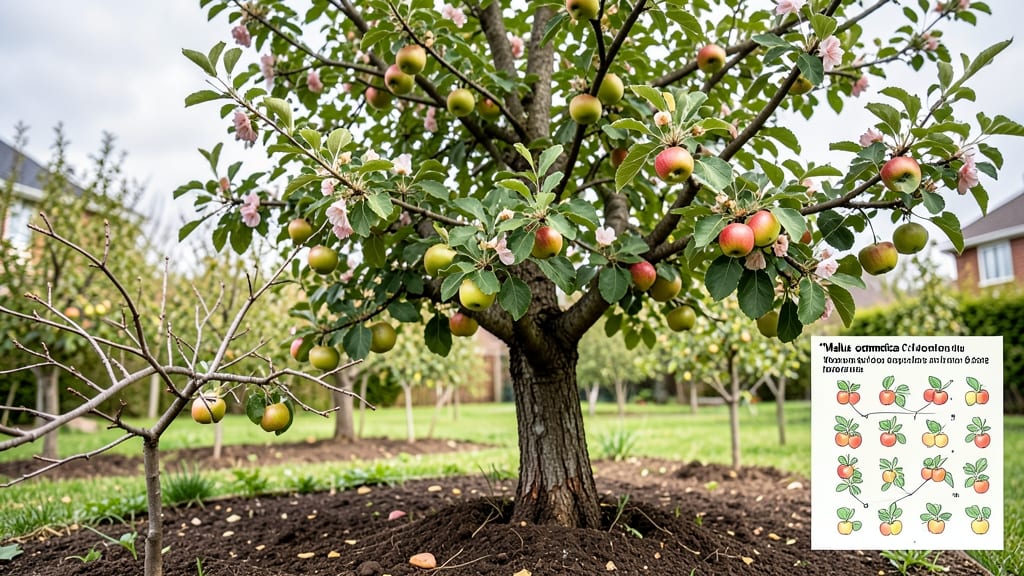
Apple trees do not produce fruit every year, as their yield depends on biennial bearing patterns, environmental conditions, and tree health. Most varieties alternate between heavy and light fruiting cycles, though consistent care can improve annual productivity.
Apple trees naturally follow a biennial bearing pattern, where they alternate between years of heavy fruit production and lighter yields. 🍏 This cycle happens because the tree prioritizes either growth (roots, branches) or fruit development—when one is overemphasized, the other suffers.
Younger trees or those under stress often skip fruiting entirely, while mature, well-maintained trees may produce more consistently. The key is balancing care to reduce extreme fluctuations, such as pruning to open the canopy for sunlight and fertilizing with nitrogen-rich organic matter during off-years.
For example, a dwarf apple tree might bear heavily one year but produce almost no fruit the next, while a standard tree in ideal conditions could average 70-80% of its peak yield annually.
Understanding this rhythm helps gardeners plan ahead—stocking up during heavy years and supplementing with store-bought apples in lean seasons.
💡 In This Article
- Why Apple Trees Follow Biennial Bearing Cycles
- How to Encourage Consistent Apple Tree Fruit Production
Why apple trees follow biennial bearing cycles
Apple trees prioritize energy between two critical functions: growth and fruit production. This physiological trade-off creates the biennial bearing pattern, where a tree invests heavily in one function at the expense of the other.
During a heavy fruiting year, the tree allocates resources like carbohydrates, nutrients, and water to develop flowers and fruit—often depleting its energy reserves. The following year, it redirects energy toward root development, branch growth, and leaf production, resulting in fewer flowers and a lighter harvest.
This cycle is hardwired into the tree's biology to prevent overbearing, which can weaken its structure and reduce long-term productivity.
The hormonal shifts behind this pattern involve gibberellins and auxins. Gibberellins, produced in developing fruit, suppress flowering in the next season by inhibiting bud formation.
Meanwhile, auxins—hormones that promote growth—divert energy toward vegetative growth when fruit production is high. 🌱 For example, a Honeycrisp apple tree might produce 500-1,000 pounds of fruit in its peak year but only 100-200 pounds the following year if left unmanaged.
Dwarf varieties, which have smaller root systems, experience more pronounced fluctuations because their limited energy reserves are stretched even thinner during heavy fruiting.
Environmental stress amplifies this cycle. Factors like drought, extreme temperatures, or poor soil quality force the tree to divert energy toward survival rather than reproduction. For instance, a tree struggling with compacted soil may skip fruiting entirely one year to focus on root expansion.
Similarly, overbearing—when a tree produces more fruit than it can sustain—leads to smaller, lower-quality apples and exhausts the tree's resources, worsening the biennial pattern. This is why commercial orchards use thinning techniques to limit fruit load and encourage more balanced production.
Tree health and variety also play a role. Some apple cultivars, like Granny Smith, are more prone to biennial bearing than others, such as Fuji, which can produce more consistently with proper care.
Younger trees (3-5 years old) often skip fruiting entirely to focus on establishing their root systems, while mature trees (> 10 years old) may develop a more predictable rhythm.
The key difference between dwarf and standard trees lies in their energy reserves: dwarfs, with their limited biomass, are more sensitive to fluctuations and may require more precise management to maintain productivity.
What most gardeners don’t realize is that this cycle isn’t just about biology—it’s also about timing. Apple trees flower in early spring, and if the previous year’s energy was drained by heavy fruiting, the tree may produce fewer blossoms.
Even if flowers form, poor nutrition or environmental stress can cause them to drop before pollination. For example, a tree that bore 200 apples one year might only produce 30-40 blossoms the next, resulting in a minimal harvest.
Understanding this rhythm helps gardeners anticipate lean years and adjust their expectations accordingly.
Consider the case of a standard-sized apple tree in a home orchard. If it yields 3 bushels of apples one year, the next year’s harvest might drop to just 0.5 bushels—a stark contrast that highlights the biennial pattern.
However, with strategic pruning and fertilization, the tree can recover more quickly and produce closer to 2 bushels in the following year. This balance is what separates a struggling orchard from a thriving one.