
Trees
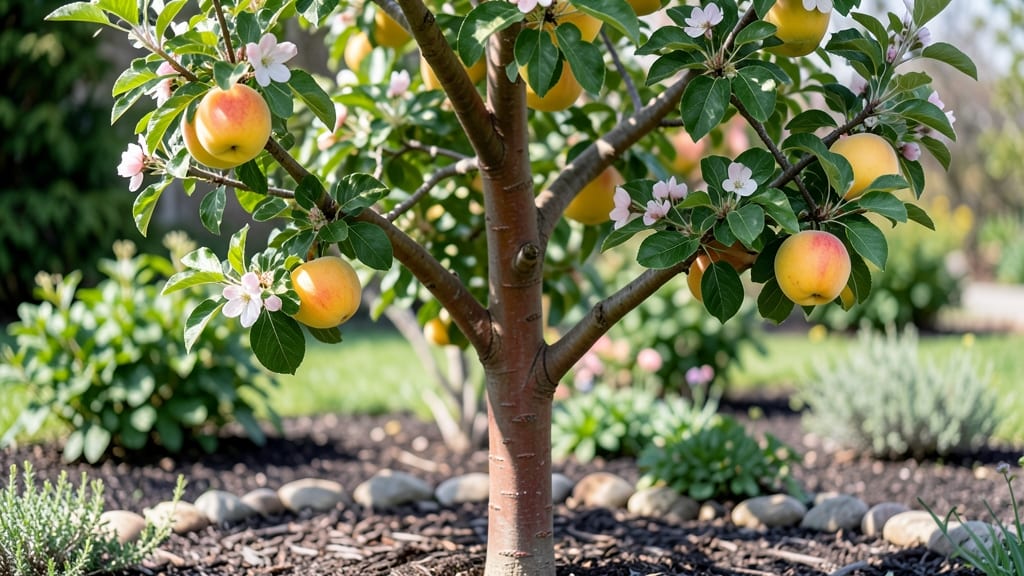
Nectarine trees produce fruit about 4–6 months after blooming, with harvests typically occurring between late spring and early summer, though exact timing depends on the variety and your local climate—most mature trees won't bear fruit until their second or third growing season.
Nectarine trees follow a precise biological rhythm where blooming triggers fruit development. 🌸 Once pollinated, the fruit takes roughly 120–180 days to mature, with cooler climates pushing harvests later into summer.
Early varieties like 'Redhaven' often ripen in June, while late-season types such as 'Starking Delight' may not reach peak flavor until August. This timing difference lets growers extend their harvest window by planting multiple varieties.
Understanding your local frost dates is key—nectarines need chilling hours (typically 300–1,000) during winter dormancy to set fruit properly. In warmer zones, trees may produce smaller crops or require cross-pollination from nearby peach trees.
The first year after planting usually yields no fruit, as the tree focuses on root and branch growth before flowering.
💡 In This Article
- Nectarine Tree Fruit Development Timeline by Growth Stage
- Best Nectarine Varieties and Their Ideal Harvest Months
Nectarine tree fruit development timeline by growth stage
Nectarine fruit development begins with blooming, which typically occurs in early spring when temperatures consistently stay above 50°F for at least a week. The tree's flowers are delicate and require both proper pollination and 10–15 days of warm, sunny weather to set fruit successfully.
Unlike peaches, nectarines are self-pollinating, but cross-pollination with nearby peach trees can increase yield by up to 30%. Once pollinated, the fruit enters a rapid growth phase where cell division accelerates, and the pit hardens—this process takes about 60–90 days.
The most critical factor in fruit maturation is temperature. Nectarines need 1,000–1,500 heat units (calculated by averaging daily temperatures above 50°F) to ripen properly.
Cooler climates (like those in the Pacific Northwest) may push harvests into late July or August, while warmer regions (such as California's Central Valley) can see fruit ready as early as late May or June.
Sunlight also plays a role—trees need at least 6–8 hours of direct sunlight daily to produce sweet, flavorful fruit. Without enough light, the fruit may develop poorly and lack the vibrant red blush that signals ripeness.
What most people don't realize is how water stress impacts fruit quality. Too much water during the growing season can dilute sugars and lead to softer, less flavorful nectarines. Conversely, drought conditions can cause the fruit to split or develop bitter flavors.
The ideal approach is to provide 1–1.5 inches of water per week during the growing season, adjusting for rainfall. Proper water management ensures the fruit develops a balanced sugar-to-acid ratio, which is why commercial orchards often use drip irrigation systems for precision.
Harvest timing varies dramatically between early and late varieties. Early-season types like 'Redhaven' ripen in June or early July, while late varieties such as 'Starking Delight' may not reach peak ripeness until August or September.
This difference is due to genetic variations in the tree's growth cycle—early varieties have a shorter juvenile phase and mature faster.
The key visual cue for harvest is when the fruit easily separates from the tree with a gentle twist, and the skin develops a slight yellowing near the stem. 🌞
One fascinating detail is how nectarines respond to temperature fluctuations during ripening. A sudden drop in temperature (like a late spring frost) can cause the fruit to develop a "frost ring"—a discolored band around the fruit where cells were damaged.
To avoid this, growers in frost-prone areas often use wind machines or sprinkler systems to protect blossoms. Additionally, nectarines harvested too early won't ripen further off the tree, so timing is everything. The fruit's natural sugars continue to develop only while still attached to the tree.
For home growers, understanding these stages helps plan for a successful harvest. Planting multiple varieties with staggered bloom times can extend your fresh fruit supply by 4–6 weeks. For example, pairing 'Fantasia' (mid-season) with 'Starking Delight' (late-season) ensures you have nectarines ready from July through September.
Just remember: patience is key—rushing the harvest can result in fruit that's tough, mealy, and lacks the sweetness that makes nectarines so beloved.