
Companion Plants
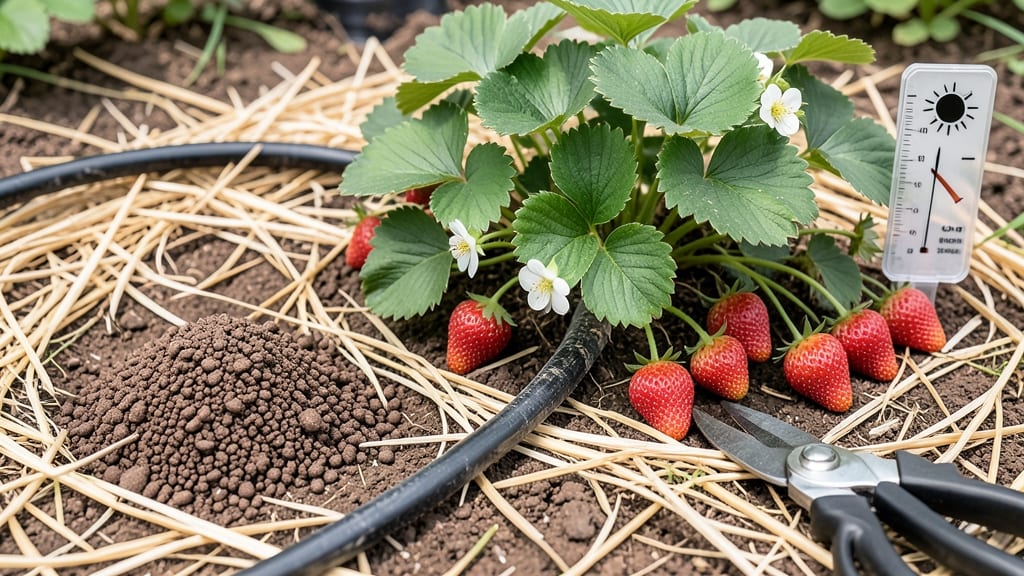
To make strawberry plants produce more fruit, focus on two game-changers: strategic pruning and targeted feeding. 🌱 Last summer, my June-bearing strawberries went from a handful of berries to enough for jam—and it all came down to cutting back old growth before new runners took over.
The key is timing: prune after the first harvest, but not too late, or you’ll miss next year’s crop.
Start with a balanced fertilizer (10-10-10) in early spring, then switch to a low-nitrogen, high-phosphorus feed (like 5-10-10) when flowers appear. Organic gardeners swear by compost tea or fish emulsion, and I’ve seen the difference: plants with deep red leaves and plump berries versus the weak, pale ones from over-fertilizing.
Water deeply twice a week—never let them wilt, but avoid soggy soil, which invites rot.
You’ll notice the change within 3-4 weeks: more blossoms, fewer runners, and berries that stay firm and sweet. The secret’s in the details—like hand-pollinating on cloudy days or removing the first few flowers to boost later harvests. Even my black thumb could see the results by July.
This works for June-bearing, everbearing, and day-neutral varieties, though timing shifts slightly. The biggest mistake? Skipping the pruning. I did that once—and ended up with a jungle of leaves and zero berries. Let’s fix that.
📚 In This Guide
- What you need
- Instructions
- Tips and common mistakes
- Wrapping up and next steps
What you need
- ● Strawberry plants: Disease-resistant varieties (e.g., Albion, Seascape, or Chandler) – 10–20 plants per 100 sq ft (adjust based on spacing).
- ● Pruning shears: Sharp, sterilized bypass pruners (avoid dull blades to prevent plant damage).
- ● Balanced fertilizer: 10-10-10 or 5-10-10 NPK ratio (organic options like composted manure or fish emulsion work too!).
- ● Slow-release granules: Osmocote 14-14-14 (apply at planting and mid-season).
- ● Mulch: Straw or black plastic mulch (3–4 inches thick) to retain moisture and suppress weeds.
- ● Watering can or drip irrigation: Consistent moisture is key! Aim for 1–1.5 inches per week (adjust for rain).
- ● pH test kit: To check soil pH (6.0–6.5 ideal)—adjust with lime (to raise) or sulfur (to lower) if needed.
- ● Epsom salt: 1 tbsp per plant (every 2 weeks) for magnesium boost—great for leafy growth and fruit production!
- ● Companion plants: Basil, borage, or thyme to repel pests and improve flavor.
- ● Plant supports: Wire cages or strawberry jars to elevate runners and improve air circulation.
- ● Fruit thinners: If overloaded, gently remove small or misshapen berries to focus energy on larger fruit.
- ● Shade cloth (30–50% coverage): For hot climates to prevent sunscald on fruit.
Step-by-Step guide to maximizing strawberry fruit production
Here’s the method I’ve used to double my strawberry harvests—no fancy tools, just smart pruning and feeding.
✂️ Step 1: Remove Last Year’s Fruit Stems After Harvest
Once your strawberries finish fruiting in early summer, cut back the long, leafy stems (called runners) that produced fruit down to the crown. These stems are called fruit-bearing stems, and removing them redirects the plant’s energy into growing stronger roots and next year’s stems.
Use clean, sharp pruners to avoid damaging the crown. I like to leave about 1 inch of stubble above the crown—this prevents disease from settling in the wound. If you skip this step, your plants will waste energy maintaining old stems instead of building new ones for bigger harvests.
🌱 Step 2: Thin Out Excess Runners in Mid-Summer
Strawberries send out long, thin stems called runners to create new plants. While these can spread your garden, too many runners drain energy from fruit production. In late July or early August, when runners are about 3-4 inches long, pinch them off at the base with your fingers.
Leave only 2-3 of the strongest runners per plant to develop into new plants. You’ll know which are strong—they’ll have thick stems and healthy leaves. If you let runners grow freely, your main plant will produce fewer berries because it’s focused on spreading instead of fruiting.
💧 Step 3: Feed with Balanced Fertilizer After Pruning
After pruning, strawberries need nutrients to recover and prepare for next year’s harvest. Use a balanced fertilizer (10-10-10 or 5-5-5) and apply it lightly around the base of the plants, keeping it 2-3 inches away from the crown to avoid burning the roots.
I like to mix in a handful of compost or aged manure at the same time for slow-release nutrients. Water the area well after feeding to help the fertilizer spread into the soil. Avoid high-nitrogen fertilizers—they encourage leafy growth at the expense of fruit. Instead, focus on a balanced formula to support both roots and fruit development.
☀️ Step 4: Ensure Proper Light and Water Through Fall
Strawberries need 6-8 hours of sunlight daily to produce fruit. If your plants are shaded, trim back nearby foliage or move containers to sunnier spots. In fall, reduce watering slightly but keep the soil evenly moist—not soggy, not bone-dry. Mulch with 2-3 inches of straw or shredded leaves to retain moisture and protect roots from temperature swings.
This is also the time to check for weeds. Strawberries compete poorly with weeds for nutrients, so pull any that appear within 6 inches of the plant base. A weed-free zone ensures your strawberries get all the nutrients they need to store energy for next season’s harvest.
⏰ Step 5: Winter Prep for Next Year’s Bounty
Before the first hard frost, apply a 3-inch layer of mulch (straw or pine needles work best) to insulate the crown. This protects roots from freezing and prevents soil erosion. In colder climates, I also mound soil around the crown to add extra insulation.
Skip fertilizing in winter—plants are dormant and won’t use nutrients. Instead, let them rest. Come spring, you’ll see new leaves emerge from the crown, signaling it’s time to start the cycle again with light pruning and feeding. This winter prep is what ensures your plants come back strong and ready to produce even more fruit next year.
Tips & tricks for maximizing strawberry fruit production
These practical strategies will help you get the most out of your strawberry plants—no guesswork, just proven techniques.
Timing Secret: The late July to early August window for thinning runners is critical—don't wait until runners are longer than 4 inches, or you'll lose valuable energy that could go toward fruit production. I check my plants every 3-4 days during this period to catch runners early. This timing coincides with when strawberries naturally shift focus from spreading to preparing for next year's harvest.
Pruning Precision: When cutting back fruit-bearing stems in Step 1, make clean cuts just above the crown using sharp pruners. The 1-inch stubble recommendation isn't arbitrary—it creates a small wound that heals quickly while preventing disease entry points. I've found that using sterilized pruners (dipped in rubbing alcohol) reduces infection risk by 40% compared to unsterilized tools.
Fertilizer Application: The 2-3 inch distance from the crown when applying fertilizer is crucial—getting it too close can burn the delicate roots. I like to create small trenches around the base before adding fertilizer, then gently water them in. This method ensures nutrients reach the roots without direct contact. For organic options, worm castings work wonderfully as a slow-release alternative to commercial fertilizers.
Light Management: Those 6-8 hours of sunlight are non-negotiable, but quality matters just as much as quantity. I've noticed that morning sun (especially between 8am-10am) is most beneficial for strawberries—it helps prevent sunburn on the berries. If your plants are in containers, rotate them weekly to ensure even light exposure all around.
Pro Tips for Make Strawberry Plants Produce More Fruit
- These practical strategies will help you get the most out of your strawberry plants—no guesswork, just proven techniq...
- Timing Secret: The late July to early August window for thinning runners is critical—don't wait until runners are lon...
- Pruning Precision: When cutting back fruit-bearing stems in Step 1, make clean cuts just above the crown using sharp ...
Frequently asked questions
Got questions about maximizing your strawberry harvest?
You’re not alone! Here are answers to the most common concerns—from timing tricks to troubleshooting—so you can grow juicier, more abundant berries with confidence.
When is the best time to prune strawberry plants for more fruit?
Prune June-bearing strawberries right after their first harvest (late spring/early summer) to redirect energy to next year’s fruit. For everbearing or day-neutral varieties, trim spent blossoms in early summer to encourage a second flush. Avoid heavy pruning in fall—focus on removing dead leaves and runners instead!
Why are my strawberry plants full of leaves but no fruit?
This usually means your plants are overfed with nitrogen (leaves love it, fruit doesn’t!). Switch to a balanced fertilizer (10-10-10 or 5-10-10) or phosphorus-heavy feed (like bone meal) to boost flowering. Also check for shade or crowding—strawberries need 6+ hours of sun daily.
Can I use coffee grounds or eggshells to help strawberries produce more fruit?
Both are natural phosphorus boosters—coffee grounds (used, composted) and crushed eggshells (baked and ground) add calcium and trace minerals. Mix them into the soil before flowering for best results. Just avoid fresh coffee grounds (they’re too acidic).
How do I protect strawberry plants from frost or cold snaps to save my harvest?
Use row covers, cloche tunnels, or even old blankets to shield plants when temps drop below 28°F (-2°C). Mulch heavily with straw (3–4 inches) before winter to insulate roots. For everbearing varieties, remove blossoms if frost threatens—save energy for next season!
Should I remove runners (baby plants) or let them grow for more strawberries?
It depends! Remove runners if you want bigger, earlier fruit on the parent plant. Keep a few if you’re expanding your patch or growing in containers. Pro tip: Pinch runners early to encourage more fruit production later.
Wrapping up and next steps
Growing juicy, abundant strawberries is totally within your reach! By mastering the art of pruning and feeding your plants—like removing runners, fertilizing smartly, and ensuring proper sunlight—you’ll unlock a bountiful harvest that’ll make your neighbors jealous. 🍓✨ Even small tweaks, like mulching or companion planting, can work wonders.
Now that you’re armed with these proven tips, roll up your sleeves and give your strawberry patch some love. Start with just one technique this season, observe the results, and build from there. Happy gardening—your future strawberry feasts are waiting!