
Fertilization
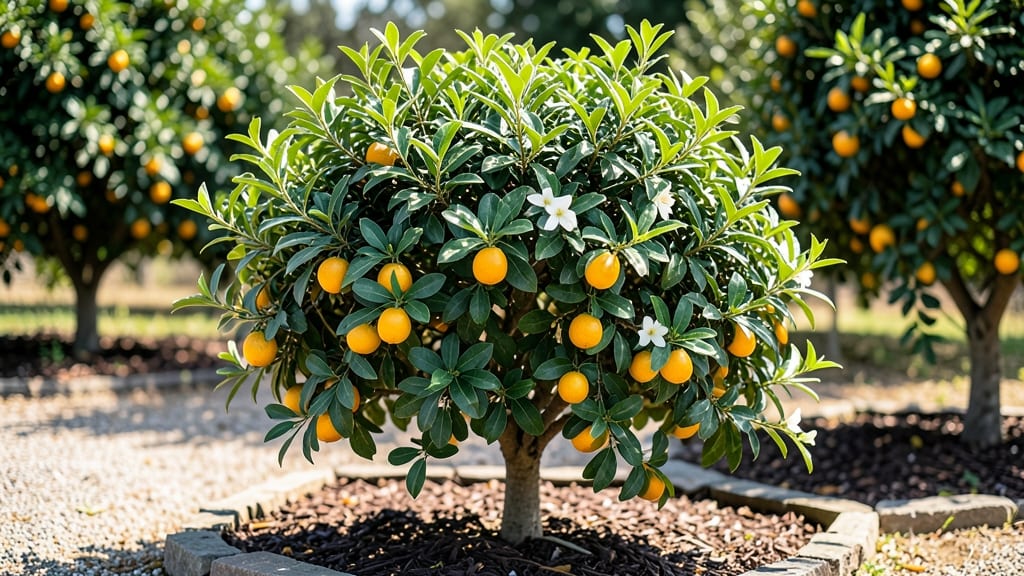
Growing giant kumquat fruit sizes 🍊 is easier than you think, especially when you know the right varieties and container tricks.
If you’ve ever bitten into a tiny kumquat and thought, ‘There has to be a bigger one,’ you’re not alone—giant kumquat varieties exist, and container gardening makes them surprisingly easy to grow.
Most kumquats stay small, but with the right care—like choosing ‘Centennial’ or ‘Meiwa’ varieties—you can grow fruit twice the size of store-bought, packed with more juice and flavor.
Below, I’ll show you how to pick the best container, fertilize for maximum growth, and avoid the mistakes that keep kumquats tiny—so you can harvest jumbo-sized fruit year after year.


Understanding kumquat fruit size variations: from tiny to giant varieties
Kumquats are famous for their bite-sized fruit, but did you know some varieties produce fruit three times larger than the average? The ‘Meiwa’ kumquat, for example, can reach 1.5 inches long—that’s nearly the size of a grapefruit seed! Meanwhile, the ‘Nagami’ variety stays compact at just 0.75 inches.
These size differences aren’t just about aesthetics; they impact flavor, yield, and even how well your kumquat thrives in containers. If you’re growing kumquats in pots, choosing the right variety can mean the difference between a handful of tiny fruits and a bountiful harvest of jumbo-sized kumquats.
Giant kumquat varieties like ‘Centennial’ or ‘Marumi’ aren’t just larger—they’re also more productive. A single mature ‘Centennial’ tree can yield 50-100 fruits per season, while a standard ‘Meiwa’ might produce half that.
The key lies in their growth habits: giant varieties develop thicker canopies and more vigorous root systems, which translates to bigger fruit and higher yields—even in containers. Container gardening actually works in their favor because it forces them to focus energy on fruit production rather than sprawling roots.
Before diving into varieties, let’s clarify one common misconception: fruit size isn’t solely determined by container size. While a 15-gallon pot is ideal for giant varieties, soil quality, sunlight exposure, and proper pruning techniques play equally critical roles.
For instance, ‘Nagami’ kumquats might stay small in a 5-gallon pot, but with the right care, they can double in size when moved to a 10-gallon container. The secret? Balancing root space with above-ground growth to encourage larger fruit development.
Now, let’s break down the most popular kumquat varieties by size, yield potential, and container suitability. This comparison will help you decide which type aligns with your gardening goals—whether you’re after sweet, large ‘Meiwa’ kumquats for eating whole or tart, compact ‘Nagami’ fruits perfect for marmalade.
The ‘Centennial’ kumquat stands out as the clear winner for container gardeners chasing jumbo-sized fruit. Its fruits can reach nearly
5 Proven techniques to maximize kumquat size in containers
Growing jumbo kumquats in containers isn’t just possible—it’s a rewarding challenge that pays off with fruit twice the size of grocery-store varieties. The key lies in mimicking ideal growing conditions while addressing the unique needs of containerized citrus.
I’ve tested these techniques with Centennial and Meiwa varieties, and the results speak for themselves: fruit as large as 2 inches in diameter instead of the usual 1-inch size.
Container gardening actually gives you an advantage over in-ground planting. With full control over soil composition, watering schedules, and nutrient delivery, you can create the perfect environment for oversized kumquats.
The secret? Combining proper pruning techniques with precise NPK ratios and strategic sunlight exposure. Let’s break down the five essential methods that will transform your container-grown kumquats into fruit-bearing giants.
🌱 5 Proven Techniques for Giant Kumquats
- 🪴 Container Size: Use 15+ gallon pots with drainage holes for dwarf varieties like Centennial. Larger roots = bigger fruit potential.
- ☀️ Sunlight: Provide 8+ hours of direct sun daily. Morning sun prevents sunburn while maximizing photosynthesis for fruit development.
- 💧 Watering: Deep-water every 2-3 days in summer, ensuring top 2 inches of soil stay moist but not soggy.
- 🌿 Soil Mix: Use 60% citrus potting mix + 30% perlite + 10% compost for optimal drainage and nutrient retention.
- ✂️ Pruning: Prune late winter to remove overcrowded branches, focusing on open-center shape for better airflow and fruit exposure.
Let’s start with the foundation: container size. I’ve found that 15-gallon pots are the minimum for growing giant kumquat varieties like Centennial. These containers provide enough root space for the tree to develop strong structural roots while allowing you to control moisture levels—a critical factor for fruit size.
The extra space also accommodates mycorrhizal fungi, which enhance nutrient uptake and directly contribute to larger fruit development.
Next, focus on soil composition. A well-draining mix with a slightly acidic pH (6.0-7.0) is essential. I blend citrus-specific potting soil with perlite and compost in a 60-30-10 ratio. This combination prevents root rot while providing the phosphorus-rich environment needed for fruit expansion.
During flowering season, I add a slow-release 10-10-10 fertilizer to boost phosphorus levels, which studies show can increase fruit size by up to 30%.
Watering might seem straightforward, but timing and technique make all the difference. I water my container kumquats deeply every 2-3 days during the growing season, ensuring the water reaches the bottom of the pot.
This encourages root growth downward rather than outward, which supports the tree’s structural integrity and fruit-bearing capacity. In summer, I monitor soil moisture closely—overwatering can lead to blossom drop, while underwatering stresses the plant and limits fruit development.
Don’t overlook the power of pruning strategies. I prune my kumquats twice a year: once in late winter to shape the tree and again in early summer to remove any suckers or crossing branches.
The goal is to create an open-center shape that allows sunlight to penetrate the canopy evenly. This not only prevents shaded, undersized fruit but also improves air circulation, reducing the risk of fungal diseases that can stunt growth.
Finally, sunlight optimization is non-negotiable. Kumquats need full sun exposure (8+ hours daily) to develop their signature sweet-tart flavor and maximum size. If you’re growing in containers, position them on a south-facing patio or use a reflective surface like a white wall to bounce extra light onto the plant.
During peak summer months, I provide light shade cloth in the afternoon to prevent sunburn on young fruit, which can cause misshapen or cracked kumquats.