
Aphids
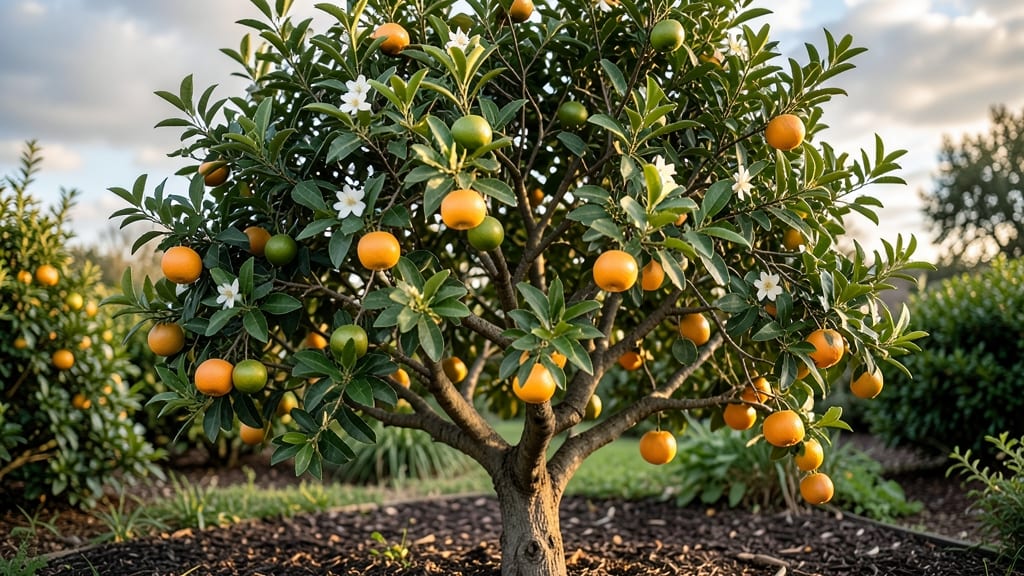
The life cycle of an orange fruit begins with pollination of white blossoms, develops into a green fruit over 6-8 months, and ripens to orange when fully sweet and juicy on the tree. Proper care ensures healthy growth from seed to harvest.
The journey of an orange fruit from blossom to harvest is a fascinating botanical process. 🌱 Each stage—from pollination to ripening—depends on environmental factors like sunlight, temperature, and water.
For example, citrus trees need consistent moisture during fruit set but must be protected from excess water once the fruit begins to form. Understanding these phases helps gardeners and farmers optimize growth, whether they're growing sweet oranges for fresh eating or bitter varieties for processing.
What's interesting is how the fruit's color change signals its internal sweetness. The shift from green to orange isn't just about pigment—it's a chemical process where chlorophyll breaks down and carotenoids take over, coinciding with sugar accumulation.
This transformation typically takes 3-4 months once the fruit reaches its full size, making patience a key factor in successful orange cultivation.
Proper care at each stage—like pruning to improve air circulation or applying balanced fertilizer—directly impacts yield and flavor. 🍊 Even small details, such as avoiding frost during flowering or ensuring adequate drainage, can mean the difference between a bountiful harvest and a failed crop.
The entire cycle, from blossom to ripe fruit, usually spans 12-18 months, depending on the variety and growing conditions.
💡 In This Article
- Stages of Orange Fruit Development Explained
- Cultivating Oranges for Optimal Fruit Production
Stages of orange fruit development explained
Orange fruit development begins with pollination of the tree's white, four-petaled blossoms, typically in early spring when temperatures reach 60-75°F. Bees and other pollinators transfer pollen between flowers, triggering fertilization that leads to fruit set.
What's fascinating is how citrus trees can produce both seedless and seeded varieties—seedless oranges develop from parthenocarpy (fruit formation without fertilization), while seeded types require successful pollination. This stage lasts about 2-3 weeks, during which up to 90% of potential fruit may drop naturally due to competition for nutrients.
The next phase, cell division and fruit growth, spans 6-8 months as the fruit swells from a tiny green button to its mature size. Inside, cells rapidly divide and expand, driven by photosynthesis in the tree's leaves. The fruit's skin thickens, and internal segments form around the developing seeds.
During this period, the fruit relies heavily on the tree's water and nutrient supply—too little water causes the fruit to split, while excess can dilute flavor. Interestingly, oranges grow fastest during the warmest months (summer), adding about 0.5 inches per month in diameter.
Color transformation marks the ripening stage, where chlorophyll breaks down and carotenoids (orange pigments) emerge. This process isn't just visual—it's a biochemical signal that sugars accumulate to 10-12% of the fruit's weight, while acids decrease.
The shift from green to orange typically takes 3-4 months and occurs when daytime temperatures average 75-85°F. What's counterintuitive is that oranges don't ripen further after picking (unlike bananas)—they're harvested at peak sweetness while still firm on the tree. 🍊
Environmental factors play critical roles at each stage. For instance, frost during flowering can kill blossoms, while high humidity promotes fungal diseases like citrus greening. Even soil pH matters—citrus trees thrive in slightly acidic soil (pH 6.0-7.0) where nutrients like iron and zinc are most available.
The tree's root system also expands aggressively during fruit development, sometimes growing 3-5 feet deeper than the canopy to access water and minerals.
One often-overlooked detail is how alternate bearing affects production. Many citrus trees produce heavy crops one year, then lighter crops the next—a survival mechanism to prevent nutrient depletion. This cycle is triggered by hormonal shifts in the tree's response to fruit load.
For example, a tree bearing 500 fruits one year may only produce 200 the following year, even with identical care. Understanding this pattern helps growers manage expectations and adjust fertilizing schedules accordingly.
Finally, the harvest window is a precise science. Oranges are picked when their color is fully orange and they yield slightly to gentle pressure. At this point, the fruit's soluble solids (sugars) reach 11-13%, and acid levels drop to 0.8-1.2%.
What's surprising is that some varieties (like navel oranges) are harvested green and artificially colored for market—though this practice is controversial due to potential flavor differences. 🌿