
Pruning
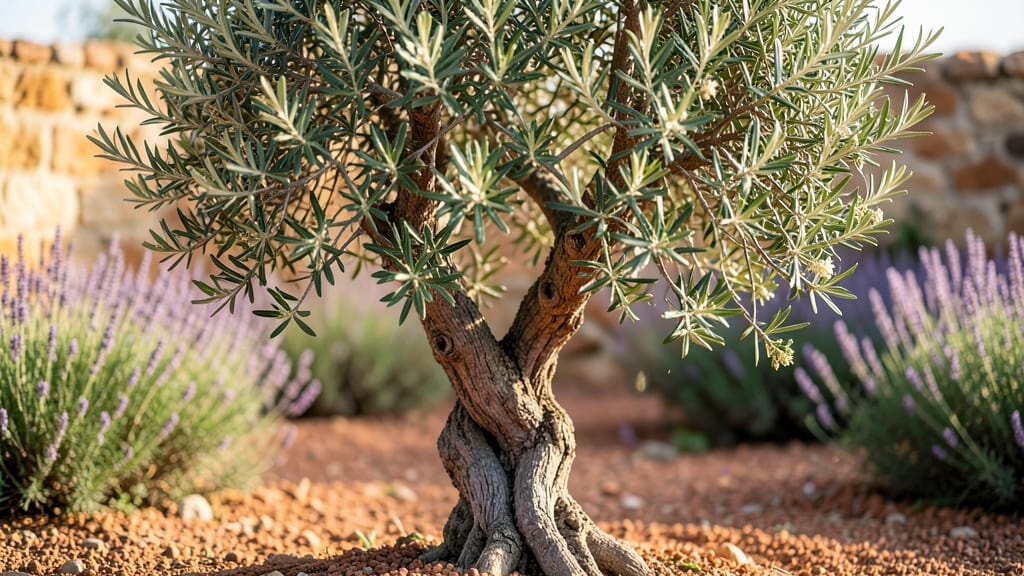
A majestic beauty, the fruitless olive tree brings Mediterranean elegance to your garden without the messy harvest. 🌿 Its glossy silver-green leaves and graceful shape create a striking focal point year-round, whether you plant it as a standalone statement or shape it into a sculptural hedge.
Unlike fruiting varieties, this one stays tidy—no dropped olives to clean up, just pure ornamental beauty that thrives in heat and drought once established.
The real magic happens in how it transforms spaces. Picture a silver-blue cloud of foliage framing a patio, or a neatly trimmed hedge that softens a modern home’s sharp lines.
It pairs perfectly with lavender, rosemary, and ornamental grasses for that effortless "garden escape" vibe. Even in winter, its evergreen leaves keep the landscape lush when other plants fade.
What you’ll love most is how low-maintenance it is—prune just once a year to shape it, and it rewards you with that polished, resort-style look without the fuss. The bark develops a textured, almost artistic pattern over time, adding depth as the tree matures.
It’s the kind of plant that makes neighbors stop and ask, "What’s that?"—and then you get to say, "This? Oh, it’s just my favorite zero-effort stunner."
Perfect for small yards, urban courtyards, or grand estate entries, this tree adapts to almost any setting. Whether you’re going for rustic charm or sleek contemporary, it delivers timeless appeal with almost no upkeep. Let’s talk about how to make it the star of your outdoor space!
📚 In This Guide
- What you need
- Instructions
- Tips and common mistakes
- Wrapping up and next steps
What you need
- ● Pruning shears: Bypass pruners (for small branches, ¼"–½" thick)
- ● Loppers: For medium branches (½"–1½" thick), with a 4–6 ft. reach
- ● Pruning saw: For thick branches (1½"+ thick), with a curved blade for clean cuts
- ● Disinfectant: 70% isopropyl alcohol or rubbing alcohol (to sterilize tools between cuts)
- ● Garden gloves: Cut-resistant (e.g., mechanix wear or gardening-specific)
- ● Heavy-duty trash bags: 2–3 large bags (for debris disposal)
- ○ Pruning sealant: Optional but recommended (e.g., Tanglefoot Tree Wound Pruning Seal for large cuts)
- ● Ladder or step stool: Sturdy, 6–8 ft. height (for high branches)
- ● Water & spray bottle: For cleaning tools and refreshing foliage post-prune
- ● Hand pruners: For precision trimming (tiny branches)
- ● Extension pole saw: For hard-to-reach branches (e.g., Fiskars 22" Extendable Pole Saw)
- ● Safety goggles: To protect eyes from debris
- ● Notebook & pencil: To sketch a pruning plan before starting
- ● Tree growth regulator: (e.g., Bonide Fungicide) if treating potential diseases
Step-by-step guide to planting and maintaining a Majestic Beauty fruitless olive tree
This stunning, low-maintenance tree thrives with minimal effort once you nail placement and watering.
🪴 Step 1: Choose the Perfect Planting Location
Find a spot with full sun exposure—at least 6-8 hours daily. The Majestic Beauty performs best in well-draining soil with a slightly alkaline pH (6.5–8.0). I always test soil first using a simple pH kit, especially in clay-heavy areas where drainage is critical. The tree’s silvery foliage actually signals stress if placed in shade—leaves will darken and lose their iconic texture.
Dig a hole twice as wide as the root ball but no deeper. Loosen the sides of the hole to encourage root spread. If your soil is heavy, mix in 1 part coarse sand or perlite per 3 parts native soil to improve aeration. The tree’s drought tolerance makes it ideal for slopes or rocky ground, but avoid waterlogged pockets where roots can rot.
🌱 Step 2: Plant with Proper Spacing and Initial Watering
Remove the tree from its container and gently tease the roots outward if they’re circling. Position it so the top of the root ball sits 1 inch above ground level—this prevents water from pooling at the stem. The Majestic Beauty grows slowly but can reach 20-30 feet tall, so allow 15-20 feet between trees if planting multiple specimens.
Backfill with native soil mixed with amendments, tamping lightly every 2 inches to eliminate air pockets. Create a 2-inch-high berm around the base to direct water away from the trunk during irrigation. Water deeply until moisture reaches 12 inches down, then let the soil dry slightly before watering again. Overwatering at planting is a common mistake—you’ll know it’s right when water drains freely through the bottom of the hole.
☀️ Step 3: Establish a Watering Routine for the First Year
Newly planted Majestic Beauty trees need deep watering every 7-10 days during the first growing season. Check moisture by inserting a 6-inch metal rod into the soil—if it comes out clean, water again. Mature trees are drought-tolerant but look their best with consistent moisture. I use a soaker hose for even distribution, avoiding wetting the leaves to prevent fungal issues.
After the first year, reduce watering to every 2-3 weeks unless experiencing extreme heat or drought. The tree’s small, silvery leaves conserve water efficiently, but prolonged dry spells will cause leaf drop. Mulch with 2-3 inches of wood chips or gravel (avoid organic mulch that retains moisture) to regulate soil temperature and reduce evaporation.
✂️ Step 4: Prune for Shape and Health Annually
Prune in late winter or early spring before new growth begins. Remove dead, diseased, or crossing branches first, then shape the tree by cutting back to outward-facing buds. The Majestic Beauty responds well to pruning, so you can train it as a standard, espalier, or even a small tree with careful shaping. Never remove more than 25% of the canopy in one season—this can stress the tree.
Watch for suckers at the base—these compete with the main trunk for nutrients. Remove them immediately by cutting at the base with clean, sharp pruners. Sterilize tools with rubbing alcohol between cuts to prevent bacterial spread. The tree’s natural growth habit is upright with a rounded crown, but regular pruning keeps it looking manicured without sacrificing its wild elegance.
🌿 Step 5: Monitor for Pests and Adjust Care as Needed
The Majestic Beauty is remarkably pest-resistant, but occasional issues like scale insects or aphids may appear. Treat with horticultural oil or insecticidal soap if you spot sticky residue (honeydew) on leaves. Avoid chemical sprays—they can harm beneficial insects and leave residues on the edible olive fruit (if growing fruiting varieties).
Fertilize lightly in early spring with a balanced, slow-release fertilizer (10-10-10 or similar). Over-fertilizing leads to excessive leaf growth at the expense of the tree’s striking structure. If leaves yellow between veins, it’s a sign of iron deficiency—apply chelated iron and adjust soil pH if needed. The tree’s natural beauty lies in its silvery foliage and sturdy form, so resist the urge to over-manipulate its growth.
Tips & tricks for perfect Majestic Beauty fruitless olive tree care
Here's what nobody tells you about making this stunning tree thrive with minimal effort.
Sunlight Strategy: The Majestic Beauty's iconic silvery foliage is your best indicator of proper sunlight placement. If you notice leaves darkening or losing their metallic sheen after just a few weeks, you've placed it in partial shade. Move it to a spot where it receives that full 6-8 hours of direct sunlight daily—this is non-negotiable for maintaining its signature appearance. I've seen trees in urban settings thrive with southern exposure where they get morning sun and afternoon shade, but even then, the leaves remain vibrant.
Soil Preparation Secret: When amending heavy clay soil, I recommend using coarse sand instead of perlite for the 1:3 ratio mix. Sand provides better long-term drainage while still maintaining soil structure, whereas perlite can break down over time and lose effectiveness. The key is creating that well-draining environment—the tree's roots absolutely hate sitting in soggy conditions. After amending, do the "drainage test": Fill the hole with water and time how quickly it drains. If it takes more than 30 minutes, you need more sand.
Watering Wisdom: That 6-inch metal rod moisture check in Step 3 is your best friend. I've found that in sandy soils, you'll need to water more frequently (every 5-7 days) because moisture drains away quickly, while clay soils may require watering every 10-14 days. The tree's drought tolerance is real, but don't confuse that with neglect—consistent moisture during the first year establishes strong root systems. Pro tip: Water in the early morning to prevent fungal issues from evening moisture lingering on the leaves.
Pruning Precision: When shaping your tree, focus on creating an open center that allows sunlight to penetrate to the lower branches. This prevents the classic "Christmas tree" look where the bottom remains bare. I like to make cuts just above outward-facing buds—this encourages new growth in the direction you want. For the first few years, I recommend minimal pruning (just removing dead branches) to let the tree establish its natural form before getting too creative with shaping.
Pro Tips for Majestic Beauty Fruitless Olive Tree
- Here's what nobody tells you about making this stunning tree thrive with minimal effort.
- Sunlight Strategy: The Majestic Beauty's iconic silvery foliage is your best indicator of proper sunlight placement. ...
- Soil Preparation Secret: When amending heavy clay soil, I recommend using coarse sand instead of perlite for the 1:3 ...
Frequently asked questions
Got questions about your majestic, fruitless olive tree? You’re not alone! Here are some of the most common queries—and their straightforward answers—to help you keep your tree thriving with minimal effort.
Why does my fruitless olive tree look so stunning year-round?
A fruitless olive tree (Olea europaea ‘Frutal’) stays lush and elegant because it focuses all its energy on foliage and growth instead of producing olives. Its silvery-green leaves, compact shape, and drought-resistant nature make it a standout ornamental tree—perfect for borders, containers, or as a focal point in Mediterranean-style gardens.
How often should I prune a fruitless olive tree for optimal shape?
Prune your fruitless olive tree once a year, ideally in late winter or early spring before new growth begins. Light shaping prunes are enough to maintain its natural form, but you can trim back up to one-third of its branches if needed. Avoid heavy pruning in fall, as it can stimulate tender new growth vulnerable to cold.
What should I do if my olive tree’s leaves turn yellow or brown?
Yellowing leaves often signal overwatering or nutrient deficiency. Let the soil dry out between waterings (olive trees hate soggy roots!) and fertilize lightly in spring with a balanced, slow-release fertilizer. Brown edges may mean underwatering or salt buildup—flush the soil with water to cleanse it.
Can I grow a fruitless olive tree in a pot, or does it need to be planted in the ground?
Fruitless olive trees thrive in containers, making them ideal for patios, balconies, or small yards. Use a large pot (at least 18 inches wide) with drainage holes and well-draining soil. Repot every 2–3 years and move indoors if temperatures drop below 20°F (-7°C).
Are there alternatives to fruitless olive trees for low-maintenance greenery?
If you love the look but want options, consider these drought-tolerant, low-fuss trees:
- Italian Cypress (Cupressus sempervirens): Tall, slender, and evergreen.
- Dwarf Bay Laurel (Laurus nobilis ‘Angustifolia’): Compact and aromatic.
- Texas Sage (Leucophyllum frutescens): Silvery foliage with vibrant blooms.
- Crepe Myrtle (Lagerstroemia): Fast-growing with stunning summer flowers.
Wrapping up and next steps
The majestic beauty fruitless olive tree proves that stunning landscapes don’t require endless effort—just a little know-how! 🌿 With its year-round elegance and minimal care demands, this tree is the perfect addition to any garden or patio.
Whether you’re a seasoned gardener or a beginner, its resilience and beauty make it a rewarding choice.
Ready to transform your space? Start small—pick a sunny spot, gather your tools, and give your fruitless olive tree the love it deserves. Watch as it thrives with effortless grace, turning your outdoor area into a serene sanctuary. Happy planting! 🌱