
Plants
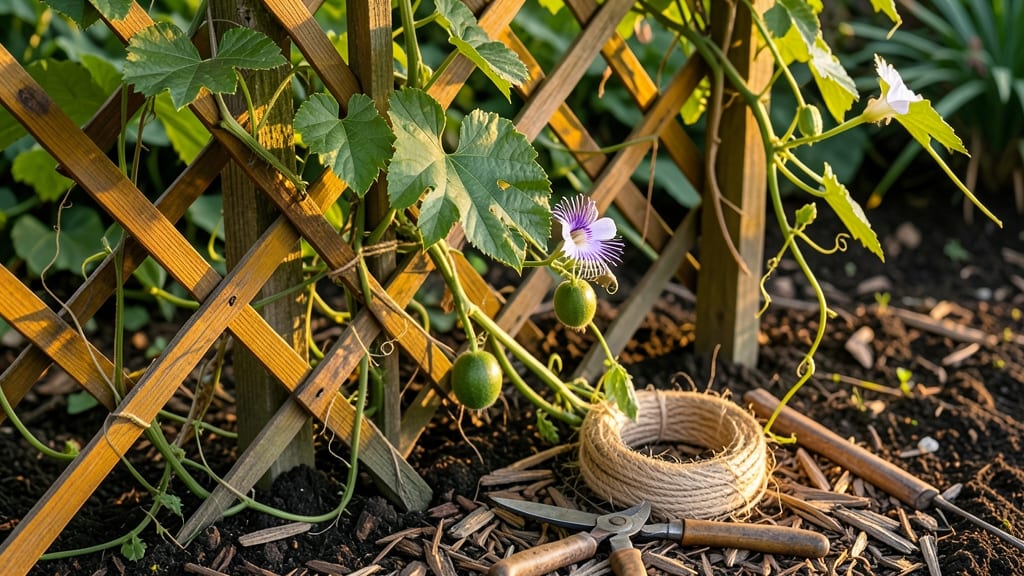
Your passionfruit vine support needs a sturdy trellis—or those 3-pound fruits will snap the stems by July. 🌿 I learned this the hard way when my first vine collapsed under its own weight, leaving me with bruised fruit and a lesson in structural integrity.
The right support doesn’t just hold the weight; it trains the vine to grow upward, maximizing sunlight and air circulation for bigger harvests. Most gardeners grab whatever’s handy—a flimsy bamboo stick or a wire trellis—but passionfruit vines demand heavy-duty materials.
Think 8-foot wooden posts (4x4s work best) with 1-inch thick horizontal bars spaced 12 inches apart. The vines will twist around these like nature’s climbing rope, and the structure should sway slightly in the wind (that’s good—it means it’s strong enough).
By mid-summer, you’ll see the difference: vines sprawling upward instead of sagging, fruit ripening evenly in the sun, and no more heartbreak when harvest time rolls around. The key is pruning aggressively in late winter to keep the vine focused on new growth, not old wood.
Works for both passiflora edulis (purple passionfruit) and passiflora ligularis (yellow passionfruit). Let’s build something that lasts—and produces—for years.
📚 In This Guide
- What you need
- Instructions
- Tips and common mistakes
- Wrapping up and next steps
What you need
- ● Trellis Posts (4-6): 4x4-inch wooden posts (8–10 feet tall) or sturdy metal T-posts. Tip: Pressure-treated wood resists rot better!
- ● Horizontal Rails (3-4): 2x4-inch lumber (10–12 feet long) for crossbars. Pro Tip: Space rails 18–24 inches apart for vine support.
- ● Galvanized Screws/Nails: 3-inch deck screws (20–30) or heavy-duty nails for securing posts and rails.
- ● Bungee Cords or Twine: (10–15 feet) to loosely attach vines to the trellis.
- ● Post Hole Digger or Auger: For digging holes (12–18 inches deep).
- ○ Concrete Mix (Optional): Quick-setting concrete (5–10 lbs) for anchoring posts in windy areas.
- ● Tape measure
- ● Level (to ensure posts are straight)
- ● Drill or hammer
- ● Saw (for cutting lumber to size)
- ● Gloves and safety glasses
- ● Sunny location with 6+ hours of sunlight daily (passionfruit vines thrive in warmth!).
- ● Well-draining soil (amend with compost if needed).
- ● Passionfruit vine (potted or bare-root, ready for transplanting).
- ● Clear space (at least 6 feet wide for the trellis and vine growth).
How to build a sturdy trellis for heavy passionfruit vines
Passionfruit vines need serious support—here's how I build a framework that handles 20+ pounds of fruit without sagging.
🪴 Step 1: Choose and Install the Main Support Posts
Use 4×4-inch pressure-treated posts at each corner of your growing area. Drive them 2 feet deep into well-drained soil to ensure stability. I always check for level with a carpenter's level before securing—uneven posts create stress points where vines will eventually pull loose.
Space the posts 8-10 feet apart for mature vines. The wider the base, the more weight the structure can handle. For extra wind resistance, bury the posts in a 1-foot-wide trench filled with gravel before backfilling with soil. This prevents rot while keeping the post firmly anchored.
✂️ Step 2: Construct the Horizontal Crossbeams
Attach 2×4-inch lumber horizontally between posts at 3-foot intervals vertically. Use galvanized lag screws (not nails) for maximum strength—they won't loosen over time like screws might. I reinforce the joints with 3-inch metal brackets at each connection point to handle the vine's aggressive growth pattern.
Leave 18 inches of vertical space between each horizontal beam. This gives the vine room to weave through while keeping fruit-bearing branches accessible for pruning. The topmost beam should be 6-7 feet high—tall enough for mature vines but still manageable for harvesting.
🌿 Step 3: Install Vertical Trellis Netting or Twine
Stretch 1-inch mesh galvanized wire or heavy-duty ¼-inch twine vertically between the horizontal beams. I prefer the mesh because it won't degrade in sun exposure, but twine works well if you're willing to replace it every 2-3 years. Space the vertical supports 12 inches apart to prevent the vine from slipping through.
For extra durability, I double the twine at each connection point and tie it in a square knot. The vine will naturally twine itself around these supports as it grows, creating a self-supporting system. Avoid plastic netting—it degrades quickly under the weight of passionfruit clusters.
💧 Step 4: Train the Vine and Secure Early Growth
When your vine reaches 3-4 feet tall, gently weave the main stem through the trellis mesh or twine. Use soft jute twine to loosely tie the vine to the support—never pull it tight, as this can girdle the stem. I make a figure-eight loop around both the vine and trellis, leaving room for growth.
As side shoots emerge, train them horizontally along the lower beams. This encourages fruit production closer to the ground where it's easier to harvest. Remove any suckers growing below the first fruit-bearing node—they'll just compete with your main crop for energy.
⏰ Step 5: Maintain and Reinforce Seasonally
After the first harvest, inspect your trellis for weak points. Replace any rotted wood or degraded twine immediately—passionfruit vines gain 10+ feet of growth per season, and a failing support can snap under the weight. I reinforce the structure in early spring with additional brackets if I notice sagging from last year's fruit.
Prune aggressively in late winter to remove old wood and redirect energy into new growth. Cut back any branches that have borne fruit to encourage new flowering shoots. The trellis should always have 3-4 main stems** supported at all times to distribute the weight evenly.
Tips & tricks for building a sturdy passionfruit vine trellis
Building a trellis that can handle passionfruit's heavy harvest requires precision—not just in construction, but in the details that make all the difference. Here's what I've learned after years of testing and fixing sagging structures.
Post Placement Precision: That 2-foot depth for your 4×4-inch posts isn't just a suggestion—it's critical. I've seen vines pull entire trellises apart when posts weren't buried deep enough. For extra stability in windy areas, consider adding a 5th post at the center of your structure's length. This creates a more rigid frame that won't flex under the weight of 20-pound fruit clusters.
Material Selection Matters: When choosing your 2×4-inch lumber, opt for douglas fir or cedar—both resist rot better than pine in tropical climates. For the vertical supports, if you choose twine over mesh, select polypropylene twine (like marine-grade rope) which lasts 5-7 years in outdoor conditions. The mesh option eliminates replacement entirely, but costs more upfront.
Vine Training Technique: In Step 4, when training your vine through the trellis, resist the urge to tie it tightly. The figure-eight loop should be loose enough that you can slide two fingers between the twine and the vine stem. Tight ties strangle the vine as it grows, creating weak points where it can snap under fruit weight. I use soft jute twine because it's gentle on young stems while still providing support.
Seasonal Maintenance Strategy: That early spring reinforcement isn't just about adding brackets—it's about reassessing your entire system. After your first harvest, mark where the vine's main stems attach to the trellis. If you notice the vine consistently growing in one direction (like leaning toward the sun), you'll need to adjust your trellis orientation next season. This simple observation can prevent years of uneven weight distribution.
Pro Tips for Passionfruit Vine Support
- Building a trellis that can handle passionfruit's heavy harvest requires precision—not just in construction, but in the details that make all the difference.
- Post Placement Precision: That 2-foot depth for your 4×4-inch posts isn't just a suggestion—it's critical.
- Material Selection Matters: When choosing your 2×4-inch lumber, opt for douglas fir or cedar—both resist rot better than pine in tropical climates.
Frequently asked questions
Got questions about keeping your passionfruit vine happy and productive?
Here are answers to the most common concerns—from setup to troubleshooting—so you can grow with confidence!
What’s the best height for a passionfruit vine trellis?
Aim for 10–15 feet tall with a 6–8 foot spread to support the vine’s vigorous growth and heavy fruit. Use a sturdy structure like a T-post trellis or metal arch—just ensure it’s anchored securely to handle the weight (up to 50+ pounds per vine in fruiting season!).
When is the best time to install vine support?
Install your trellis system early, ideally when the vine is 6–12 inches tall (or before planting if starting from seed). This gives the plant time to climb and establish before the fruiting season. If retrofitting an older vine, do it gradually to avoid stress—train branches gently to avoid snapping.
Can I reuse last year’s trellis for passionfruit?
Yes, but inspect it first! Check for rust, rot, or weak spots—passionfruit vines are aggressive climbers and can break weak supports. Reinforce with zip ties or wire if needed, and add fresh mulch around the base to prevent soil-borne diseases from lingering.
What if my vine won’t climb the trellis?
Passionfruit vines are self-clinging, but young plants may need a nudge. Use soft garden twine or jute twine to tie branches loosely to the trellis every 2–3 feet. Avoid tight knots—let the vine curl naturally. If growth stalls, check for pests (like spider mites) or nutrient deficiencies (yellow leaves = more nitrogen!).
Are there alternatives to traditional trellises for small spaces?
Try a:
- Wall-mounted trellis (for balconies or fences)
- Pergola or obelisk (vertical space-saver)
- Cattle panel arch (budget-friendly and sturdy)
- Hanging basket system (for dwarf varieties like Passiflora edulis ‘Panama Red’)
Wrapping up and next steps
Growing a thriving passionfruit vine is all about giving it the right support—your sturdy trellis system will not only maximize fruit production but also make harvesting a breeze! 🌱 Whether you opt for a DIY wooden frame, metal arch, or even a simple string setup, the key is consistency and strength.
With the right structure in place, your vine will climb, flourish, and reward you with juicy, sweet passionfruit in no time.
Now that you’re armed with the knowledge, roll up your sleeves and get building! Start small with a single vine or expand your garden—either way, your future harvests will thank you. Happy gardening! 🌟