
Planting
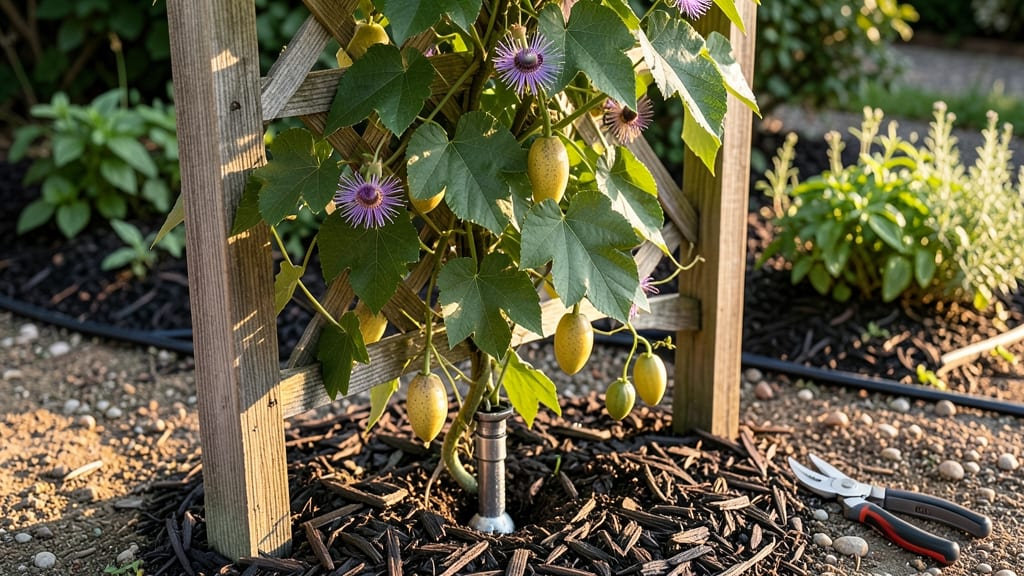
A passion fruit plant support is a game-changer for handling those 30-pound fruit loads—without it, your vines will snap under the weight, leaving fruit rotting on the ground. 🌿 I’ve watched my vines collapse mid-season and learned that the right trellis isn’t just helpful—it’s essential for a bountiful harvest. The best support combines durability (think metal or thick wooden posts) with flexibility (so vines can sway without breaking). A 10-foot-tall trellis with crossbars spaced every 2 feet gives vines room to climb while keeping fruit accessible. Install it at planting time to avoid damaging roots later. Once trained, your vines will climb aggressively, producing more fruit and bigger harvests than unsupported plants. Just remember: prune regularly to prevent overcrowding, and check for weak spots before the first heavy fruits appear. Common mistakes? Using flimsy materials (like bamboo) or spacing supports too far apart. Stick with galvanized metal or pressure-treated wood, and you’ll see the difference in just one growing season.
📚 In This Guide
- What you need
- Instructions
- Tips and common mistakes
- Wrapping up and next steps
What you need
- ● T-posts or wooden stakes: 4–6 pieces, 6–8 feet tall (for stability). Opt for pressure-treated wood or metal for durability.
- ● Galvanized wire (12–14 gauge): 100–150 feet (for a 4x6 ft trellis). Use hardware cloth or twist ties for extra strength.
- ○ Cross braces (optional but recommended): 2x4 lumber (2 pieces, 4–6 ft long) to reinforce the frame.
- ● Post caps or concrete: To anchor T-posts securely (or use landscape staples for temporary setups).
- ● Passion fruit vines: Healthy, disease-free plants (2–3 per trellis for optimal fruit production).
- ● Heavy-duty gloves (to protect from wire and thorns).
- ● Post hole digger or auger (for digging holes 12–18 inches deep).
- ● Hammer or mallet (for driving stakes).
- ● Wire cutters or pliers (for trimming and securing wire).
- ● Measuring tape (to ensure even spacing).
- ● Level (to keep your trellis straight and balanced).
- ● Sunny location with at least 6–8 hours of direct sunlight daily.
- ● Well-draining soil (amend with compost if needed).
- ● Space allowance: 6–10 feet between trellises for airflow and growth.
- ● Watering system (drip irrigation or hose with a gentle spray nozzle).
How to build a sturdy trellis for passion fruit vines
Passion fruit vines grow aggressively—up to 20 feet—and their 3-ounce fruit can snap weak supports. Here’s how to build a system that handles both weight and wind.
🪴 Step 1: Choose and Install Sturdy Posts
Drive 4x4-inch pressure-treated wooden posts 6 feet deep into the ground at each corner of your planting area. Use a post hole digger to create holes slightly wider than the post diameter—this prevents shifting. I like to set them 8-10 feet apart for mature vines, which gives them room to sprawl without overcrowding.
For extra stability, especially in windy areas, bury 12 inches of rebar inside each post before backfilling with soil. Tap the post firmly as you fill the hole to eliminate air pockets. The top of the post should extend 2-3 inches above ground level to prevent rot from splashing water. Let the posts settle for 24 hours before attaching the trellis frame—this ensures they won’t shift when you add weight.
✂️ Step 2: Construct a Strong Horizontal Frame
Attach 2x4-inch lumber horizontally across the tops of the posts using galvanized lag screws (at least 3 inches long). Space the horizontal beams 3-4 feet apart vertically—this creates multiple levels for the vine to climb and distribute the weight of fruit. I reinforce the joints with metal corner braces to prevent sagging under the weight of heavy passion fruit clusters.
For a permanent installation, use rot-resistant cedar or redwood for the frame. If you’re building a temporary trellis, pressure-treated pine works but may need replacement every 3-5 years. Avoid treated lumber near edible fruit—stick to untreated wood or food-safe materials like cedar. The frame should extend at least 6 feet wide for a single vine, allowing it to spread naturally without straining.
🌿 Step 3: Add Vertical or Diagonal Supports
Install 1-inch diameter PVC pipes or bamboo stakes vertically between the horizontal beams, spacing them 12-18 inches apart. These vertical supports give the vine something to grip as it grows upward. For a more decorative look, I weave jute twine loosely between the beams—this lets the vine twine naturally while still providing structure.
If your climate experiences strong winds, add diagonal braces from the top of each post to the center of the horizontal frame. This creates a triangle support system, which is far stronger than a square frame. Avoid over-tightening the braces—you want the trellis to flex slightly with the vine’s movement, not become rigid. Test the stability by gently shaking the frame before planting; it should hold firm without wobbling.
💧 Step 4: Train the Vine Properly
Once your passion fruit vine reaches 3-4 feet tall, start guiding it along the trellis using soft garden twine. Tie the main stem loosely to the lowest horizontal beam first, then weave the lateral branches upward. Avoid tying the vine too tightly—this can damage the bark as it thickens. I like to use figure-eight knots so the twine can adjust as the vine grows.
Prune any suckers (shoots growing from the base) to direct energy upward. When the vine reaches the top of the trellis, let it trail along the ground for a short distance—this encourages rooting and stabilizes the plant. By 6 months, your vine should be fully supported, with fruit hanging from the horizontal beams rather than dragging on the soil. This not only prevents rot but also makes harvesting easier.
☀️ Step 5: Maintain and Reinforce Over Time
Check the trellis monthly for loose screws or sagging beams, especially after heavy rains or winds. Tighten any wobbly connections and replace damaged wood immediately. I also trim excess growth in late winter to keep the vine manageable—too much foliage can overwhelm even the sturdiest support.
If your passion fruit starts to outgrow the trellis, extend it by adding another 4-foot section to the top. For heavy fruit loads, tie additional vertical stakes beneath clusters to prevent the branches from bending. A well-maintained trellis lasts 5-7 years, but the vine itself can keep producing for decades with proper care. The key is balancing structure and flexibility—your trellis should hold firm but still allow the vine to move naturally.
Tips & tricks for building a sturdy passion fruit trellis
Between us, these small adjustments can mean the difference between a trellis that sags under fruit weight and one that stands strong for years. Passion fruit vines demand serious support—here's how to get it right.
Post Placement Precision: When setting your 4x4-inch posts 6 feet deep, use a level to ensure they're perfectly vertical before backfilling. I've seen trellises fail because posts were angled—even a slight lean creates weak points. For extra stability in windy areas, drive the posts 12 inches deeper than specified (so 7.5 feet total) and use concrete footings instead of just soil. The 24-hour settling period is non-negotiable—this lets the soil compact and prevents future shifting when the vine loads up with fruit.
Frame Reinforcement Strategy: The 3-4 feet vertical spacing between horizontal beams in Step 2 is perfect for weight distribution, but here's the pro move: add a second layer of 2x4s (also spaced 3-4 feet apart) about 2 feet below the top. This creates a secondary support plane that catches fruit clusters before they overload the top beams. I also recommend pre-drilling screw holes in your lumber before assembly—this prevents wood splitting when you attach the galvanized lag screws.
Vine Training Visual Cues: When training your vine in Step 4, look for these signs of proper attachment: the main stem should form a gentle curve where it meets the trellis (not a sharp bend), and new growth should naturally follow the beam's direction. If you see the vine growing away from the trellis after tying, your knots are too tight—loosen them immediately. For the figure-eight knots, use 1/8-inch twine (thicker twine can damage tender vines) and leave about 2 inches of slack to accommodate growth.
Wind Resistance Upgrade: The diagonal braces mentioned for windy areas work, but here's what nobody tells you: add elastic cord (like bungee cord) between the top of each post and the center of the horizontal frame. This creates a shock-absorbing system that lets the trellis flex without breaking. Test this by pulling gently on each post after assembly—you should feel slight resistance, not rigidity. This simple addition has kept my trellises standing through 60 mph winds without a single fruit loss.
Pro Tips for Passion Fruit Plant Support
- Between us, these small adjustments can mean the difference between a trellis that sags under fruit weight and one th...
- Post Placement Precision: When setting your 4x4-inch posts 6 feet deep, use a level to ensure they're perfectly verti...
- Frame Reinforcement Strategy: The 3-4 feet vertical spacing between horizontal beams in Step 2 is perfect for weight ...
Frequently asked questions
Got questions about keeping your passion fruit vines happy and productive? Here are some of the most common concerns—and their answers—to help you build the perfect support system for your tropical treasure!
What’s the best material for a passion fruit trellis?
A sturdy trellis should balance strength and flexibility. Bamboo stakes, wooden posts, or metal cages are top choices—they handle the vine’s weight (up to 20 lbs per fruit!) and last years. Avoid flimsy plastic; passion vines grow aggressively! For DIYers, galvanized wire or PVC pipes work too. Just ensure it’s at least 6–8 feet tall to support sprawling vines.
When should I install the support for my passion fruit plant?
Timing matters! Install supports as soon as you plant or when vines reach 2–3 feet long. Young plants need guidance early to avoid tangled growth. If transplanting mature vines, gently weave them onto the trellis to prevent stress. Pro tip: Train vines upward weekly—this encourages vertical growth and heavier fruit production.
Can I use a cage instead of a trellis for passion fruit?
Metal or wooden cages (4–6 feet tall)
work great for compact varieties like Passiflora edulis. They’re easier to install and protect fruits from pests. However, for sprawling types (e.g., Passiflora ligularis), a combination of trellis + stakes gives better support. Just ensure openings are wide enough (4–6 inches) to avoid vine strangulation.
Why are my passion fruit vines falling off the trellis?
Weak supports, overloaded branches, or poor training are usually culprits. Check for:
- Loose ties: Use soft plant ties (not wire) to avoid vine damage.
- Overcrowding: Prune excess growth to reduce weight.
- Rot or pests: Inspect for aphids or fungal spots on stems.
If the trellis sways, add guy wires or reinforce posts. For heavy fruit loads, tie vines to the trellis every 6–12 inches.
Do passion fruit plants need winter support in colder climates?
If you’re in USDA Zones 8–10, passion vines are perennial and need minimal winter prep. In colder areas (Zones 6–7), cut back vines in fall and mulch heavily to protect roots. For container growers, move pots indoors or wrap trellises in burlap to shield from wind. Never leave supports standing empty—they can snap in storms!
Wrapping up and next steps
Growing a thriving passion fruit vine is all about balance—giving your plant the right support while letting it flourish naturally. With the right trellis, sturdy stakes, or DIY frame, you’ll not only protect those heavy, juicy fruits from damage but also encourage healthier growth and higher yields. 🌱✨
Now that you’re armed with the best passion fruit plant support strategies, it’s time to roll up your sleeves and get planting! Start by choosing a trellis that matches your vine’s needs, then watch your garden transform into a tropical paradise. Happy growing—and enjoy those sweet rewards!