
Fertilization
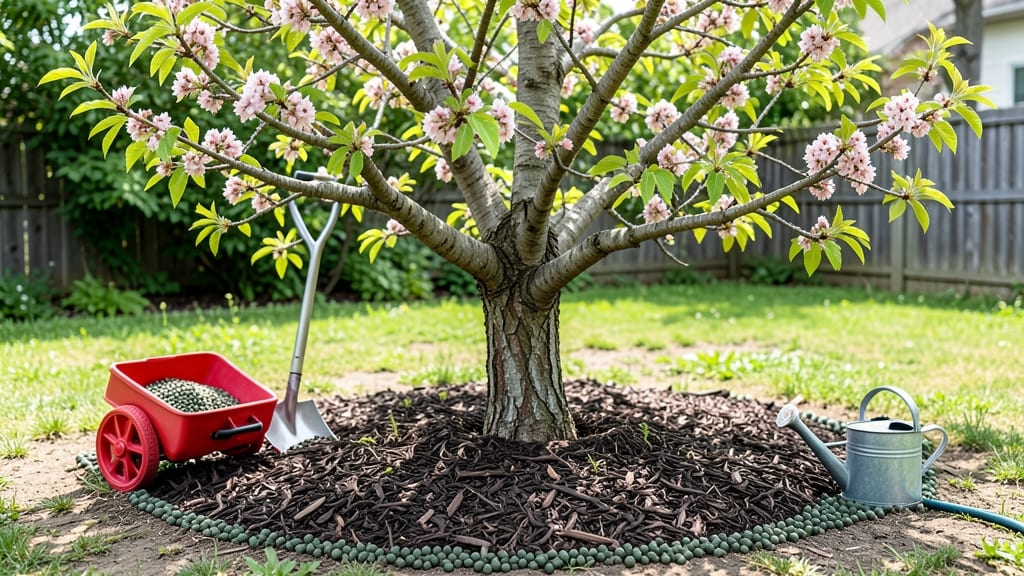
Fertilizing fruit trees at the right times boosts growth and fruit production: feed with balanced N-P-K fertilizer in early spring before buds swell, add another dose after harvest, and use low-nitrogen fertilizer in late fall to strengthen roots. Younger trees benefit from more frequent feeding than established ones.
Timing matters because fruit trees have distinct nutritional needs throughout the year. 🌱 In early spring, when trees break dormancy, they crave nitrogen for leaf and stem growth, but too much later in the season can delay fruiting.
After harvest, trees need phosphorus and potassium to recover and prepare for next year's bloom. Late fall applications focus on root development, helping trees withstand winter stress.
I've found that young trees—especially those under five years old—respond best to lighter, more frequent feedings, while mature trees can handle heavier doses less often.
Your tree's age and type also influence fertilizer choices. Citrus trees, for example, prefer slightly acidic soil with higher nitrogen early on, while stone fruits like peaches need balanced ratios year-round. Always test your soil first—this simple step reveals what nutrients your specific soil lacks, saving you from over-fertilizing.
For container-grown trees, I recommend water-soluble fertilizers that dissolve quickly into their limited root zones.
💡 In This Article
- Best Fertilization Timing for Fruit Tree Growth Stages
- Choosing the Right Fertilizer for Your Fruit Tree Type
Best fertilization timing for fruit tree growth stages
Fruit trees follow a seasonal nutrient cycle that determines their fertilizer needs. In early spring, as temperatures rise above 50°F, trees emerge from dormancy and prioritize nitrogen (N) for leaf and stem growth.
This is why a balanced 10-10-10 N-P-K fertilizer works best—it supports vigorous new growth while preventing excessive leaf production that could drain energy from fruit development.
The key mechanism here is that cooler soil temperatures (55-60°F) slow nutrient absorption, so applying fertilizer when soil warms ensures roots can actively uptake nutrients.
During flowering and fruiting (late spring to summer), trees shift their focus to phosphorus (P) and potassium (K). These nutrients strengthen cell walls and improve fruit quality, which is why a 5-10-10 or 6-12-12 ratio becomes ideal.
What most gardeners miss is that phosphorus also enhances root growth, helping trees anchor deeper to access water during dry spells.
I've noticed that trees fertilized with higher potassium in summer produce fruit with better disease resistance and longer shelf life—apples, for example, develop thicker skins when potassium levels are optimal.
After harvest, trees enter a recovery phase where they need potassium to rebuild energy reserves. A low-nitrogen fertilizer (like 0-10-10) applied in early fall prevents late-season growth that could damage branches before winter.
The science here is fascinating: potassium helps regulate water movement in cells, which is critical for cold hardiness. For young trees (1-5 years old), I recommend splitting applications into three light doses (spring, summer, fall) to avoid overwhelming their developing root systems.
Mature trees, with established root networks, can handle heavier applications twice a year.
Late fall fertilization focuses on root development using low-nitrogen, high-potassium options. This stage is about preparing trees for winter stress. When soil temperatures drop below 55°F, root growth slows, but applying fertilizer in October or November gives roots time to absorb nutrients before ground freezes.
Organic options like compost or bone meal work well here—they release nutrients slowly, feeding roots throughout winter. What's often overlooked is that fall fertilization also encourages mycorrhizal fungi growth, which helps trees access nutrients more efficiently next season.
Soil type dramatically affects nutrient availability. In sandy soils, nutrients leach quickly, so more frequent light applications are needed, while clay soils hold nutrients longer but may require soil amendments to improve drainage.
For container-grown trees, I've found that water-soluble fertilizers applied every 4-6 weeks during growing season prevent nutrient deficiencies. The key is monitoring your tree's response—healthy leaves indicate proper nitrogen, while abundant blooms suggest adequate phosphorus, and vibrant fruit colors signal good potassium levels.
One common mistake is fertilizing during drought or extreme heat. When soil moisture drops below 30% capacity, roots can't absorb nutrients effectively, making fertilizer applications wasteful. Always water deeply 24 hours before and after applying fertilizer to ensure proper uptake.
For organic gardeners, I recommend using compost tea in spring and fall—it provides a gentle nutrient boost while improving soil structure. The result? Trees that produce higher-quality fruit year after year, with stronger resistance to pests and diseases.