Pests
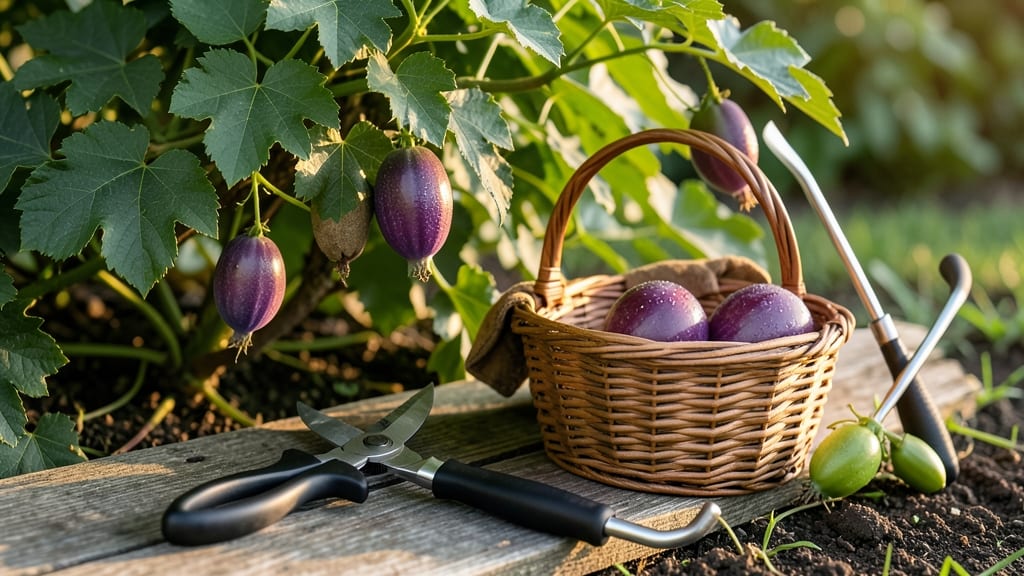
You should eat passionfruit when it's fully ripe, which means its skin turns deep purple or yellow (depending on the variety) and gives off a strong, sweet fragrance. Tropical climates yield peak flavor between late spring and summer, while cooler regions enjoy them from late summer to early fall.
Timing matters more than you might think—passionfruit's sugar content peaks when fully ripe, making it taste vibrant and complex. 💫 The color shift happens because chlorophyll breaks down, revealing the fruit's natural pigments, while the aroma comes from volatile compounds that develop as the fruit matures.
I always test ripeness by gently squeezing the fruit; it should yield slightly to pressure without feeling mushy. In my experience, passionfruit harvested at this stage delivers the most intense flavor, whether you're eating it fresh, blending it into smoothies, or using it in desserts.
If you're growing your own, wait until the fruit detaches easily from the vine before picking—this ensures maximum sweetness. For store-bought fruit that's still firm, place it in a paper bag with a banana or apple to speed up ripening through ethylene gas exposure.
Once ripe, passionfruit keeps well at room temperature for a few days, but refrigeration extends its shelf life while preserving that luscious flavor.
💡 In This Article
- How to Identify Ripe Passionfruit by Color and Scent
- Best Harvesting and Storage Tips for Peak Passionfruit Flavor
How to identify ripe passionfruit by color and scent
The color transformation in passionfruit happens due to chlorophyll degradation and the emergence of carotenoids or anthocyanins. Purple varieties develop deep, rich pigmentation when fully ripe, thanks to anthocyanins that form under high sugar concentrations—think of it like the red in blueberries or purple grapes.
Yellow varieties, on the other hand, rely on carotenoids (like those in mangoes) that become more pronounced as the fruit matures. 💫 The skin should never be pale or dull; instead, it should glow with intensity, whether purple or golden.
Scent is your next clue—ripe passionfruit emits a sweet, tropical aroma that's almost intoxicating. This fragrance comes from volatile organic compounds (VOCs) like esters and terpenes, which peak at full ripeness.
A firm but slightly yielding fruit (like a ripe avocado) is ideal—too hard means it's underripe, while mushiness signals overripeness. Pro tip: Gently squeeze near the stem end; if it gives just a little, it's ready.
Underripe fruit tastes bland and seedy, while overripe fruit can be mealy and lose its vibrant flavor.
Here's what to watch for with each variety:
- Purple passionfruit: Skin should be deep purple-black with no green patches—chlorophyll breakdown is complete. The aroma will smell like a mix of citrus and tropical flowers.
- Yellow passionfruit: Skin turns bright golden-yellow with no green streaks. The scent should be sweet and slightly floral, not sour or sharp.
Temperature plays a role too. Passionfruit grown in tropical climates ripen faster due to higher ambient ethylene production (the natural ripening hormone). In cooler regions, fruit may take longer to develop these ripening cues.
That's why passionfruit from late summer to early fall in temperate zones often tastes more concentrated—it's had time to fully develop its sugars and aromas.
One common mistake is assuming all passionfruit ripen the same way. Purple varieties are more prone to overripening if left on the vine too long, while yellow varieties tend to ripen more uniformly.
Always check for that sweet, fragrant aroma—it's your best indicator that the fruit is ready to eat, whether you're using it for fresh fruit salads, smoothies, or desserts like passionfruit cheesecake.
The sugar content in passionfruit actually increases as it ripens, peaking at full maturity. This is why ripe fruit tastes sweeter and more complex—its natural sugars (like glucose and fructose) convert from starches during the ripening process.
The acidity also mellows out, making the flavor more balanced. 🌟 For the best experience, always prioritize these visual and olfactory cues over firmness alone.