
Propagation
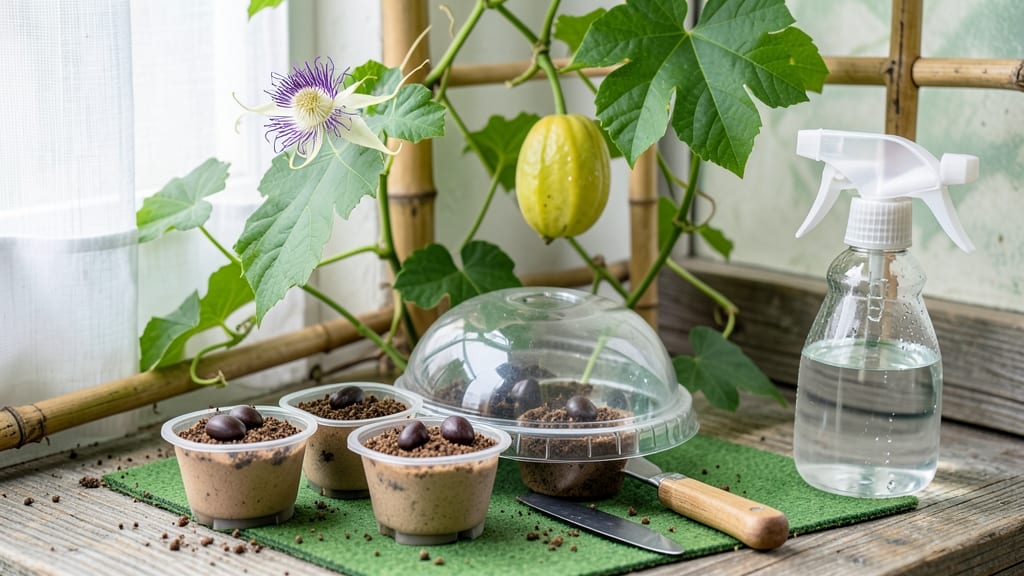
Growing passion fruit from seeds gives you vines that produce heavy harvests in just two years—if you get the early stages right. 🌱 I’ve started dozens of passion fruit plants, and the difference between thriving vines and failed seedlings comes down to three things: seed freshness, warmth, and patience.
Skip the nursery plants and grow your own from tropical passion fruit seeds, and you’ll save money while unlocking varieties you won’t find anywhere else.
The secret starts with fresh seeds—they germinate best within a month of harvest. Plant them in a warm, moist mix of potting soil and perlite, keeping the container in a 75-85°F spot (like a sunny windowsill or under grow lights).
Germination takes 2-4 weeks, but don’t give up if nothing sprouts right away—some seeds need extra time. Once the first leaves appear, you’ll know you’re on the right track.
By the time your seedlings are 4-6 inches tall, they’ll be ready for transplanting into larger pots or the ground—only after all frost risk has passed. These vines grow fast, so give them space to climb or sprawl.
With the right care, you’ll see your first flowers in 12-18 months, followed by those juicy, fragrant fruits you’ve been dreaming of.
This method works best in USDA Zones 8-11, but even cooler climates can grow passion fruit in containers and bring them indoors in winter. The key is consistent warmth—these tropical vines won’t tolerate cold snaps.
If you’re in a colder zone, start your seeds early indoors and be ready to move them before summer ends.
📚 In This Guide
- What you need
- Instructions
- Tips and common mistakes
- Wrapping up and next steps
What you need
- ● Passion fruit seeds – 5–10 fresh, viable seeds (harvested from ripe fruit or purchased from a reputable source).
- ● Seed-starting mix – 1–2 gallons of well-draining, sterile potting soil (or coco coir for moisture control). Pro tip: Mix in perlite or vermiculite (10–20%) for aeration!
- ● Small pots or seed trays – 4–6 biodegradable pots (3–4 inches wide) or a seed tray with individual cells.
- ● Spray bottle – For gentle watering (avoid over-saturating seeds).
- ● Clear plastic wrap or humidity dome – To maintain warmth and moisture until germination.
- ● Grow lights or sunny windowsill – A south-facing window or LED grow lights (12–16 hours/day) for seedlings.
- ● Trowel or small shovel – For transplanting seedlings into larger containers.
- ● Fertilizer – Balanced liquid fertilizer (e.g., 10-10-10) or organic options like compost tea. Pro tip: Dilute to half-strength for young plants!
- ● Trellis or sturdy stakes – 6–8 feet tall (passion vines grow fast!).
- ● Pruning shears – For shaping vines and removing dead growth.
- ○ Mulch (optional) – Straw or wood chips to retain soil moisture and suppress weeds.
- ● pH test kit – Passion fruit prefers slightly acidic soil (pH 6.0–7.0).
- ● A warm, humid environment (70–85°F) for germination.
- ● Patience! Germination can take 2–4 weeks—stay consistent with care.
- ● Access to a greenhouse or indoor space if you’re in a cooler climate.
Step-by-step instructions for growing passion fruit from seeds
Here's how to turn those vibrant seeds into a thriving vine ready for your first harvest in just two seasons.
🌱 Step 1: Extract and Prep the Seeds for Faster Germination
Passion fruit seeds need a little help breaking dormancy. Start by scooping out the jelly-like pulp from a ripe fruit and rinsing it under cool water to remove excess fruit. The seeds are the hard, dark brown ovals you'll find inside. I like to soak them in lukewarm water for 24 hours—this softens the outer coating and speeds up germination significantly. After soaking, gently rub the seeds between your fingers to remove any remaining pulp.
Plant the seeds ½ inch deep in a small pot filled with a mix of 50% potting soil and 50% perlite. The perlite keeps the roots aerated and prevents rot, which is critical for these tropical seeds. Water lightly until the soil feels damp but not soggy. Place the pot in a warm spot—75-80°F is ideal—because passion fruit seeds germinate best in warmth. You'll see sprouts in 10-14 days, but be patient if your home runs cooler.
💧 Step 2: Provide Warmth and Humidity for Seedling Growth
Once the first true leaves appear, move your seedlings to a location with bright, indirect light. A south-facing window works well, but avoid direct midday sun, which can scorch the delicate leaves. If you notice the seedlings stretching toward the light with pale, elongated stems, they need more intensity—supplement with a grow light 4-6 inches above the plants for 12-14 hours daily.
Passion fruit vines love humidity, so mist the leaves lightly every 2-3 days or place the pot on a tray filled with pebbles and water. The evaporation creates a natural humidity dome around the seedlings. Keep the soil consistently moist but never waterlogged—let the top inch dry out between waterings. You'll know you're on track when the seedlings develop deep green, glossy leaves and start putting out new growth every 2-3 weeks.
☀️ Step 3: Transplant and Train the Vine for Strong Growth
When your seedlings reach 6-8 inches tall and have developed 4-5 sets of true leaves, it's time to transplant them into individual 5-gallon pots. Use a well-draining potting mix with added compost—passion fruit vines are heavy feeders. Choose pots with drainage holes and place them in a location where they can climb, like a trellis or sturdy fence. I use a 3-foot tall bamboo trellis for my seedlings, which gives them plenty of room to grow upward.
Train the vine early by gently tying the main stem to the trellis with soft twine. As new growth appears, guide it along the trellis in a spiral pattern. This encourages stronger stems and better fruit production later. Once transplanted, water deeply once a week, allowing the soil to dry slightly between waterings. Fertilize every 4-6 weeks with a balanced, water-soluble fertilizer to support rapid growth. You'll see the vine start to thicken and develop tendrils within 4-6 weeks.
✂️ Step 4: Prune and Prepare for Flowering and Fruiting
By the second year, your passion fruit vine will be ready to flower and fruit. To encourage this, prune back any leggy or weak growth in early spring, cutting just above a leaf node. This redirects energy to stronger, more productive branches. Passion fruit vines are self-pollinating, but you can improve yields by gently shaking the vine during flowering to release pollen. The flowers are stunning—bright red with intricate patterns—and they'll appear in clusters along the vine.
When fruits start to form, reduce nitrogen-heavy fertilizers and switch to a phosphorus-rich fertilizer to support fruiting. Passion fruit needs full sun (6-8 hours daily) for best production, so move your vine outdoors if it's been indoors. Harvest fruits when they're fully colored and slightly soft to the touch—this usually takes 70-80 days after flowering. You'll know they're ripe when they release easily from the vine and have a sweet, tropical scent.
Tips & tricks for growing passion fruit from seeds
These practical insights will help you coax the most from your tropical vine project—because patience and precision pay off with heavy harvests.
Seed Preparation Secret: The 24-hour lukewarm water soak isn't just about breaking dormancy—it's about softening the seed coat enough for roots to emerge. I've found that adding a few drops of hydrogen peroxide (1 tsp per quart of water) to the soaking water helps prevent fungal issues while keeping the water fresh. After soaking, give the seeds a final rinse and let them air-dry on a paper towel for 10 minutes before planting to prevent waterlogged soil.
Lighting Strategy: That 12-14 hours of grow light isn't arbitrary—it mimics tropical daylight patterns. Position your light so it's just 4-6 inches above the seedlings and adjust the height as they grow. I've seen seedlings stretch aggressively when the light is too far away, so keep an eye on that distance. If your seedlings are leaning toward the light source, rotate the pot daily to encourage even growth. This prevents the vine from developing a permanent bend that could weaken it later.
Transplanting Timing: Waiting until your seedlings reach 6-8 inches with 4-5 sets of true leaves ensures they have enough energy reserves for the transplant shock. I've learned the hard way that rushing this step often results in stunted growth. When you do transplant, water the soil thoroughly before removing the seedling from its starter pot to minimize root disturbance. The 5-gallon pots are crucial—they provide enough space for root development without becoming waterlogged.
Fertilizer Transition: The switch from balanced fertilizer to phosphorus-rich when fruits form is critical. I recommend using a fertilizer with a ratio like 5-10-10 or 7-9-5 during fruiting to support flower and fruit development. Too much nitrogen at this stage will result in lush foliage but fewer fruits. When you see those first flowers appear, cut back on watering slightly—just enough to let the top inch of soil dry out between waterings. This helps prevent blossom-end rot in the developing fruits.
Pro Tips for Grow Passion Fruit From Seeds
- These practical insights will help you coax the most from your tropical vine project—because patience and precision pay off with heavy harvests.
- Seed Preparation Secret: The 24-hour lukewarm water soak isn't just about breaking dormancy—it's about softening the seed coat enough for roots to emerge.
- Lighting Strategy: That 12-14 hours of grow light isn't arbitrary—it mimics tropical daylight patterns.
Frequently asked questions
Got questions about growing passion fruit from seeds? You’re not alone! Here are some of the most common concerns—plus quick, actionable answers to keep your tropical vines thriving.
How long does it take for passion fruit seeds to germinate?
Passion fruit seeds typically sprout in 2–4 weeks if kept warm (70–85°F) and moist. Pre-soaking seeds for 24 hours can speed up germination. If nothing emerges after 6 weeks, try replanting fresh seeds—some may have been dormant or non-viable.
Can I grow passion fruit from store-bought fruit seeds?
Just save seeds from ripe, organic passion fruit (avoid hybrid varieties like "Sweetie" if you want true-to-type fruit). Rinse and dry them before planting. Pro tip: Store-bought seeds may take longer to germinate, so be patient!
What’s the best climate for growing passion fruit?
Passion fruit thrives in USDA Zones 8–11 with warm, humid conditions. In cooler climates, grow them in containers and overwinter indoors. They need full sun (6+ hours/day) and protection from frost—even young vines are sensitive!
Why are my passion fruit seedlings wilting or turning yellow?
Overwatering or poor drainage are top culprits. Ensure pots have drainage holes and water only when the top inch of soil is dry. Yellow leaves may also signal nutrient deficiency—feed seedlings with a balanced fertilizer (10-10-10) every 4–6 weeks once established.
When will my passion fruit plant produce fruit?
With proper care, expect first flowers in 12–18 months and fruit in 2–3 years. Female flowers (larger, with a stigma) are needed for fruit—if your plant has only male flowers, hand-pollinate with a brush or attract bees. Patience pays off!
Wrapping up and next steps
Growing passion fruit from seeds is a rewarding journey that brings tropical joy to your garden—literally!
With patience, the right conditions, and a little care, you’ll soon be harvesting sweet, fragrant fruits in just two years. 🌱✨ Now that you’re armed with all the tips and tricks, why not plant those seeds today and watch your vine thrive?
Ready for the next step? Once your passion fruit plant is established, explore pruning techniques or learn how to support its rapid growth with trellises. Happy gardening!