
Size
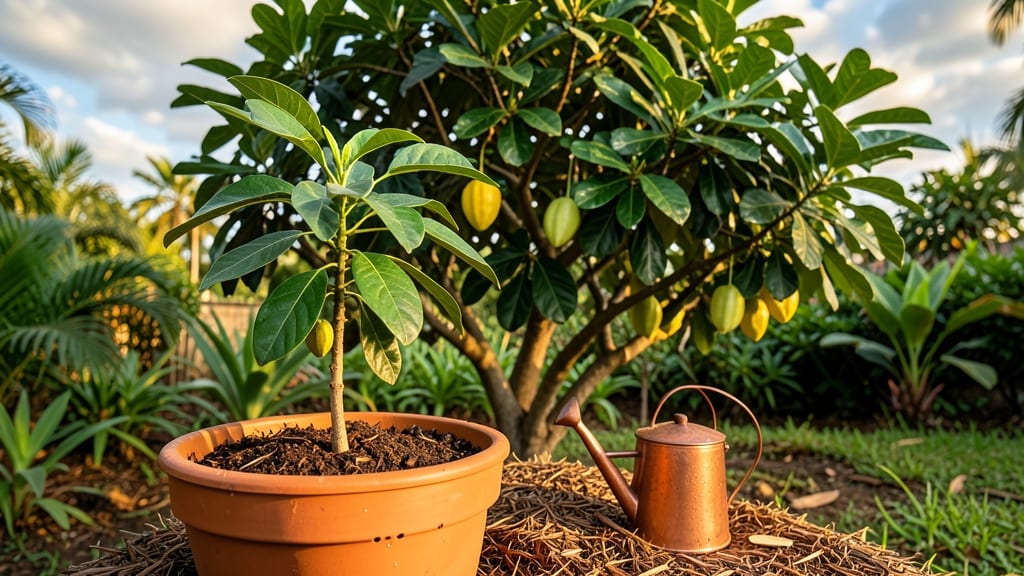
Growing star fruit in containers is easier than you think—this tropical tree thrives with just sunlight, patience, and a 5-gallon pot. 🌱 I’ve grown mine for three years, and the first harvest last summer was worth every bit of care. The key?
Mimicking its native tropical climate without needing a greenhouse. Star fruit (Averrhoa carambola) needs full sun (6+ hours daily) and well-draining soil mixed with compost. In warmer zones (10-11), plant outdoors; elsewhere, keep it in a pot you can move indoors during winter.
Water when the top inch of soil dries, but avoid soggy roots—they’re the #1 killer. By year three, you’ll see those signature star-shaped fruits dangling from the branches. The first harvest is a game-changer—juicy, tart-sweet slices that taste like a vacation in every bite.
Prune lightly after fruiting to keep the shape compact and encourage next year’s crop. Containers work even in small spaces, and the tree’s glossy leaves add tropical flair to patios or balconies. Just watch for scale insects and overwatering—both can stunt growth. Ready to grow your own? Let’s get started!
📚 In This Guide
- What you need
- Instructions
- Tips and common mistakes
- Wrapping up and next steps
What you need
- ● Star fruit tree: Seedling or grafted tree (available at tropical nurseries or online; $20–$50 depending on size)
- ● OR seeds from a ripe star fruit (soak in water for 24 hours to soften the hard shell)
- ● Container or planting area: For containers: 5-gallon pot minimum (diameter ≥12 inches; drainage holes required)
- ● For ground planting: Full sun spot (6+ hours/day) with well-draining, slightly acidic soil (pH 5.5–6.5)
- ● Soil: Potting mix: 60% well-draining soil (e.g., cactus/succulent mix) + 40% perlite/pumice
- ● Ground soil: Amend with compost or coconut coir for aeration
- ● Fertilizer: Balanced 10-10-10 or citrus-specific fertilizer (apply every 4–6 weeks during growing season)
- ● Watering tools: Watering can or hose with gentle spray nozzle (star fruit hates soggy roots!)
- ● Pruning shears (sterilized with rubbing alcohol for cuts)
- ● Mulch (straw or wood chips to retain moisture)
- ● Humidity tray (for seedlings in dry climates)
- ● pH test kit (to monitor soil acidity)
- ● Slow-release fertilizer tablets (for container plants)
- ● Support stake (if growing in windy areas)
Step-by-step instructions for growing star fruit in containers
Here's how to nurture this tropical beauty—it's easier than you think!
🌱 Step 1: Choose the Right Container and Soil Mix
Star fruit (Averrhoa carambola) needs a large container—at least 15 gallons for each tree. I use fabric grow bags because they prevent root circling and allow excess water to drain freely. Make sure the container has multiple drainage holes to avoid soggy roots, which will rot over time.
Fill the container with a well-draining potting mix—I blend 60% premium cactus/succulent mix with 30% perlite and 10% compost for nutrients. This keeps moisture levels balanced while allowing roots to breathe. Tap the container gently after filling to settle the mix without compacting it too much.
☀️ Step 2: Plant Your Star Fruit Tree and Position for Sunlight
Dig a hole in the center of the container twice as wide as the root ball but no deeper. Gently remove the tree from its nursery pot and loosen any circling roots with your fingers. Place it in the hole so the top of the root ball sits just below the container rim. Backfill with your soil mix, pressing lightly to eliminate air pockets.
Star fruit thrives in full sun—at least 6-8 hours daily. If you're in a cooler climate, a south-facing window or grow lights will work, but outdoors is ideal. I keep mine on a patio with afternoon shade in summer to prevent leaf scorch. Watch for yellowing leaves—this signals too much direct sun or overwatering.
💧 Step 3: Water Deeply and Maintain Consistent Moisture
Water your star fruit tree deeply until water drains from the bottom holes—this ensures roots get hydrated all the way through. Let the top 2 inches of soil dry out between waterings. Overwatering is the #1 killer of container-grown star fruit, so never let the pot sit in standing water.
In summer, you may need to water every 2-3 days, but in winter, once a week is usually enough. Stick your finger in the soil—if it feels dry 1 inch down, it’s time to water. Fertilize monthly with a balanced liquid fertilizer (10-10-10) during growing season (spring through fall) to encourage fruiting.
✂️ Step 4: Prune for Shape and Encourage Fruit Production
Prune your star fruit tree lightly in late winter or early spring to shape it and remove any dead or crossing branches. I use clean, sharp pruning shears to make cuts just above a leaf node. Avoid heavy pruning—star fruit produces best on mature wood, so never cut more than 25% of the canopy at once.
If you notice long, leggy growth, your tree needs more light. Pinch back the tips of new shoots to encourage bushier growth. Once the tree is established (after 2-3 years), you’ll see small white flowers in spring—these will turn into fruit! Thin out some of the fruit if overloaded, leaving only the healthiest-looking ones to prevent stress on the tree.
🪴 Step 5: Overwinter Care for Container-Grown Star Fruit
Star fruit is tropical and won’t tolerate frost, so bring your container indoors before temperatures drop below 40°F. I move mine into a sunny garage or greenhouse where it gets bright, indirect light. Reduce watering to every 10-14 days since growth slows in winter.
If you can’t bring it inside, insulate the pot with bubble wrap or a thick blanket to protect roots. In spring, resume regular watering and fertilizing as new growth appears. With patience, your star fruit tree can live for decades and reward you with sweet, tangy fruit in just a few years!
Tips & tricks for growing star fruit in containers
These simple strategies will help your tropical tree thrive—even if you're new to container gardening.
Container Size Matters: The 15-gallon minimum isn't just a suggestion—it's crucial for root development. I've seen star fruit trees struggle in smaller pots because their roots outgrow the space quickly. If you're using fabric grow bags, make sure they're at least 18 inches deep to accommodate the root system. The extra depth prevents roots from circling and becoming root-bound, which can stunt growth and reduce fruiting potential.
Soil Mix Secrets: That 60-30-10 blend of cactus mix, perlite, and compost isn't arbitrary—it's about balance. The cactus mix provides excellent drainage, perlite prevents compaction, and compost delivers essential nutrients without being too heavy. Pro tip: Add a handful of orchid bark to your mix for extra aeration. This helps mimic the tree's natural tropical environment while preventing soggy soil that leads to root rot.
Sunlight Strategy: The 6-8 hours of sunlight requirement can be tricky in cooler climates. If you're using grow lights, position them about 6 inches above the plant and run them for 12-14 hours daily during winter months. For outdoor growers, I recommend rotating your container every few weeks so all sides get equal light exposure. This prevents lopsided growth and ensures even fruit production. Watch for those yellowing leaves—they're your first warning sign of either too much direct sun or overwatering.
Fertilizer Timing: That monthly 10-10-10 application during growing season is perfect, but here's what nobody tells you: Reduce fertilization in late summer to prepare the tree for winter dormancy. I switch to a half-strength application in September, then stop completely in October. This helps the tree store energy for next year's growth. Also, always water thoroughly before fertilizing to prevent root burn from concentrated nutrients.
Pro Tips for Grow Star Fruit
- These simple strategies will help your tropical tree thrive—even if you're new to container gardening.
- Container Size Matters: The 15-gallon minimum isn't just a suggestion—it's crucial for root development. I've seen st...
- Soil Mix Secrets: That 60-30-10 blend of cactus mix, perlite, and compost isn't arbitrary—it's about balance. The cac...
Frequently asked questions
Got questions about growing your own star fruit? You’re not alone—this tropical beauty can be tricky for beginners! Below, we’ve rounded up the most common queries and straightforward answers to help you cultivate a thriving tree with confidence.
What’s the best climate for growing star fruit?
Star fruit (Averrhoa carambola) thrives in USDA Hardiness Zones 10-12 or warmer climates with consistent temperatures above 60°F (15°C). If you’re in a cooler zone, grow it in a large container and bring it indoors during winter. Frost will kill the tree, so protect it with burlap wraps or a greenhouse if temperatures dip below 40°F (4°C).
How long does it take for a star fruit tree to bear fruit?
Patience is key! A star fruit tree typically takes 3–5 years to produce fruit from seed, but grafted trees (available at nurseries) can bear fruit in just 1–2 years. Ensure your tree gets full sun (6+ hours daily), well-draining soil, and regular watering to speed up fruiting. Female trees produce fruit, while male trees are needed for pollination—ask your nursery for a self-pollinating variety if space is limited.
How often should I water a star fruit tree?
Water your star fruit tree deeply 2–3 times per week during hot, dry periods, but reduce frequency in winter. Overwatering causes root rot, so let the top 2–3 inches of soil dry out between waterings. If growing in a container, check moisture daily—potted plants dry out faster. Mulch around the base (but avoid the trunk) to retain moisture and regulate soil temperature.
What pests or diseases should I watch for?
Star fruit trees are generally low-maintenance, but keep an eye out for aphids, mealybugs, or scale insects, which suck sap and weaken the tree. Treat infestations early with neem oil or insecticidal soap. Fungal diseases like powdery mildew can occur in humid conditions—improve airflow and avoid overhead watering. If leaves yellow or drop, it may signal nutrient deficiency (try a citrus-specific fertilizer) or overwatering.
Can I grow star fruit in a container, and what size pot do I need?
Star fruit trees adapt well to containers, making them perfect for small spaces or patios. Use a minimum 15–20 gallon pot (24+ inches deep) with drainage holes and a mix of potting soil, perlite, and compost. As the tree grows, upgrade to a 30+ gallon container to prevent root binding. Place the pot in full sun and rotate it occasionally for even growth.
Wrapping up and next steps
Growing star fruit is a rewarding adventure—even for beginners! With the right container, soil, and a little patience, you can enjoy sweet, fragrant fruit right at home. Remember, consistency in watering, sunlight, and pruning is key to a thriving tree.
Now that you’ve got the know-how, why not take the next step? Start with a cutting or young sapling, and soon you’ll be harvesting your own tropical treasure. Happy growing! 🌱✨