
Landscaping
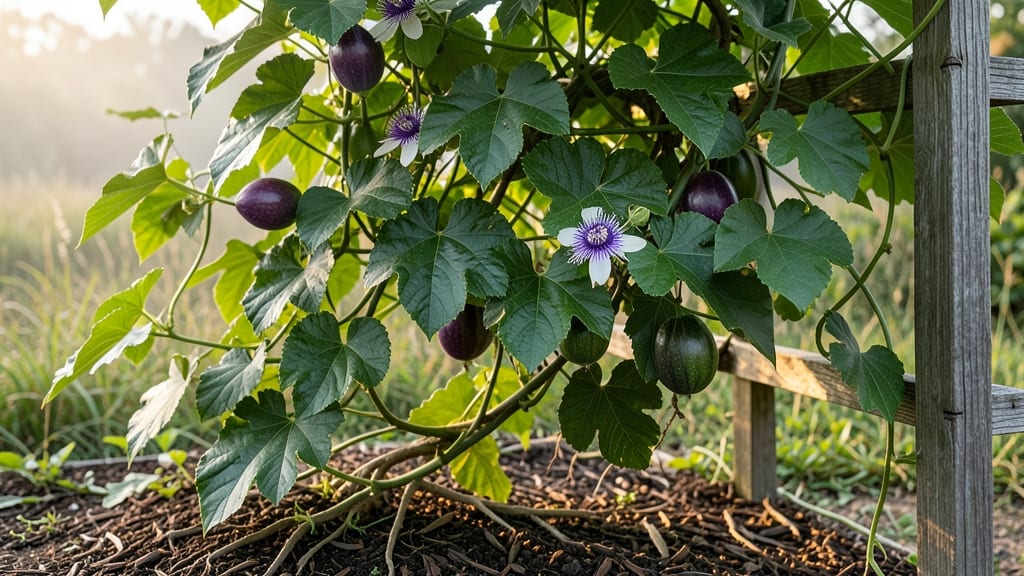
Training a passionfruit vine on a fence turns bare space into a lush, fruiting curtain that outshines any store-bought bouquet. 🌿 The secret lies in choosing the right support—wire mesh or wooden lattice works best—and giving the vine room to sprawl without strangling itself.
I learned this the hard way when my first attempt tangled into a tangled mess, but now my fence produces enough fruit to share with neighbors every summer.
The right fence material makes all the difference: galvanized wire holds up against the vine’s weight, while cedar slats add rustic charm and resist rot. Space your trellis sections 3-4 feet apart to prevent sagging, and install it at a 45-degree angle for better sunlight exposure.
Combine it with climbing roses or morning glories for a layered, romantic look that blooms from spring to fall. By late summer, you’ll be harvesting sweet, tropical fruit straight from your fence—no ladder needed—while the vine’s glossy leaves create a living privacy screen.
The key is pruning in early spring to encourage airflow and fruit production, and training new growth along the support as it climbs. This works for any fence height or yard size, from urban balconies to rural homesteads. The only requirement?
Patience—it takes 1-2 years for the vine to fully establish, but the payoff is worth every twist of the wire. Let’s get growing!
📚 In This Guide
- What you need
- Instructions
- Tips and common mistakes
- Wrapping up and next steps
What you need
- ● Passionfruit Vine: 1-2 healthy Passiflora edulis (purple) or Passiflora ligularis (yellow) plants (bare-root or potted)
- ● Pro tip: 💡 Choose disease-resistant varieties if your climate is humid!
- ● Fence: A sturdy, trellis-style, or chain-link fence (4-6 ft tall for optimal growth)
- ○ Optional: A metal or wooden trellis (if fence lacks grip—10-15 ft long, 2-3 ft wide)
- ● Potting Mix: 1 large container (15-20 gallons) or in-ground planting spot (if climate allows)
- ● High-quality, well-draining potting mix (avoid garden soil—it compacts!)
- ● Bonus: Add perlite or orchid bark (10-20%) for aeration
- ● Support Accessories: Soft jute twine or garden ties (20-30 ft, ¼-inch wide)
- ○ Optional: Climbing hooks (galvanized, 4-6 inches long) for extra grip
- ● Sunlight: Full sun (6+ hours daily)—passionfruit vines are sun-worshippers! ☀️
- ● Climate: USDA Zones 7-11 (or frost-free areas)
- ● Pro tip: 🌡️ In colder zones? Grow in containers and overwinter indoors!
- ● Watering Setup: Drip irrigation or a watering can with a long spout (vines need deep, consistent moisture)
- ● Fertilizer: Balanced liquid fertilizer (10-10-10 or 20-20-20, diluted to half-strength)
- ○ Optional: Compost or worm castings (for organic enrichment)
Step-by-Step instructions for growing passionfruit vines on a fence
Here's how I turn a simple fence into a lush, fruiting vertical garden that thrives year-round.
🪴 Step 1: Choose and Prepare Your Fence Structure
Start with a sturdy fence made of wood, metal, or strong trellis netting—passionfruit vines can reach 20-30 feet and need something that won’t snap under their weight. I prefer a 6-foot-tall fence with horizontal slats spaced 12 inches apart for easy vine attachment. If using chain-link, add horizontal wires every 18 inches for support.
Check for sharp edges or protruding nails that could damage the vines. Wrap any rough spots with landscape fabric or burlap strips to protect tender stems. This is especially important for young vines that will climb and rub against the fence as they grow.
🌱 Step 2: Plant Passionfruit Vines at the Base
Dig a hole twice as wide as the root ball but only as deep as the container the vine came in. Passionfruit vines hate being buried too deep—this encourages strong root growth near the surface. Gently remove the vine from its container and loosen the roots if they’re circling tightly.
Place the vine in the hole and backfill with the native soil, pressing lightly to eliminate air pockets. Water deeply until moisture reaches 12 inches down—you’ll know it’s enough when the soil feels damp but not soggy. I like to add a slow-release fertilizer (like 10-10-10) to the planting hole to give the vine a nutrient boost as it establishes.
☀️ Step 3: Train Vines to Climb the Fence
Passionfruit vines need something to grip as they grow. I tie young shoots to the fence using soft plant ties or jute twine, spacing them 12 inches apart along the horizontal slats. Avoid metal ties—they can cut into the stems as the vine thickens. The first few weeks are critical; if you skip this, the vine will flop and struggle to reach sunlight.
As the vine climbs, it’ll naturally twine around the fence. Let it grow 3-4 feet before pruning the tip to encourage bushier growth. This creates a stronger framework for future fruit production. Watch for new shoots at the base—these are your future climbing leaders, so prioritize training them upward.
💧 Step 4: Water and Fertilize for Maximum Fruit Production
Passionfruit vines need consistent moisture, especially during flowering and fruiting. Water deeply 2-3 times per week until the soil is damp 12 inches down. Let the top 2 inches dry out between waterings to prevent root rot. I use a soaker hose along the base of the fence to deliver water slowly without wetting the leaves, which reduces disease risk.
Fertilize every 6-8 weeks with a balanced fertilizer (like 10-10-10) during the growing season. When flowers appear, switch to a low-nitrogen, high-phosphorus fertilizer (like 5-10-10) to encourage fruiting. I also add compost tea monthly for a natural nutrient boost—this keeps the soil rich without overloading the vine.
✂️ Step 5: Prune and Maintain for Year-Round Harvests
Prune in late winter or early spring before new growth starts. Remove dead, diseased, or crossing branches first, then cut back overly long vines to 6-8 feet to improve airflow and sunlight penetration. This also redirects energy toward fruit production rather than excessive foliage. I leave 3-4 strong canes as the main climbing stems—they’ll bear the most fruit.
Throughout the year, watch for suckers (small shoots growing from the base or along the stem). Remove 80% of them to focus the vine’s energy on the main structure. When fruit appears, thin clusters so each vine carries no more than 10-12 fruits—this ensures larger, sweeter passionfruit instead of small, underdeveloped ones.
Tips & tricks for perfect vertical passionfruit gardens
Here's what nobody tells you about keeping those vines happy and productive once they're on the fence.
Fence Support Secrets: The 12-inch spacing between horizontal slats isn't just about looks—it's the perfect distance for vine attachment. If your fence lacks slats, install temporary wooden dowels at 12-inch intervals until the vines establish themselves. I've seen vines struggle when forced to climb too far between supports, so don't skip this detail in Step 1. The first year is all about building that strong framework.
Root Care Matters: When planting, resist the urge to bury the vine too deeply. The instructions mention planting only as deep as the container—this is crucial because passionfruit roots need oxygen near the surface. I've seen beginners bury them too deep, which leads to root rot and stunted growth. After planting, press the soil gently but firmly to eliminate air pockets, and that deep watering (12 inches down) will help settle everything just right.
Training Timeline: Those first few weeks after planting are make-or-break. The critical 3-4 feet growth before pruning creates the perfect structure. I recommend checking your vines every 3-4 days during this period—you'll notice new shoots emerging at the base that need immediate training. Use soft plant ties (not metal) and adjust them as the stems thicken, which they will within weeks.
Fertilizer Transition: The switch from balanced 10-10-10 to low-nitrogen 5-10-10 when flowers appear makes all the difference. I've learned the hard way that keeping nitrogen high after flowering leads to leafy growth at the expense of fruit. Mark your calendar 6-8 weeks after planting for that first fertilizer change, and you'll see the difference in fruit set within weeks. The compost tea is the cherry on top—it keeps the soil microbes happy without overwhelming the plants.
Pro Tips for Passionfruit Vine On Fence
- Here's what nobody tells you about keeping those vines happy and productive once they're on the fence.
- Fence Support Secrets: The 12-inch spacing between horizontal slats isn't just about looks—it's the perfect distance ...
- Root Care Matters: When planting, resist the urge to bury the vine too deeply. The instructions mention planting only...
Frequently asked questions
Got questions about growing passionfruit vines on fences? You’re not alone! Here are answers to the most common curiosities—from setup to troubleshooting—to help you cultivate a thriving vertical garden.
How tall can a passionfruit vine grow on a fence?
A healthy passionfruit vine can climb 15–20 feet (or more!) if given a sturdy trellis or fence. Use a 10–12-foot fence for manageable harvesting, but expect vigorous growth—prune annually to control sprawl and improve airflow.
When is the best time to plant passionfruit vines on a fence?
Plant in early spring (after the last frost) for warm climates or late spring in cooler zones. Passionfruit thrives in USDA Zones 8–11—start indoors 8–10 weeks before the last frost if your area has chilly winters.
Can I grow passionfruit vines on a chain-link fence?
Yes, but add bamboo stakes or twine to guide vines upward—chain-link alone won’t provide enough support. Avoid barbed wire or sharp edges that could damage the delicate tendrils. For extra durability, opt for a wooden or metal trellis instead.
Why aren’t my passionfruit vines producing fruit?
Common culprits include:
- Insufficient sunlight: Needs 6+ hours of direct sun daily.
- Lack of pollinators: Hand-pollinate flowers with a soft brush if bees are scarce.
- Young vines: Passionfruit takes 1–2 years to bear fruit.
- Over-fertilizing: Too much nitrogen = leafy growth, no fruit.
What’s the best fence material for passionfruit vines?
Ideal fences balance durability and climbing support:
Material
Pros
Cons
Wooden fence
Natural look, easy to attach vines
Requires maintenance (rot risk)
Metal trellis
Long-lasting, sturdy
May need insulation in cold climates
Pergola
Shade + climbing space
Higher upfront cost
Wrapping up and next steps
Growing a passionfruit vine on a fence isn’t just about adding beauty to your yard—it’s a rewarding journey toward fresh, tropical fruit right at your fingertips! 🌱 With the right setup, patience, and care, you’ll enjoy year-round harvests and a lush, romantic vertical garden that transforms any space.
Whether you’re a seasoned gardener or just starting out, this vine brings joy, functionality, and a touch of the exotic to your outdoor oasis.
Ready to dive in? Start by choosing your vine and preparing your fence—then watch your garden grow into a fruitful masterpiece! 🌟 Plan your next steps today!