
Plants
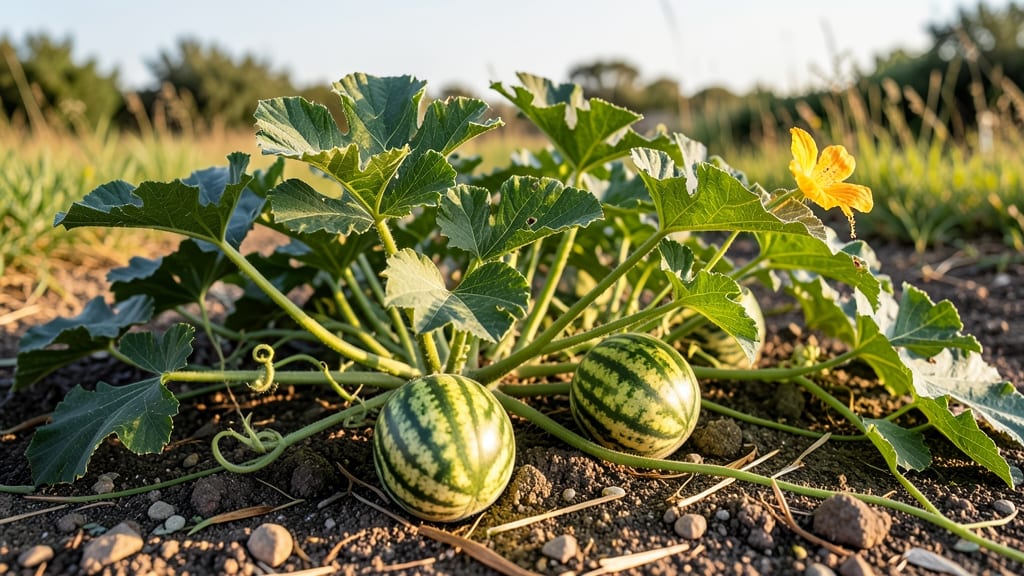
That vine with small watermelon-looking fruit isn’t a mistake—it’s horned melon (Cucumis metuliferus), a quirky, edible vine that looks like a cross between a cucumber and a mini watermelon. 🌱 I’ve grown these for years, and they’re one of the most fun plants in my garden, producing spiky, lime-green fruits packed with flavor.
The key to success starts with warm soil (wait until after last frost) and full sun—at least 6-8 hours daily. Space vines 3-5 feet apart or let them climb a trellis, as they sprawl aggressively.
Rich, well-draining soil is a must; these plants hate soggy roots and will bolt in heat if stressed.
Once established, keep soil consistently moist (not soggy) and prune aggressively to encourage fruit production. The fruits—about the size of a golf ball—are tart, citrusy, and perfect for salads, jams, or even pickling. Harvest when they’re firm but yielding to gentle pressure, usually 3-4 months after planting.
Ornamental gardeners love them too—the vines are fast-growing, drought-tolerant once established, and the fruits add a whimsical touch to summer arrangements. Perfect for adventurous eaters or those who want a conversation-starting plant!
Understanding Tiny Melon Culprits
If your vine is producing small, watermelon-like fruits that resemble honeydew melons but stay puny, don’t panic—there’s usually a clear reason behind it. Below, we break down the top causes for stunted melon growth, complete with science-backed explanations and actionable fixes.
---
Melons rely on pollinators (like bees or wind) to transfer pollen from male to female flowers, triggering fruit development. If pollination fails, flowers drop off, or fruits remain tiny and underdeveloped.
Why it happens: - Lack of bees or wind: Without proper pollination, the ovary (future fruit) doesn’t receive the signal to grow. - Timing mismatch: Male flowers often open before female flowers, leaving them vulnerable to missed opportunities. - Environmental stress: Cold temperatures, rain, or pesticide use can deter pollinators.
🔍 What to look for: - Flowers that wilt and fall without setting fruit. - Fruits that start small but never swell.
✅ Fix it: - Hand-pollinate by gently transferring pollen with a small brush or cotton swab from male to female flowers (female flowers have tiny melon-shaped ovaries at the base). - Plant bee-friendly flowers nearby (e.g., marigolds, sunflowers) to attract pollinators. - Avoid pesticides during flowering season—opt for organic or neem oil sprays instead.
---
Melons are 90% water, and inconsistent moisture levels can stunt growth or cause fruits to split prematurely. Both drought stress and overwatering disrupt nutrient uptake and fruit development.
Why it happens: - Underwatering: Roots can’t absorb enough nutrients, leading to weak vines and tiny fruits. - Overwatering: Poor drainage causes root rot, preventing the plant from absorbing water and nutrients efficiently. - Inconsistent watering: Fluctuating soil moisture confuses the plant, halting growth.
🔍 What to look for: - Wilting leaves (underwatering) or yellowing, mushy stems (overwatering). - Fruits that start growing but stop midway.
✅ Fix it: - Water deeply 1–2 times per week (adjust based on climate—drier areas need more). - Use mulch (straw or wood chips) to retain moisture and regulate soil temperature. - Check soil moisture by sticking your finger 1–2 inches deep—water when dry. - Ensure proper drainage by planting in raised beds or well-amended soil.
---
Melons thrive in warm, consistent temperatures (70–90°F). Too much heat or cold can halt flowering, cause blossom drop, or stunt fruit growth.
Why it happens: - Cold snaps (<50°F): Slow down metabolism, preventing fruit set. - Heat waves (>95°F): Cause blossom end rot (blackened tips) or fruit deformation. - Frost damage: Kills flowers and young fruits before they develop.
🔍 What to look for: - Flowers that drop without opening. - Fruits that appear deformed or stay small despite proper care.
✅ Fix it: - Use row covers in early spring to protect from frost. - Provide shade cloth (30–50%) during extreme heat to prevent sunscald. - Choose heat-tolerant varieties (e.g., ‘Sugar Baby’ or ‘Charleston Gray’). - Avoid planting too early—wait until soil is at least 70°F before transplanting.
---
Melons are heavy feeders and require balanced nutrients—especially nitrogen, phosphorus, and potassium—for robust growth. A deficiency in any of these can lead to weak vines and tiny fruits.
Why it happens: - Nitrogen (N) deficiency: Leads to pale, yellowing leaves and stunted growth. - Phosphorus (P) deficiency: Causes poor root development and weak flowers. - Potassium (K) deficiency: Results in weak stems and small, misshapen fruits. - Calcium or magnesium deficiencies: Can cause blossom end rot or fruit deformities.
🔍 What to look for: - Yellowing leaves (N deficiency). - Purple stems or slow growth (P deficiency). - Weak vines or fruits that fail to swell (K deficiency).
✅ Fix it: - Test your soil (pH 6.0–6.8 is ideal for melons). - Add compost or well-rotted manure before planting for a nutrient boost. - Use a balanced fertilizer (10-10-10 or 5-10-10) at planting, then switch to a low-nitrogen, high-phosphorus fertilizer (e.g., 2-10-10) when flowers appear. - Side-dress with potassium-rich compost halfway through the growing season.
--- Pests like cucumber beetles, aphids, or squash vine borers can damage leaves, stems, or roots, reducing the plant’s ability to produce energy for fruit development. Diseases like powdery mildew or downy mildew also weaken vines.
Why it happens: - Leaf damage: Reduces photosynthesis, starving the fruit of energy. - Root damage: Limits nutrient and water uptake. - Fungal infections: Clog stomata (leaf pores), preventing gas exchange and growth.
🔍 What to look for: - Chewed leaves or holes (beetles/borers). - Sticky residue (aphids). - White powdery coating (mildew).
✅ Fix it: - Handpick pests early in the morning. - Use neem oil or insecticidal soap for aphids and beetles. - Rotate crops to prevent soil-borne diseases. - Prune infected leaves and dispose of them (don’t compost). - Space plants properly for airflow (reduces mildew risk).
--- Not all melon varieties produce large, honeydew-sized fruits. Some heirloom or dwarf varieties are bred to stay small for specific purposes (e.g., container growing or unique flavors).
Why it happens: - Miniature varieties: Some melons (like ‘Mini Melons’ or ‘Minnesota Midget’) are bred to stay small. - Hybrid traits: Certain hybrids may revert to smaller sizes if not cross-pollinated properly.
🔍 What to look for: - Consistent small fruit size across all plants. - Variety description mentions “mini” or “dwarf.”
✅ Fix it: - Choose the right variety for your goals (e.g., ‘HoneyBear’ for large honeydew-like melons). - Check seed packets for expected fruit size before planting.
--- Stunted melon growth is often multifactorial—fixing one issue (like watering) while ignoring another (like pollination) may not yield results. Audit your vine’s health by checking: ✅ Leaves (color, wilting, pests) ✅ Flowers (pollination success) ✅ Fruits (size progression, deformities) ✅ Soil (moisture, nutrients, pH)
By addressing all potential causes, you’ll give your melons the best shot at reaching honeydew-sized perfection! 🍉✨
How to Fix Your Mini Melon Mystery
If your vine is producing tiny, watermelon-like fruits that resemble honeydew but refuse to grow to full size, don’t panic! With the right adjustments, you can encourage healthier, larger harvests. Below are practical, step-by-step solutions tailored to common causes—plus prevention tips to keep your plants thriving.
---
Problem: Too many vines competing for nutrients, sunlight, and space lead to stunted fruit growth.
Fix It: 🔥 Step 1: Identify the strongest vines—look for healthy leaves, robust stems, and well-placed flowers. 🍳 Step 2: Gently prune weaker vines at the base using clean, sharp pruners (sterilize with rubbing alcohol). 👨🍳 Step 3: Space remaining vines 12–18 inches apart (for bush varieties) or 6–8 feet apart (for trailing types). 🥘 Step 4: Add compost or aged manure to the soil to replenish nutrients after pruning.
💡 Pro Tip: If your plant is a trailing variety, train it along a trellis to maximize airflow and sunlight exposure—this reduces disease risk and boosts fruit size!
---
Problem: Irregular watering (too much or too little) stresses plants, leading to poor fruit development.
Fix It: 🔥 Step 1: Water deeply 1–2 times per week (adjust based on climate—dry areas need more, humid areas less). 🍳 Step 2: Use drip irrigation or soaker hoses to deliver water directly to the roots (avoid wetting leaves to prevent fungal issues). 👨🍳 Step 3: Check soil moisture 1–2 inches below the surface—if it’s dry, water; if soggy, wait. 🥘 Step 4: Mulch around the base with straw or wood chips to retain moisture and regulate temperature.
🌡️ Warning: Yellowing leaves or wilting vines? You’re either overwatering (roots suffocating) or underwatering (stress signals). Fix it fast!
---
Problem: Poor soil or lack of key nutrients (like nitrogen, phosphorus, or potassium) stunts fruit growth.
Fix It: 🔥 Step 1: Test your soil (DIY kits are cheap and easy) to identify deficiencies. 🍳 Step 2: Amend soil with: - Balanced fertilizer (10-10-10) at planting time. - Phosphorus-rich fertilizer (5-10-10) when flowers appear. - Potassium booster (like banana peel tea or wood ash) for fruit development. 👨🍳 Step 3: Side-dress with compost or worm castings mid-season for a slow-release nutrient boost.
📊 Quick Fix Table: | Symptom | Likely Deficiency | Solution | |---------------------------|-----------------------|---------------------------------------| | Yellow lower leaves | Nitrogen | Add blood meal or fish emulsion | | Purple stems/leaves | Phosphorus | Bone meal or rock phosphate | | Weak, brittle vines | Potassium | Kelp meal or banana peel tea |
---
Problem: Melon vines need 6–8 hours of direct sunlight daily—shady spots lead to small, underdeveloped fruit.
Fix It: 🔥 Step 1: Relocate your plants to a sunnier spot if possible (south-facing is ideal in the Northern Hemisphere). 🍳 Step 2: Prune nearby trees/shrubs blocking sunlight (but avoid late pruning, which stresses plants). 👨🍳 Step 3: Use reflective surfaces (like white sheets or mirrors) to bounce extra light onto shaded areas. 🥘 Step 4: If growing indoors, supplement with grow lights (LED full-spectrum bulbs work best).
✨ Bonus: Rotate your plants every few weeks to ensure even sun exposure on all sides.
---
Problem: Bugs (like aphids, cucumber beetles) or diseases (powdery mildew) sap energy from your vines, reducing fruit size.
Fix It: 🔥 Step 1: Inspect leaves daily for holes, chewed edges, or white powdery spots. 🍳 Step 2: Combat pests naturally: - Aphids? Spray with soapy water (1 tsp mild soap + 1 quart water). - Beetles? Use neem oil or row covers to protect flowers. 👨🍳 Step 3: Prevent fungal diseases by: - Watering early in the morning (leaves dry faster). - Space plants for airflow (prevents mildew). - Remove infected leaves immediately. 🥘 Step 4: Encourage beneficial insects (like ladybugs or lacewings) by planting marigolds or basil nearby.
🎯 Prevention Tip: Crop rotation—don’t plant melons in the same spot year after year to break pest/disease cycles!
---
Problem: Without proper pollination, flowers drop or produce tiny, seedless fruit.
Fix It: 🔥 Step 1: Check for pollinators (bees, butterflies). If none are visiting, hand-pollinate: 🍳 Step 2: Use a soft paintbrush or cotton swab to transfer pollen from male flowers (long stem, no bulb) to female flowers (tiny melon at the base). 👨🍳 Step 3: Do this daily during peak blooming (morning is best). 🥘 Step 4: Plant pollinator-friendly flowers (like sunflowers or zucchini blossoms) nearby to attract bees naturally.
💡 Pro Tip: Avoid over-fertilizing with nitrogen—it promotes leafy growth over flowers, reducing pollination opportunities!
--- Final Thought: Most "mini melon" issues are fixable with better spacing, water, nutrients, and sunlight. Start with one or two adjustments (like thinning plants + deep watering) and monitor progress over 2–3 weeks before adding more changes. Happy growing! 🌱🍉
Frequently asked questions
Is this vine edible, or just decorative?
This vine is 100% edible! The spiky, lime-green fruits (called horned melons or kiwano) have a tart, citrusy flavor with a jelly-like interior. They’re perfect for salads, jams, or even pickling. The skin is edible too, though it has a crunchy texture.
How do I tell if my vine is male or female?
Male flowers have long stems with no bulb, while female flowers have a tiny melon-shaped ovary at the base. The female flowers will eventually grow into fruit, so focus on hand-pollinating these if bees aren’t visiting. Prune excess male flowers to redirect energy to fruit production.
Can I grow this vine in containers or do I need a garden?
Yes! These vines thrive in large containers (at least 15-gallon pots) with good drainage. Use a trellis or cage to support the sprawling growth. Just ensure the container gets full sun (6+ hours daily) and water consistently—containers dry out faster than garden soil.
Why are my fruits staying small and hard?
Small, hard fruits usually mean poor pollination or nutrient stress. Try hand-pollinating with a cotton swab, and check for yellowing leaves (sign of nitrogen deficiency). Add compost or a balanced fertilizer, and ensure consistent watering—melons need 1–2 inches of water per week.
How long until harvest after planting?
With warm soil (70°F+), expect 3–4 months from seed to harvest. Start seeds indoors 4–6 weeks before last frost, then transplant after danger of frost passes. Harvest when fruits are firm but yielding to gentle pressure—usually 70–90 days after flowering.