
Pruning
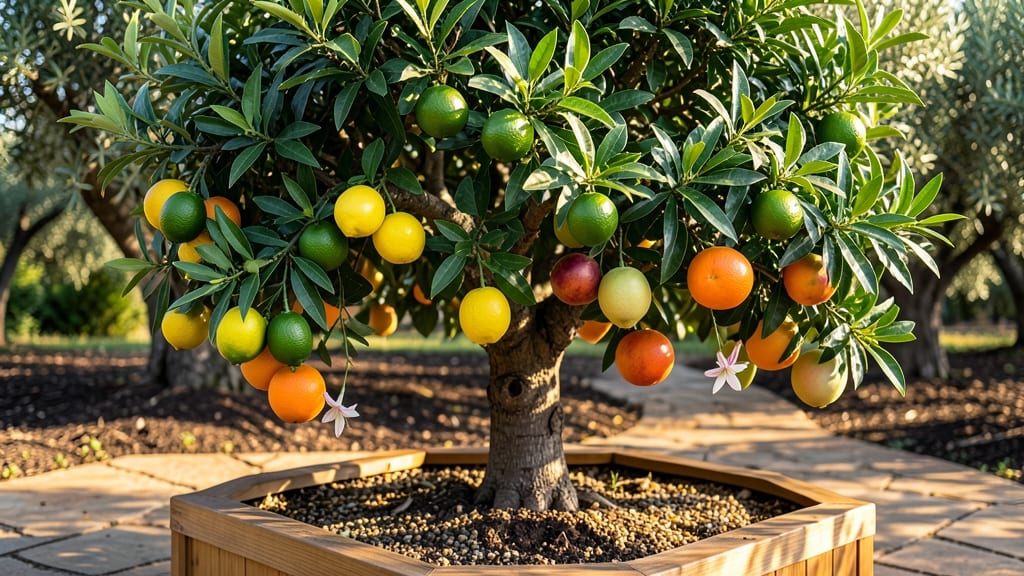
A fruit salad tree packed with oranges, lemons, and limes on a single trunk sounds like a dream—until you realize how much space it could take. 🌱 I've grown three of these grafted wonders, and the secret to success isn't just the tree itself, but the way you prune it to keep all those fruits thriving together.
Start with a dwarf variety grafted with three citrus types, planted where it gets 6-8 hours of sunlight daily and where winter temps stay above 20°F.
The soil needs to drain fast (citrus hates soggy feet) and be rich in organic matter—think compost mixed into the top 12 inches of soil. Fertilize lightly in spring with citrus-specific food, and you'll see new growth within weeks.
Pruning is where the magic happens: trim back 20-30% of last year's growth in early spring to encourage airflow and fruit production. You'll harvest oranges in late fall, lemons in winter, and limes in early summer—all from the same tree.
The key is consistent watering (deep but infrequent) and watching for pests like aphids or scale, which love crowded branches.
This isn't just about saving space—it's about year-round harvests with minimal effort. My tree produces 50+ fruits per season, and the variety keeps us snacking fresh citrus from December through June. The only downside? Neighbors will ask how you do it—and now you can tell them.
📚 In This Guide
- What you need
- Instructions
- Tips and common mistakes
- Wrapping up and next steps
What you need
- ● Rootstock or dwarf fruit tree: 1–3 compatible fruit trees (e.g., apple, pear, cherry, or citrus—choose varieties that thrive in your climate!)
- ● Pro tip: Dwarf varieties (6–8 ft tall) are ideal for small spaces! 🌡️
- ● Grafting tools: Sharp grafting knife or pruning shears (sterilized with rubbing alcohol)
- ● Grafting tape or rubber bands (1–2 rolls)
- ● Grafting wax or sealing compound (small jar)
- ● Soil & nutrients: Well-draining potting mix or garden soil (50 lbs minimum)
- ● Compost or organic fertilizer (e.g., worm castings or balanced 10-10-10)
- ○ Slow-release fertilizer granules (optional, for established trees)
- ● Pruning tools: Bypass pruners (for clean cuts on branches <½ inch thick)
- ● Loppers (for branches ½–2 inches thick)
- ● Hand saw (for thicker branches, if needed)
- ● Safety gear: Gloves (cut-resistant for pruning)
- ○ Safety glasses (optional, but helpful for debris!)
- ○ Support structures (optional): Stakes or trellis (for young trees or heavy fruit loads)
- ● Tree ties or soft cloth strips (to secure branches)
- ● Sunlight: 6+ hours of direct sun daily (most fruit trees are sun-worshippers! ☀️)
- ● Space: Minimum 8–10 ft diameter for mature trees (or vertical growing for small gardens).
- ● Climate compatibility: Check USDA Hardiness Zone for your fruit varieties.
- ● Pro tip: Test soil pH (ideal: 6.0–7.0 for most fruit trees) with a kit or local extension service! 🎯
Step-by-step instructions for growing a fruit salad tree
Here’s how to cultivate a thriving, multi-fruit tree that keeps bearing all season long.
🌱 Step 1: Choose the Right Variety and Location
Start with a grafted fruit salad tree—these are specially bred to produce multiple fruit types on a single trunk. Look for varieties like the Citrus × Fortunella (kumquat × orange) or Citrus × Aurantium (sour orange × bitter orange) hybrids, which are hardy and productive. Plant in a location with full sun exposure (at least 6-8 hours daily) and well-draining soil. If you’re in a cooler climate, opt for dwarf varieties or grow in large containers that can be moved indoors during winter.
Dig a hole twice as wide as the root ball but no deeper. Loosen the roots slightly if they’re tightly bound, then place the tree in the hole so the graft union (the bump where the branches meet the trunk) sits 2-3 inches above soil level. This prevents rot and ensures strong regrowth. Backfill with native soil, tamp gently, and water deeply to settle everything.
☀️ Step 2: Water and Fertilize for Healthy Growth
Water deeply once a week during the first year, ensuring the soil is moist 6 inches down. Overwatering causes root rot, so let the top 2 inches of soil dry out between waterings. Use a drip irrigation system or soaker hose to deliver water slowly at the base—this mimics natural rainfall and reduces evaporation. Mulch around the base with 2-3 inches of organic mulch (like wood chips) to retain moisture and regulate soil temperature.
Fertilize every 6-8 weeks during the growing season with a balanced citrus fertilizer (6-6-6 or 8-8-8 ratio). Avoid high-nitrogen fertilizers—they promote leafy growth at the expense of fruit. In early spring, add a slow-release fertilizer to support flowering. You’ll notice new growth within 2-3 weeks if the tree is healthy; if leaves yellow, it may need more zinc or iron.
✂️ Step 3: Prune Strategically for Year-Round Fruit
Prune twice a year: once in late winter (just before buds swell) to shape the tree and remove dead or crossing branches, and again in early summer after the first flush of fruit sets. Use clean, sharp pruners to make cuts at a 45-degree angle just above a leaf node. This encourages new growth and prevents disease. Remove suckers (shoots growing from the base or graft union) immediately—they drain energy from the main tree.
Thin fruit clusters so each branch holds 3-5 fruits spaced 6 inches apart. Overcrowded fruit stays small and underdeveloped. You’ll see larger, sweeter fruit by harvest time if you prune aggressively in early summer. Avoid heavy pruning in fall—it stresses the tree before winter dormancy. After pruning, apply a copper fungicide spray to prevent bacterial infections from open wounds.
🍊 Step 4: Harvest and Maintain for Continuous Production
Harvest fruit when it’s fully colored and slightly soft to the touch. Most fruit salad trees bear two crops a year: a main harvest in late spring/early summer and a lighter crop in fall. Pick fruit gently by twisting it free—don’t pull, or you’ll damage the stem. Store harvested fruit in a cool, dry place (like a paper bag in the fridge) for up to 2 weeks. If you notice fruit dropping prematurely, it may need more water or a calcium supplement to strengthen cell walls.
In winter, reduce watering to once every 2-3 weeks unless the soil is extremely dry. Move container-grown trees to a sunny indoor spot (like a bright window or under grow lights) to maintain photosynthesis. If you live in a frost-prone area, wrap the trunk with burlap and cover the tree with a frost cloth on cold nights. With consistent care, your fruit salad tree will keep producing year after year.
Tips & tricks for growing a fruit salad tree
Here's what nobody tells you about keeping your fruit salad tree thriving all year long.
Sunlight Strategy: That 6-8 hours of daily sun is non-negotiable for fruit production. If your tree isn't getting enough light, you'll notice smaller fruit and fewer blooms. For container trees, rotate them every few weeks so all sides get equal exposure. In low-light areas, supplement with grow lights—12-14 hours of light per day can make a huge difference during winter months.
Pruning Precision: When you prune in early summer, focus on removing branches that are growing inward or crossing each other. These compete for sunlight and nutrients, reducing your overall harvest. I like to make my cuts just above a leaf node at a 45-degree angle—this encourages new growth in the right direction. Remember, you're not just shaping the tree, you're directing its energy toward fruit production.
Watering Wisdom: The key to that weekly deep watering is getting moisture 6 inches down into the soil. Use a moisture meter to check—if it's dry at that depth, water again. In hot weather, you might need to water twice a week instead of once. The top 2 inches drying out between waterings is your signal that roots are actively reaching deeper, which means stronger growth overall.
Fertilizer Timing: That 6-8 week fertilization schedule works perfectly when you time it right. Apply your balanced citrus fertilizer right after your second pruning in early summer, when the tree is putting all its energy into new growth and fruit development. The early spring slow-release fertilizer gives you that extra boost for flowering, but don't apply it after mid-spring—you'll get too much leafy growth at the expense of fruit.
Pro Tips for Fruit Salad Tree
- Here's what nobody tells you about keeping your fruit salad tree thriving all year long.
- Sunlight Strategy: That 6-8 hours of daily sun is non-negotiable for fruit production. If your tree isn't getting eno...
- Pruning Precision: When you prune in early summer, focus on removing branches that are growing inward or crossing eac...
Frequently asked questions
How long does it take for a fruit salad tree to bear fruit?
A fruit salad tree typically takes 3 to 5 years to mature and produce fruit, depending on the variety and growing conditions. Dwarf varieties may fruit sooner, while standard-sized trees could take longer. Patience is key—consistent care (watering, pruning, and fertilization) speeds up the process!
Can I grow a fruit salad tree in a pot? What size container do I need?
Yes! Most fruit salad trees thrive in containers, but choose a large pot (at least 15-20 gallons) with drainage holes. Dwarf varieties adapt best to pots, while standard trees need bigger containers (30+ gallons). Ensure the pot is twice as wide as the tree’s root ball and use well-draining soil. Rotate the pot occasionally for even sunlight exposure.
How often should I prune a fruit salad tree, and when is the best time?
Prune your fruit salad tree twice a year: late winter/early spring (before new growth) to shape the tree and remove dead branches, and summer to control size and improve airflow. Avoid heavy pruning in fall—it can stimulate tender growth vulnerable to frost. Always sterilize tools to prevent disease!
What if my fruit salad tree isn’t producing fruit? Troubleshooting tips?
If your tree isn’t fruiting, check these common issues:
- Age: Young trees (under 3 years) focus on growth, not fruit.
- Pollination: Some varieties need cross-pollination—plant two trees or hand-pollinate with a brush.
- Nutrients: Lack of nitrogen, phosphorus, or potassium can stunt fruit production. Fertilize in early spring.
- Sunlight: Ensure it gets 6+ hours of direct sun daily.
- Water stress: Drought or overwatering can cause fruit drop.
Can I grow a fruit salad tree from seed?
While possible, growing from seed is not recommended for fruit salad trees because:
- Seeds may not produce true-to-type fruit (e.g., an apple seedling could grow a completely different variety).
- Seed-grown trees take much longer (5–10+ years) to bear fruit.
- Disease resistance and hardiness vary.
Wrapping up and next steps
Growing a fruit salad tree is a rewarding journey that blends creativity with nature’s bounty! 🌱 By selecting the right fruit varieties, mastering pruning techniques, and staying consistent with care, you’ll enjoy a year-round harvest of fresh, vibrant flavors.
Whether you’re a seasoned gardener or a beginner, this guide has given you the tools to succeed—now it’s time to roll up your sleeves and watch your edible landscape thrive!
Ready to take the next step? Start by sketching your tree’s layout or ordering your favorite fruit varieties today. Your future self (and taste buds!) will thank you. 🍓🍇🍊