
Planting
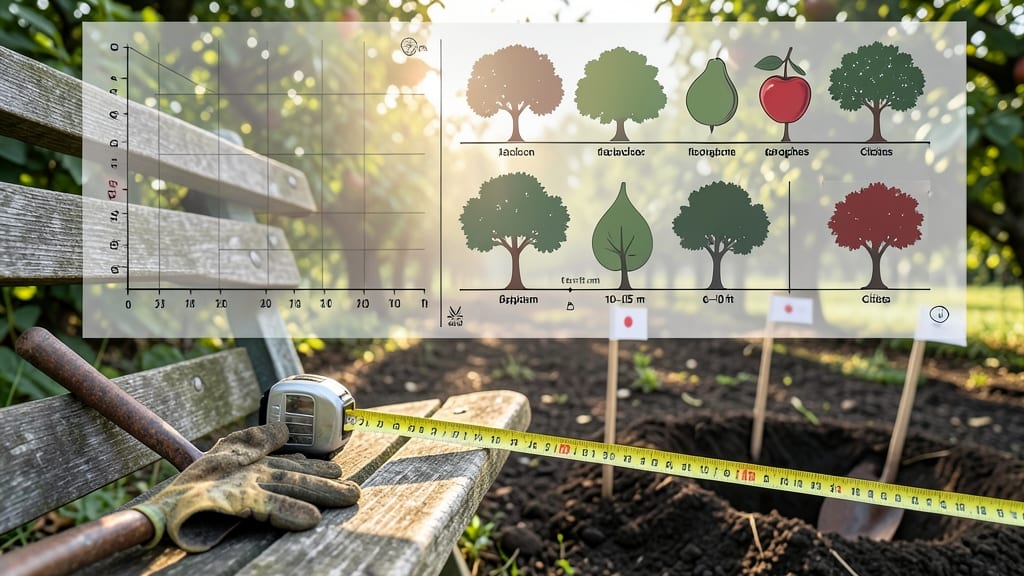
A fruit tree spacing chart shows that dwarf varieties need 15–25 feet apart, semi-dwarf trees require 20–30 feet, and full-size trees should have 30–50 feet between them to maximize growth, sunlight exposure, and disease resistance.
A fruit tree spacing chart isn't just about numbers—it's about creating an ecosystem where each tree thrives. 🌳 For example, apple trees need more room than peach trees because their canopies spread wider over time.
I've seen many gardeners struggle with overcrowding, which leads to poor airflow and increased fungal risks. The key is planning for the tree's mature size, not its current one, and considering how roots will expand underground.
When working with limited space, consider vertical training techniques or espalier methods to save room without sacrificing yield. For commercial orchards, proper spacing directly impacts harvest efficiency and equipment access. Always check your specific variety's growth habits—some citrus trees, for instance, can handle closer spacing than stone fruits.
💡 In This Article
- How Tree Size and Variety Affect Spacing Needs
- Practical Spacing Tips for Small vs. Large Gardens
How tree size and variety affect spacing needs
The spacing between fruit trees isn't arbitrary—it's determined by how wide the tree's canopy will spread and how deep its roots will grow. Dwarf varieties, like the popular Columnar Honeycrisp apple or Patio Peach, stay compact because they're grafted onto dwarfing rootstocks that restrict growth.
These trees typically reach 8-12 feet tall with 6-8 feet wide canopies, which is why they can thrive just 15-20 feet apart. The root systems also stay contained, usually within a 4-6 foot radius, reducing competition for water and nutrients.
Semi-dwarf trees, such as the Liberty apple or Elberta peach, strike a balance—they grow 12-16 feet tall and 10-14 feet wide at maturity, requiring 20-25 feet between them.
Their root systems spread 8-10 feet underground, which is why you'll often see them planted in rows with 15-20 feet between rows.
Full-size trees, like the classic Granny Smith apple or Navel orange, can reach 20-30 feet tall with canopies spanning 15-25 feet, demanding 30-50 feet of space to prevent shading and disease.
The roots of these giants can extend 15-20 feet outward, creating invisible underground territories that compete fiercely for resources.
Variety matters just as much as size—citrus trees, for example, have different spacing needs than stone fruits. A Valencia orange tree might need 20-25 feet between neighbors because its canopy spreads wide, while a Pluot peach tree can handle 15-20 feet due to its more upright growth habit.
Stone fruits like peaches and plums also tend to have shallower root systems, so they're less competitive underground but more susceptible to fungal diseases if airflow is restricted.
Apples, on the other hand, benefit from wider spacing because their branches grow heavy with fruit, and overcrowding can lead to limb breakage.
Here's what's actually happening underground: Roots spread outward in search of water and nutrients, and if trees are planted too closely, their root zones overlap, leading to competition. This competition reduces yield and weakens trees, making them more vulnerable to pests and diseases.
Above ground, crowded canopies block sunlight, which is crucial for photosynthesis—the process that fuels fruit production. For instance, a Fuji apple tree needs at least 6-8 hours of direct sunlight daily to produce high-quality fruit, and spacing ensures every tree gets its fair share. 🌿
Long-term growth projections are critical—what looks small now will become massive in a few years. A 2-year-old dwarf apple tree might only be 4 feet tall, but in 5 years, it could reach 10 feet with a 6-foot canopy.
Planting too close now means you'll have to prune aggressively later or even remove trees entirely. I've seen gardeners regret planting full-size pear trees 20 feet apart only to realize years later that the canopies are now touching, creating a dark, humid microclimate perfect for fungal infections like apple scab.
Consider these key factors when choosing spacing for your orchard:
- Canopy spread: Measure the mature width of your tree's variety (e.g., 12 feet for a semi-dwarf peach) and multiply by 1.5 for spacing.
- Rootstock type: Dwarfing rootstocks (like M.9 for apples) restrict both above-ground and below-ground growth, allowing closer planting.
- Climate and soil: Trees in windy areas may need slightly more space to avoid branch damage, while rich, well-draining soil can support closer planting.
- Pollination needs: If you're planting multiple varieties for cross-pollination, ensure they're close enough (within 100 feet) but not so close that they compete.
For example, if you're planting 5 dwarf apple trees in a row, spacing them 18 feet apart gives each tree enough room to grow without shading its neighbors.
In a small urban yard, you might opt for columnar varieties spaced just 6-8 feet apart along a fence, saving space while still producing abundant fruit.
The goal is to create a balanced ecosystem where every tree has access to sunlight, air circulation, and root space—just like a well-managed forest. 🌳