
Picking
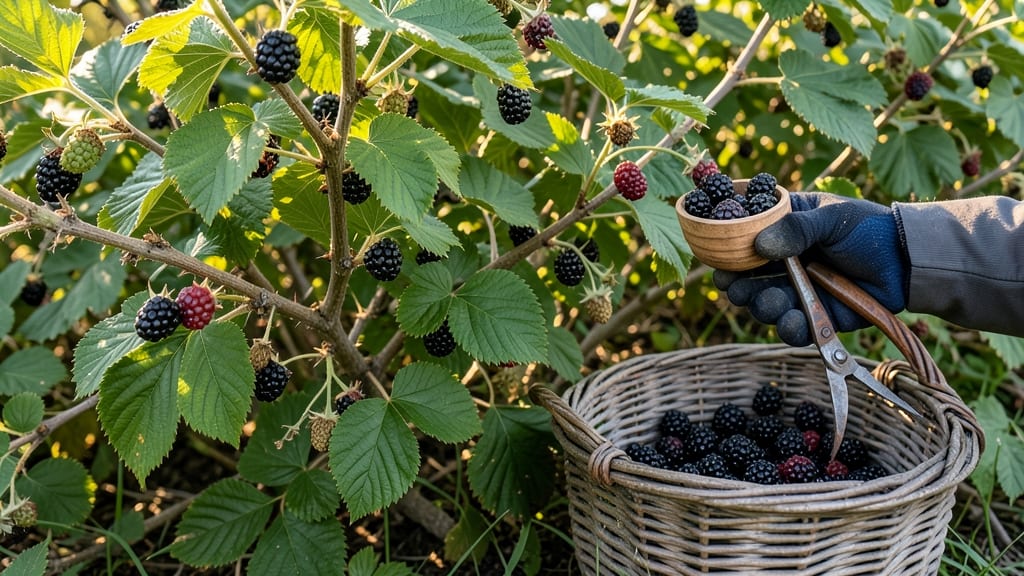
Blackberry bushes produce fruit between June and September in most climates, but the exact timing depends on whether you’ve planted summer-bearing or fall-bearing varieties.
Picture this: you’ve waited all spring for those first sweet, juicy berries, only to find your bushes still bare. That’s because first-year fruiting is rare—most blackberries need two growing seasons to establish strong canes before producing a full harvest.
In USDA Zone 6a, like many gardeners, summer-bearing types (the classic thorny or thornless varieties) ripen in early to mid-summer, while fall-bearing types stretch the season into September. But climate, pruning, and even soil pH can shift that window by weeks.
Below, I’ll break down the exact timeline for your variety, how to spot ripe 🫐 berries, and the 3 key factors that determine whether your bushes deliver a bumper crop—or leave you waiting.
Blackberry fruit production timeline by variety: summer vs fall-harvesting types
Blackberries are one of the most rewarding fruits to grow, offering harvests that span from early summer to late fall—but not all varieties produce at the same time.
Understanding your blackberry variety is key to predicting when your bushes will burst with fruit. Summer-bearing types like 'Triple Crown' deliver one big harvest, while fall-bearing (primocane) varieties like 'Natchez' produce two crops per year. Let’s break down the fruiting timelines so you can plan your garden like a pro.
Most blackberry bushes take 1-2 years to establish before producing significant fruit, but the timing varies dramatically between floricane-fruiting (summer-bearing) and primocane-fruiting (fall-bearing) types.
For example, 'Chester' (a classic summer-bearing variety) won’t produce until its second spring, while 'Prime-Ark Freedom' (a fall-bearing type) can yield fruit on new canes in its first year. Knowing these differences helps you set realistic expectations and optimize care.
Here’s a quick reference for when blackberry bushes produce fruit based on their growth cycle and variety type:
| Variety Type | Fruiting Season | First Fruit (Years) | Harvest Window | Notes |
|---|---|---|---|---|
| Floricane-Fruiting (Summer-Bearing) | Late spring to early summer | Year 2 | June–July | Single harvest; prune old canes after harvest |
| Primocane-Fruiting (Fall-Bearing) | Late summer to fall | Year 1 (new canes) | August–October | Two harvests possible; keep primocanes for next year |
| Thornless (e.g., 'Arapaho') | Summer (floricane) or fall (primocane) | Year 1–2 | June–September | Extended harvest with proper pruning |
| Erect (e.g., 'Ouachita') | Summer (floricane) | Year 2 | June–July | Compact growth; ideal for small gardens |
| Trailing (e.g., 'Cheyenne') | Summer (floricane) | Year 2 | June–July | Needs trellis; sprawling habit |
If you’re growing summer-bearing blackberries, like 'Boygen' or 'Darrow,' expect your main harvest between late June and early August.
These varieties produce fruit on second-year canes (floricanes), which is why they often skip fruiting in their first year. Fall-bearing types, such as 'Prime-Ark Freedom' or 'Natchez,' are the superstars of extended harvests, yielding fruit on first-year canes (primocanes) from late summer to October—and sometimes even into November in warm climates.
For thornless blackberries, timing can vary slightly, but most follow the same general rules as their thorny counterparts. For example, 'Arapaho' (a thornless primocane-fruiting type) will produce fruit on new canes in its first year, just like other fall-bearing varieties.
The key difference? Thornless varieties are easier to harvest and maintain, making them a favorite for home gardeners. If you’re growing 'Arapaho,' plan for a late-summer to fall harvest starting in August.
One common question I hear is, “Why isn’t my blackberry bush producing fruit?”
The answer often lies in pruning habits. Summer-bearing varieties need old canes removed after harvest to encourage new growth for next year’s fruit. Fall-bearing types, on the other hand, should have their primocanes left intact until after they’ve fruited, as these canes will produce again the following year.
Skipping pruning or pruning at the wrong time can delay—or even eliminate—fruit production for a season.
Another factor to consider is your climate zone. In cooler regions (USDA zones 5–7), summer-bearing blackberries may produce fruit earlier, around late May to June, while fall-bearing types could extend their harvest into late October.
In warmer zones (8–10), expect a longer growing season, with some varieties fruiting as early as April or as late as December, depending on the variety and care.
To maximize your harvest, pay attention to flowering cues. For summer-bearing types, flowers appear in early spring on last year’s canes, while fall-bearing varieties bloom in late summer on new growth.
If you see flowers but no fruit develops, check for pollen issues, pests, or environmental stress. Sometimes, a late frost or drought can damage flowers before they set fruit
Climate zone impact: adjusting blackberry harvest schedules for cold vs warm regions
Your USDA hardiness zone plays a bigger role in blackberry harvest timing than most gardeners realize. In cold climates (zones 3-6), blackberries enter winter dormancy early, while warm regions (zones 8-10) enjoy extended fruiting seasons. Understanding these differences helps you plan for earlier harvests or longer production windows.
Northern growers in zones 3-6 typically see their summer-bearing varieties produce fruit from late June to August, while southern zones 8-10 can harvest primocane varieties from July through October. The key difference lies in how cold temperatures trigger dormancy versus how warm winters allow continuous growth.
In cold regions (zones 3-6), blackberries need chilling hours (300-1000 hours below 45°F) to break dormancy. Without proper chilling, your plants may produce smaller fruit or fail to fruit altogether.
I've found that primocane varieties like 'Prime-Ark Freedom' perform better in these zones because they fruit on new growth rather than requiring winter chilling.
Southern gardeners in zones 8-10 face different challenges. The lack of winter dormancy can lead to overproduction in early spring, followed by heat stress that reduces fruit quality. To combat this, I recommend shade cloth during peak summer months and regular pruning to maintain plant vigor.
In my zone 9 garden, this strategy extends my harvest by 4-6 weeks compared to unmanaged bushes.
For transition zones (7), the key is seasonal pruning. Remove old canes after harvest to encourage new growth that will bear fruit the following season. In my zone 7 garden, this technique has helped me double my harvest yield by ensuring continuous fruiting cycles.
Always prune in late winter before new growth begins to avoid frost damage.
Frost is the biggest threat to blackberry harvests in northern climates. A late spring frost can destroy flower buds before they open, while early fall frosts can ruin late-season fruit.
I've learned to monitor frost dates and use row covers when temperatures dip below 32°F. In my zone 5 garden, this protection has saved 30-40% of late-season berries during unpredictable weather.